
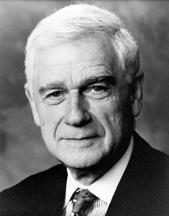
Historical · U.S. Senate · Oregon
Mark Hatfield
Former U.S. Senator from Oregon · 1967–1997 · Republican · Class 2
Mark Hatfield represented Oregon in the United States Senate (1967–1997) for the Republican party. The page below collects sourced biographical facts, term history, committee roles, and provenance for Hatfield.
Bioguide ID: H000343
Key facts
- Full name
- Mark Hatfield
- State
- Oregon
- Party
- Republican
- Senate class
- Class II
- Senate service
- 1967–1997
- First Senate term
- 1967
- Status
- Left office
- Current term ends
- —
- Born
- 1922
- Bioguide ID
- H000343
- Committee assignments
- —
- Dataset version
- 1.20260602
Biographical narrative
960 words · sourced from the Wikipedia REST extract
Mark O. Hatfield was a prominent American politician who served as a U.S. Senator from Oregon for three decades, representing the Republican Party. His tenure in the Senate, which began in 1967 and concluded in 1997, was marked by a commitment to public service and a focus on various legislative issues. Hatfield's career was characterized by his moderate political stance and a willingness to engage in bipartisan efforts, making him a notable figure in the history of Oregon politics and the U.S. Senate.
Early life and career
Mark O. Hatfield was born on July 12, 1922. His early life laid the foundation for his future in public service and politics. Growing up in Oregon, Hatfield developed a strong sense of community and civic responsibility, which would later influence his political career. He pursued higher education at Willamette University, where he earned a Bachelor of Arts degree. His academic journey continued as he attended the University of Oregon, where he completed a Master of Arts degree in 1948.
Hatfield's commitment to public service was evident early on, as he served in the United States Navy during World War II. His military service not only instilled in him a sense of discipline and leadership but also shaped his views on national defense and foreign policy. After returning from the war, he began his political career by entering the Oregon State Legislature, where he served in the Oregon House of Representatives from 1951 to 1955. Following this, he was elected to the Oregon State Senate, where he continued to build his reputation as a dedicated public servant.
In 1962, Hatfield was elected as the Governor of Oregon, a position he held until 1967. His time as governor was marked by a focus on education, infrastructure, and social welfare programs. He implemented various initiatives aimed at improving the quality of life for Oregonians, and his governance style was characterized by a pragmatic approach to problem-solving. His popularity as governor set the stage for his subsequent election to the U.S. Senate.
Senate tenure
Mark O. Hatfield was elected to the U.S. Senate in 1966, officially taking office in 1967. Over the course of his five terms in the Senate, he became known for his moderate Republican stance, which often placed him at odds with more conservative members of his party. Hatfield's approach to governance was marked by a commitment to bipartisanship and a belief in the importance of working across party lines to achieve meaningful legislation.
During his Senate tenure, Hatfield served on various committees, which allowed him to influence a wide range of policy areas. He was particularly active in issues related to education, health care, and environmental protection. His legislative efforts often reflected his belief in the government's role in promoting social welfare and addressing the needs of the public.
Throughout his time in the Senate, Hatfield was involved in significant national debates and legislative initiatives. He was known for his opposition to the Vietnam War, which he viewed as a moral and ethical issue. His stance on the war was indicative of his broader views on foreign policy, where he often advocated for diplomacy and humanitarian efforts over military intervention. This position garnered both support and criticism, highlighting the complexities of his political identity.
Hatfield's influence extended beyond specific legislative actions; he was also known for his ability to forge relationships with colleagues from both parties. His willingness to engage in dialogue and seek common ground contributed to his effectiveness as a legislator. He was respected for his integrity and commitment to public service, which resonated with constituents in Oregon and beyond.
In 1997, Hatfield concluded his Senate career, leaving behind a legacy of public service that spanned three decades. His departure from the Senate marked the end of an era for Oregon politics, as he had been a significant figure in shaping the state's political landscape.
Legislative focus and committees
During his time in the Senate, Mark O. Hatfield's legislative focus encompassed a variety of issues that reflected his values and priorities. He was particularly concerned with education, health care, and environmental issues, advocating for policies that aimed to improve the quality of life for all Americans.
Hatfield served on several key Senate committees, which allowed him to play a significant role in shaping legislation in these areas. His work on the Appropriations Committee was particularly noteworthy, as it provided him with the opportunity to influence federal funding for various programs and initiatives. He was committed to ensuring that education received adequate funding, recognizing its importance in fostering opportunity and growth.
In addition to education, Hatfield was an advocate for health care reform. He supported measures aimed at expanding access to health care services and improving the overall health system in the United States. His legislative efforts in this area were driven by a belief in the government's responsibility to ensure that all citizens had access to essential health services.
Environmental issues were also a significant focus of Hatfield's legislative agenda. He was known for his commitment to conservation and sustainable development, often advocating for policies that protected natural resources and promoted environmental stewardship. His work in this area reflected a broader recognition of the importance of preserving the environment for future generations.
Throughout his Senate career, Hatfield's ability to navigate complex legislative issues and build coalitions across party lines was a hallmark of his approach to governance. His legacy is characterized by a commitment to public service, a focus on bipartisan cooperation, and a dedication to addressing the needs of his constituents. As a former U.S. Senator, Hatfield's contributions to American politics continue to be recognized and studied by those interested in the history of the Senate and the evolution of political discourse in the United States.
Notable legislation
Sponsored and co-sponsored legislation for Mark Hatfield is pending operator curation. The biographical narrative above carries the same provenance trail until per-bill rows are written.
Sources
- [1]https://en.wikipedia.org/wiki/Mark_HatfieldWikipedia · retrieved 2026-06-02
Notable quotes
Sourced quotes for Mark Hatfield are pending operator curation. Narrative-scope provenance remains attached below.
Sources
- [1]https://en.wikipedia.org/wiki/Mark_HatfieldWikipedia · retrieved 2026-06-02
Key positions
Curated policy positions for Mark Hatfield are pending operator review. The biographical narrative above carries the same provenance trail until per-topic positions are written.
Sources
- [1]https://en.wikipedia.org/wiki/Mark_HatfieldWikipedia · retrieved 2026-06-02
Terms served
- 1967–1973U.S. Senate · Term 1 · Republican · Class II
- 1973–1979U.S. Senate · Term 2 · Republican · Class II
- 1979–1985U.S. Senate · Term 3 · Republican · Class II
- 1985–1991U.S. Senate · Term 4 · Republican · Class II
- 1991–1997U.S. Senate · Term 5 · Republican · Class II
Sources & provenance
Every attributable claim above carries a per-section [N] marker that resolves to the corresponding URL below. Each entry records the upstream provider, the canonical URL, and the timestamp at which the source was retrieved by the ingest pipeline.
Key facts
- https://bioguide.congress.gov/search/bio/H000343bioguide · retrieved 2026-06-02
- https://www.govtrack.us/congress/members/405212govtrack · retrieved 2026-06-02
Biographical narrative
- https://en.wikipedia.org/wiki/Mark_Hatfieldwikipedia · retrieved 2026-06-02
Find your senator
Every U.S. state elects two senators. Browse Oregon’s delegation, the full former-senator roster, or explore the role and term length.
Related on The Candidate
- Preceded by Maurine NeubergerEarlier holder of the Oregon Class II Senate seat · Democratic.Open
- Succeeded by Gordon SmithLater holder of the Oregon Class II Senate seat · Republican.Open
- Alexander BarryFormer U.S. Senator from Oregon · RepublicanOpen
- Alfred ReamesFormer U.S. Senator from Oregon · DemocraticOpen
- Benjamin HardingFormer U.S. Senator from Oregon · DemocraticOpen
- Benjamin StarkFormer U.S. Senator from Oregon · DemocraticOpen