
Historical · U.S. Senate · Rhode Island
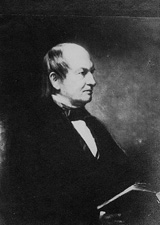
Albert Greene
Former U.S. Senator from Rhode Island · 1845–1851 · Whig · Class 1
Albert Greene represented Rhode Island in the United States Senate (1845–1851) for the Whig party. The page below collects sourced biographical facts, term history, committee roles, and provenance for Greene.
Bioguide ID: G000424
Key facts
- Full name
- Albert Greene
- State
- Rhode Island
- Party
- Whig
- Senate class
- Class I
- Senate service
- 1845–1851
- First Senate term
- 1845
- Status
- Left office
- Current term ends
- —
- Born
- 1792
- Bioguide ID
- G000424
- Committee assignments
- —
- Dataset version
- 1.20260602
Biographical narrative
900 words · sourced from the Wikipedia REST extract
Albert Greene was a prominent American lawyer and politician from Rhode Island, who served as a United States Senator representing the Whig Party from 1845 to 1851. His political career spanned various roles, including serving as the Attorney General of Rhode Island and holding positions in both the Rhode Island House of Representatives and the State Senate. Greene's contributions to state and national politics were marked by his legal expertise and leadership within his community.
Early life and career
Albert Greene was born on April 15, 1792, in East Greenwich, Rhode Island. He pursued his education at Kent Academy, where he laid the groundwork for his future career in law. Following his graduation, Greene began studying law and was admitted to the bar in 1812. He furthered his legal education at Litchfield Law School in Connecticut, a prestigious institution known for training many prominent lawyers of the time. After completing his studies in 1813, Greene commenced his legal practice in his hometown of East Greenwich.
Greene's early career also included significant involvement in local politics. He served in the Rhode Island House of Representatives from 1815 to 1825, where he held the position of Speaker of the House from 1821 to 1825. His leadership in the legislature helped shape state policies and governance during a formative period in Rhode Island's history. In addition to his legislative duties, Greene was active in the military, achieving the rank of brigadier general and later major general of the Fourth Brigade of the State Militia from 1816 to 1823. This military experience contributed to his reputation as a leader in both civil and military affairs.
In 1825, Greene was appointed as the Attorney General of Rhode Island, a position he held until 1843. During his tenure, he was involved in various legal matters that impacted the state, further establishing his reputation as a skilled lawyer and public servant. His contributions to education were recognized in 1827 when he received an honorary Master of Arts degree from Brown University, reflecting his standing in the community and his commitment to public service.
Senate tenure
Greene's political career reached a significant milestone when he was elected to the United States Senate as a member of the Whig Party. He took office on March 4, 1845, representing Rhode Island in the Senate. His election came during a time of considerable political change in the United States, as the Whig Party was emerging as a major political force in opposition to the Democratic Party.
During his time in the Senate, which lasted until March 3, 1851, Greene participated in various legislative discussions and decisions that shaped the nation. Although specific details about his voting record and legislative initiatives are not available, his role as a senator would have involved engagement in key national issues of the day, including debates over economic policies, territorial expansion, and the growing tensions surrounding slavery.
After completing his term in the Senate, Greene chose not to seek reelection. Instead, he returned to state politics, where he was elected to the Rhode Island Senate in 1851 and 1852. His continued involvement in state government demonstrated his commitment to public service and his desire to contribute to the governance of Rhode Island.
In 1857, Greene returned to the Rhode Island House of Representatives, further solidifying his legacy as a dedicated public servant. His career in various legislative roles showcased his adaptability and ongoing influence in Rhode Island politics.
Legislative focus and committees
While specific details regarding Greene's legislative focus and committee assignments during his Senate tenure are not documented, it is reasonable to infer that, as a member of the Whig Party, he would have been involved in discussions and initiatives that aligned with the party's platform. The Whig Party, which emerged in the 1830s, was characterized by its opposition to the policies of President Andrew Jackson and the Democratic Party. The party generally advocated for modernization, economic development, and a strong legislative role in addressing national issues.
Greene's background as a lawyer and his extensive experience in state politics likely informed his approach to legislative matters. His legal expertise would have been beneficial in navigating complex legal and constitutional issues that arose during his time in the Senate. Furthermore, his previous roles in the Rhode Island House of Representatives and as Attorney General would have provided him with a deep understanding of state and national governance, allowing him to contribute meaningfully to Senate discussions.
In addition to his legislative responsibilities, Greene's military background may have influenced his perspectives on national defense and military affairs. His experience as a major general in the state militia could have provided him with insights into the importance of military readiness and the role of the federal government in supporting state militias.
Following his departure from the Senate, Greene's continued involvement in Rhode Island's political landscape, including his service in the Rhode Island Senate and House of Representatives, indicates that he remained engaged with legislative matters and community issues. His long-standing commitment to public service reflects a dedication to the principles of governance and the welfare of his constituents.
Albert Greene passed away on January 8, 1863, in Providence, Rhode Island. He was interred in Grace Church Cemetery, leaving behind a legacy of public service and legal expertise that contributed to the political landscape of Rhode Island and the nation during a pivotal era in American history.
Notable legislation
Sponsored and co-sponsored legislation for Albert Greene is pending operator curation. The biographical narrative above carries the same provenance trail until per-bill rows are written.
Sources
- [1]https://en.wikipedia.org/wiki/Albert_C._GreeneWikipedia · retrieved 2026-06-02
Notable quotes
Sourced quotes for Albert Greene are pending operator curation. Narrative-scope provenance remains attached below.
Sources
- [1]https://en.wikipedia.org/wiki/Albert_C._GreeneWikipedia · retrieved 2026-06-02
Key positions
Curated policy positions for Albert Greene are pending operator review. The biographical narrative above carries the same provenance trail until per-topic positions are written.
Sources
- [1]https://en.wikipedia.org/wiki/Albert_C._GreeneWikipedia · retrieved 2026-06-02
Terms served
- 1845–1851U.S. Senate · Term 1 · Whig · Class I
Sources & provenance
Every attributable claim above carries a per-section [N] marker that resolves to the corresponding URL below. Each entry records the upstream provider, the canonical URL, and the timestamp at which the source was retrieved by the ingest pipeline.
Key facts
- https://bioguide.congress.gov/search/bio/G000424bioguide · retrieved 2026-06-02
- https://www.govtrack.us/congress/members/404771govtrack · retrieved 2026-06-02
Biographical narrative
- https://en.wikipedia.org/wiki/Albert_C._Greenewikipedia · retrieved 2026-06-02
Find your senator
Every U.S. state elects two senators. Browse Rhode Island’s delegation, the full former-senator roster, or explore the role and term length.
Related on The Candidate
- Preceded by John FrancisEarlier holder of the Rhode Island Class I Senate seat · Law and Order.Open
- Succeeded by Charles JamesLater holder of the Rhode Island Class I Senate seat · Democratic.Open
- Ambrose BurnsideFormer U.S. Senator from Rhode Island · RepublicanOpen
- Asher RobbinsFormer U.S. Senator from Rhode Island · WhigOpen
- Benjamin HowlandFormer U.S. Senator from Rhode Island · RepublicanOpen
- Senators from Rhode IslandEvery former U.S. Senator who has represented Rhode Island.Open