
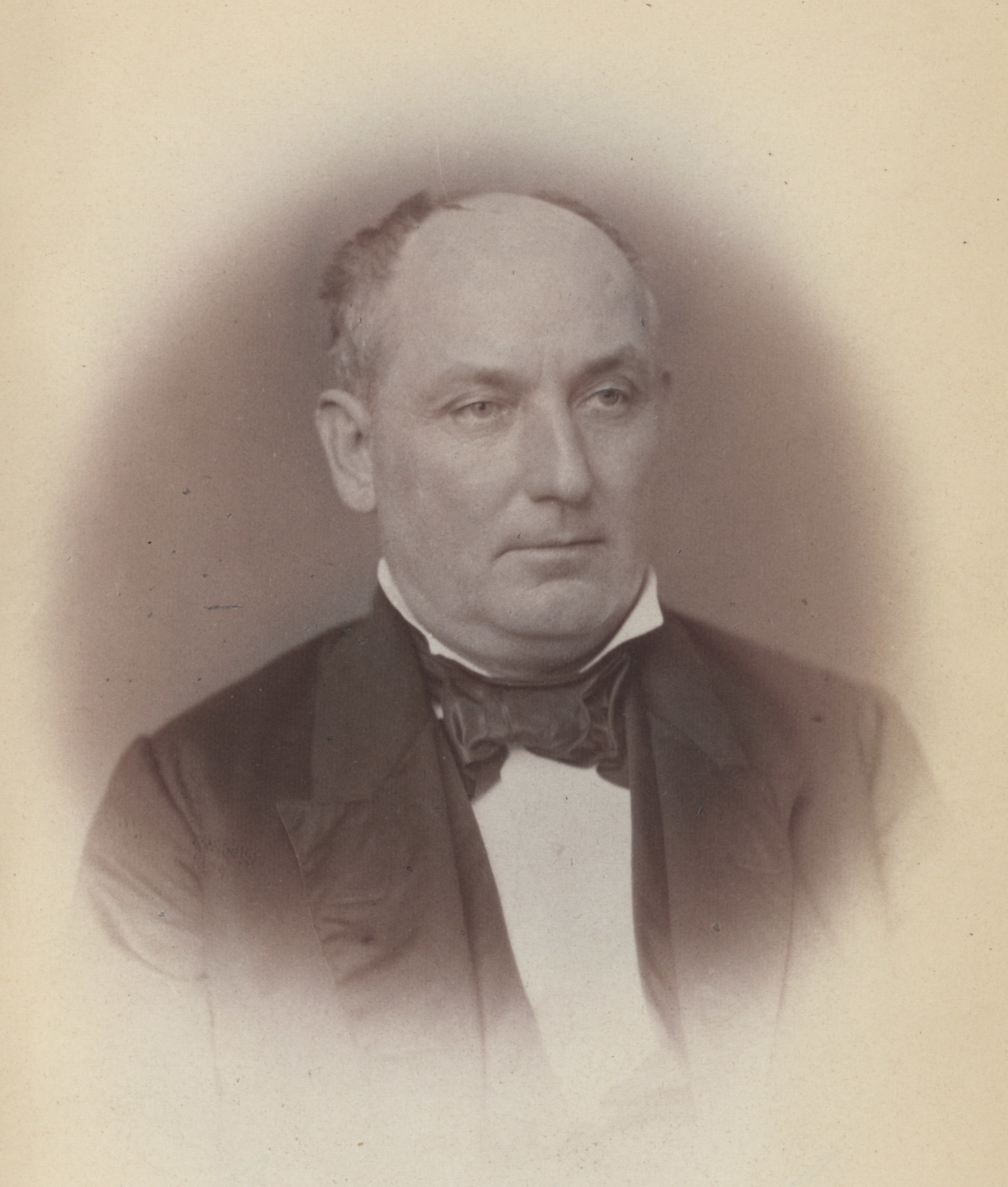
Historical · U.S. Senate · South Carolina
James Hammond
Former U.S. Senator from South Carolina · 1857–1861 · Democratic · Class 3
James Hammond represented South Carolina in the United States Senate (1857–1861) for the Democratic party. The page below collects sourced biographical facts, term history, committee roles, and provenance for Hammond.
Bioguide ID: H000128
Key facts
- Full name
- James Hammond
- State
- South Carolina
- Party
- Democratic
- Senate class
- Class III
- Senate service
- 1857–1861
- First Senate term
- 1857
- Status
- Left office
- Current term ends
- —
- Born
- 1807
- Bioguide ID
- H000128
- Committee assignments
- —
- Dataset version
- 1.20260602
Biographical narrative
973 words · sourced from the Wikipedia REST extract
James Hammond was a prominent American politician and planter who served as a United States Senator from South Carolina from 1857 until his resignation in 1860. A member of the Democratic Party, Hammond was known for his staunch defense of slavery and states' rights during a tumultuous period in American history. His political career was marked by his involvement in various governmental roles, including serving as a U.S. Representative and the Governor of South Carolina. Hammond's legacy is complex, as he was both a significant political figure and a controversial individual due to his actions and beliefs regarding slavery and personal conduct.
Early life and career
James Hammond was born on November 15, 1807, in Newberry County, South Carolina. He was the son of Elisha and Catherine Fox (Spann) Hammond. Hammond pursued his education at South Carolina College, where he graduated in 1825. During his time at college, he was an active member of the Euphradian Society, which fostered debate and discussion among its members.
After completing his education, Hammond embarked on a diverse career path. He initially worked as a teacher and also contributed to a local newspaper. His interest in law led him to study the subject, and he was admitted to the bar in 1828. Following his admission, he established a legal practice in Columbia, South Carolina. During this period, he also founded a newspaper that supported the concept of nullification, which was a significant political theory in South Carolina at the time.
Hammond's financial situation improved significantly after he married Catherine Elizabeth Fitzsimmons, a young woman with a considerable dowry. This marriage allowed him to acquire substantial property, and he eventually became a member of the planter class. Over time, Hammond accumulated approximately 22 square miles of land, multiple plantation houses, and enslaved more than 300 individuals who worked on his estates.
Hammond's political career began when he was elected to the United States House of Representatives as a member of the Nullifier Party in 1835. However, his tenure was brief, as he resigned the following year due to health issues. After a two-year period spent in Europe, he returned to South Carolina, where he focused on managing his agricultural holdings. His experience in governance and politics led to his election as the Governor of South Carolina, a position he held from 1842 to 1844.
In 1857, following the death of Senator Andrew Butler, Hammond was chosen by the South Carolina legislature to fill the vacant Senate seat. He served in the Senate until his resignation in 1860, a decision influenced by South Carolina's declaration of secession from the Union. Hammond passed away on November 13, 1864, just two days before his fifty-seventh birthday, at what is now the Redcliffe Plantation State Historic Site in Beech Island, South Carolina.
Senate tenure
Hammond's time in the U.S. Senate was marked by his vocal support for slavery and his belief in the rights of states to govern themselves without federal interference. He became known for his passionate speeches advocating for the Southern way of life and the institution of slavery, which he viewed as essential to the economy and social structure of the South. His most notable contribution to the Senate was his famous assertion that "Cotton is King," a phrase that encapsulated the economic power of cotton production in the Southern states and the reliance on enslaved labor to sustain it.
During his Senate tenure, Hammond was involved in various debates and discussions surrounding the contentious issues of slavery and states' rights. He defended the institution of slavery vigorously, arguing that it was a necessary component of Southern society. His speeches often included comparisons between the labor of enslaved individuals in the South and the labor of free workers in the North, which he characterized as less advantageous.
Hammond's political career faced significant challenges due to personal scandals, particularly those related to his conduct toward women. Despite these controversies, he was able to secure his position in the Senate, reflecting the complexities of Southern politics at the time. His resignation in 1860 came amid increasing tensions between the North and South, as the nation moved closer to civil conflict.
Legislative focus and committees
Throughout his Senate career, Hammond's legislative focus was primarily centered on issues related to slavery, agriculture, and the rights of Southern states. He was a prominent advocate for the interests of the Southern planter class, emphasizing the economic importance of cotton and the necessity of maintaining the institution of slavery for the prosperity of the South. His views were representative of a broader Southern perspective that resisted any federal attempts to regulate or abolish slavery.
Hammond's involvement in committees during his Senate tenure included those that dealt with agricultural issues and economic policies relevant to the Southern states. He was known for his writings and speeches that sought to justify and promote the Southern way of life, including the treatment of enslaved individuals. His work in the Senate reflected the prevailing attitudes of many Southern politicians who viewed slavery as an integral part of their social and economic systems.
In addition to his legislative activities, Hammond was part of a group of Southern intellectuals who sought to articulate a pro-slavery ideology. He co-authored works that defended the institution of slavery and argued for its moral and economic justification. His writings contributed to the intellectual climate of the time, which sought to rationalize and defend slavery against growing abolitionist sentiments in the North.
Hammond's legacy is intertwined with the broader historical context of the antebellum South and the eventual outbreak of the Civil War. His steadfast support for slavery and states' rights positioned him as a significant figure in the political landscape of his time, while his personal controversies and actions have led to a complex and often critical examination of his life and career.
Notable legislation
Sponsored and co-sponsored legislation for James Hammond is pending operator curation. The biographical narrative above carries the same provenance trail until per-bill rows are written.
Sources
- [1]https://en.wikipedia.org/wiki/James_H._HammondWikipedia · retrieved 2026-06-02
Notable quotes
Sourced quotes for James Hammond are pending operator curation. Narrative-scope provenance remains attached below.
Sources
- [1]https://en.wikipedia.org/wiki/James_H._HammondWikipedia · retrieved 2026-06-02
Key positions
Curated policy positions for James Hammond are pending operator review. The biographical narrative above carries the same provenance trail until per-topic positions are written.
Sources
- [1]https://en.wikipedia.org/wiki/James_H._HammondWikipedia · retrieved 2026-06-02
Terms served
- 1835–1837U.S. House · District 4 · Term 1 · Nullifier
- 1857–1861U.S. Senate · Term 2 · Democratic · Class III
Sources & provenance
Every attributable claim above carries a per-section [N] marker that resolves to the corresponding URL below. Each entry records the upstream provider, the canonical URL, and the timestamp at which the source was retrieved by the ingest pipeline.
Key facts
- https://bioguide.congress.gov/search/bio/H000128bioguide · retrieved 2026-06-02
- https://www.govtrack.us/congress/members/405010govtrack · retrieved 2026-06-02
Biographical narrative
- https://en.wikipedia.org/wiki/James_H._Hammondwikipedia · retrieved 2026-06-02
Find your senator
Every U.S. state elects two senators. Browse South Carolina’s delegation, the full former-senator roster, or explore the role and term length.
Related on The Candidate
- Preceded by Andrew ButlerEarlier holder of the South Carolina Class III Senate seat · Democratic.Open
- Succeeded by Frederick SawyerLater holder of the South Carolina Class III Senate seat · Republican.Open
- Alva LumpkinFormer U.S. Senator from South Carolina · DemocraticOpen
- Arthur HayneFormer U.S. Senator from South Carolina · DemocraticOpen
- Asbury LatimerFormer U.S. Senator from South Carolina · DemocraticOpen
- Democratic PartyFederal candidates and office holders on the Democratic line.Open