
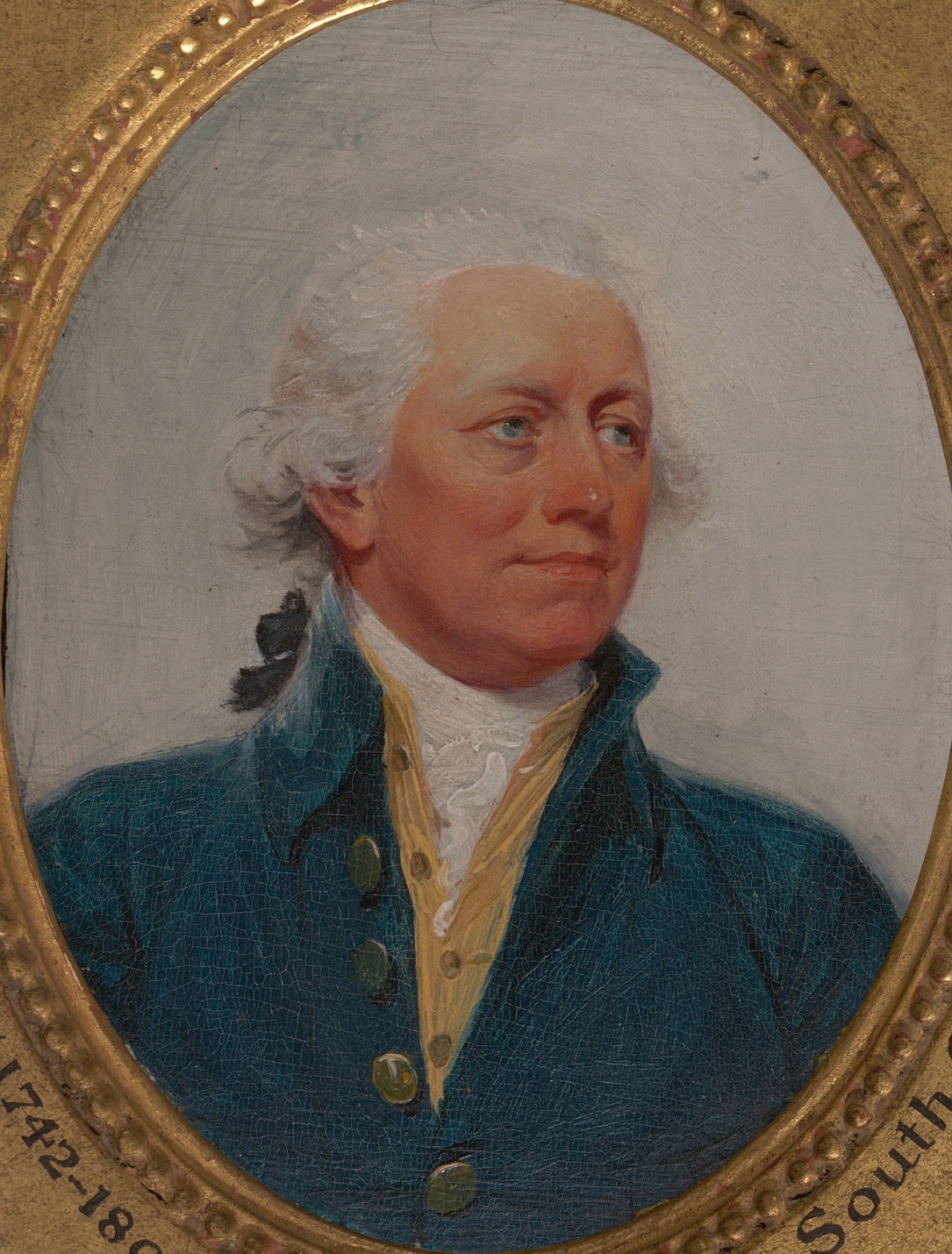
Historical · U.S. Senate · South Carolina
Ralph Izard
Former U.S. Senator from South Carolina · 1789–1795 · Pro-Administration · Class 3
Ralph Izard represented South Carolina in the United States Senate (1789–1795) for the Pro-Administration party. The page below collects sourced biographical facts, term history, committee roles, and provenance for Izard.
Bioguide ID: I000053
Key facts
- Full name
- Ralph Izard
- State
- South Carolina
- Party
- Pro-Administration
- Senate class
- Class III
- Senate service
- 1789–1795
- First Senate term
- 1789
- Status
- Left office
- Current term ends
- —
- Born
- —
- Bioguide ID
- I000053
- Committee assignments
- —
- Dataset version
- 1.20260602
Biographical narrative
817 words · sourced from the Wikipedia REST extract
Ralph Izard was an American politician who served as a U.S. Senator from South Carolina during the early years of the United States government. A member of the Pro-Administration party, Izard's political career spanned from 1789 to 1795, during which he held significant roles, including that of President pro tempore of the Senate. His contributions to the early legislative framework of the United States were notable, particularly in the context of the post-Revolutionary War era.
Early life and career
Ralph Izard was born at "The Elms," a plantation located near Charleston, South Carolina, around January 23, 1741, or 1742. He was the son of Henry Izard and Margaret Johnson. Izard's early education took place in England, where he attended a school in Hackney, London. He later matriculated as a fellow-commoner at Trinity Hall, Cambridge. After spending several years in England, he returned to America in 1764. His return to South Carolina was brief, as he soon became involved in various political and diplomatic activities.
In 1768, Izard was elected to the American Society, which later became known as the American Philosophical Society. His career took him to London in 1771 and subsequently to Paris in 1776, where he engaged in diplomatic efforts on behalf of the Continental Congress. He was appointed as a commissioner to the Court of Tuscany in 1776, although his tenure was cut short when he was recalled in 1779. Upon his return to America in 1780, Izard made a significant commitment to the American Revolutionary War by pledging his large estate in South Carolina to help finance the construction of warships.
Izard's political involvement continued as he served as a member of the Continental Congress in 1782 and 1783. His experiences during this period were instrumental in shaping his views and political strategies, which he would later bring to the Senate.
Senate tenure
Ralph Izard was elected to the United States Senate in 1788, representing South Carolina. His Senate term began on March 4, 1789, and he served until March 4, 1795. During his time in the Senate, Izard was involved in the foundational legislative processes of the new nation. He was a member of the Pro-Administration party, which supported the policies of President George Washington and the emerging federal government.
One of the notable moments during Izard's Senate career occurred in August 1789 when President Washington entered the Senate chamber to express his displeasure over the rejection of his nominee for the collector of Savannah, Georgia. This incident highlighted the tensions between the executive and legislative branches during the formative years of the U.S. government. In 1794, Izard was elected as President pro tempore of the Senate, a position that underscored his influence and leadership within the chamber.
Izard's Senate tenure coincided with a critical period in American history, as the nation was establishing its political institutions and addressing various issues related to governance, finance, and foreign relations. His participation in the Senate contributed to the development of legislative practices and the functioning of the federal government.
Legislative focus and committees
Throughout his time in the Senate, Ralph Izard was engaged in various legislative matters that were crucial to the early Republic. While specific details of his committee assignments and legislative initiatives are not extensively documented, his role as a senator during this period would have involved addressing key issues such as the establishment of a national bank, the regulation of commerce, and the formulation of foreign policy.
Izard's contributions to the Senate were part of a broader effort to stabilize and strengthen the new government following the Revolutionary War. His experiences in diplomacy and his commitment to the principles of the American Revolution informed his legislative priorities and actions. As a member of the Pro-Administration party, he aligned himself with the policies that sought to create a strong federal government capable of addressing the challenges facing the nation.
After completing his Senate term in 1795, Izard retired from public life to focus on managing his estates. His later years were marked by personal challenges, including a debilitating illness that affected him physically. Despite his retirement from politics, Izard's legacy continued through his family and his contributions to the early development of the United States.
Ralph Izard passed away on May 30, 1804, near Charleston, South Carolina, at the age of sixty-two. He is interred in the churchyard of St. James Goose Creek Episcopal Church, located near Charleston. His descendants included notable figures, such as Major General George Izard, who served as a governor of Arkansas, and other family members who played roles in American history.
Izard's life and career reflect the complexities of the early American political landscape, as well as the personal sacrifices made by individuals who contributed to the founding of the nation. His involvement in the Senate during its formative years underscores the importance of legislative leadership in shaping the trajectory of the United States.
Notable legislation
Sponsored and co-sponsored legislation for Ralph Izard is pending operator curation. The biographical narrative above carries the same provenance trail until per-bill rows are written.
Sources
- [1]https://en.wikipedia.org/wiki/Ralph_IzardWikipedia · retrieved 2026-06-02
Notable quotes
Sourced quotes for Ralph Izard are pending operator curation. Narrative-scope provenance remains attached below.
Sources
- [1]https://en.wikipedia.org/wiki/Ralph_IzardWikipedia · retrieved 2026-06-02
Key positions
Curated policy positions for Ralph Izard are pending operator review. The biographical narrative above carries the same provenance trail until per-topic positions are written.
Sources
- [1]https://en.wikipedia.org/wiki/Ralph_IzardWikipedia · retrieved 2026-06-02
Terms served
- 1789–1795U.S. Senate · Term 1 · Pro-Administration · Class III
Sources & provenance
Every attributable claim above carries a per-section [N] marker that resolves to the corresponding URL below. Each entry records the upstream provider, the canonical URL, and the timestamp at which the source was retrieved by the ingest pipeline.
Key facts
- https://bioguide.congress.gov/search/bio/I000053bioguide · retrieved 2026-06-02
- https://www.govtrack.us/congress/members/412129govtrack · retrieved 2026-06-02
Biographical narrative
- https://en.wikipedia.org/wiki/Ralph_Izardwikipedia · retrieved 2026-06-02
Find your senator
Every U.S. state elects two senators. Browse South Carolina’s delegation, the full former-senator roster, or explore the role and term length.
Related on The Candidate
- Succeeded by Jacob ReadLater holder of the South Carolina Class III Senate seat · Federalist.Open
- Alva LumpkinFormer U.S. Senator from South Carolina · DemocraticOpen
- Andrew ButlerFormer U.S. Senator from South Carolina · DemocraticOpen
- Arthur HayneFormer U.S. Senator from South Carolina · DemocraticOpen
- Asbury LatimerFormer U.S. Senator from South Carolina · DemocraticOpen
- Senators from South CarolinaEvery former U.S. Senator who has represented South Carolina.Open