
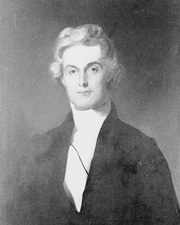
Historical · U.S. Senate · South Carolina
William Harper
Former U.S. Senator from South Carolina · 1826–1827 · Jackson · Class 3
William Harper represented South Carolina in the United States Senate (1826–1827) for the Jackson party. The page below collects sourced biographical facts, term history, committee roles, and provenance for Harper.
Bioguide ID: H000226
Key facts
- Full name
- William Harper
- State
- South Carolina
- Party
- Jackson
- Senate class
- Class III
- Senate service
- 1826–1827
- First Senate term
- 1826
- Status
- Left office
- Current term ends
- —
- Born
- 1790
- Bioguide ID
- H000226
- Committee assignments
- —
- Dataset version
- 1.20260602
Biographical narrative
862 words · sourced from the Wikipedia REST extract
William Harper was a prominent jurist and politician from South Carolina, who served as a U.S. Senator in the mid-1820s. Born on January 17, 1790, in Antigua, Harper became a significant figure in the legal and political landscape of South Carolina. His tenure in the Senate was marked by his alignment with the Jacksonian party and his advocacy for state rights and free trade. After his brief time in the Senate, he continued to influence South Carolina politics through various roles, including serving as a state chancellor until his death in 1847.
Early life and career
William Harper was born in Antigua, where he spent his early years before moving to the United States for further education. He received part of his education in Baltimore, Maryland, which helped lay the foundation for his future legal career. By the 1810s, Harper had established himself as one of the leading lawyers in Columbia, South Carolina. His legal expertise and reputation allowed him to gain prominence in the state’s legal community.
In the early 1820s, Harper briefly served as a chancellor in the Missouri territory, a role that provided him with valuable experience in governance and law. However, he returned to South Carolina in 1823, where he resumed his legal practice and became increasingly involved in state politics. His legal career and political engagement positioned him as a significant figure in South Carolina, particularly during a time of growing tensions regarding state and federal authority.
In 1826, following the death of U.S. Senator John Gaillard, Harper was appointed to fill the vacant Senate seat by Governor Richard Manning. His appointment marked the beginning of his formal political career at the national level, where he represented South Carolina in the U.S. Senate.
Senate tenure
Harper's Senate tenure began on March 28, 1826, and lasted until December 7 of the same year. During this brief period, he was a member of the Jacksonian party, which was characterized by its advocacy for the rights of the common man and a strong opposition to entrenched interests. Harper's time in the Senate was marked by the political climate of the era, which included debates over issues such as states' rights, tariffs, and the role of the federal government.
Despite the short duration of his Senate term, Harper's political activities were significant. He participated in discussions and decisions that reflected the interests and concerns of South Carolinians, particularly regarding the principles of free trade and the assertion of state rights. His alignment with the Jacksonian philosophy underscored his commitment to these principles, which would continue to shape his political ideology in subsequent years.
After leaving the Senate, Harper returned to South Carolina, where he continued to be active in state politics. His experience in the Senate contributed to his understanding of national issues and the interplay between state and federal governance.
Legislative focus and committees
Throughout his political career, William Harper was a staunch advocate for the principles of state rights and free trade, which were central to the political discourse of South Carolina during his time. His legal background informed his views on the sovereignty of states within the Union, and he became a prominent defender of the notion that states had the right to reject federal laws deemed unconstitutional. This perspective was particularly relevant during the nullification crisis, a significant event in South Carolina's history that revolved around the state's opposition to federal tariffs.
Harper's involvement in the nullification movement, which was led by figures such as John C. Calhoun, illustrated his commitment to the idea that states should have the authority to govern themselves without undue interference from the federal government. His legal opinions and writings during this period emphasized the belief that states were sovereign entities, capable of making decisions that aligned with their interests and values.
In addition to his political activities, Harper's legacy is also marked by his writings on social and political theory, particularly regarding the institution of slavery. He is often recognized as an early and influential proponent of pro-slavery thought. His work, including a notable lecture titled "Memoir on Slavery," articulated arguments that framed slavery as a positive social good rather than merely a necessary evil. Harper's philosophical and economic justifications for slavery positioned him among other significant figures in the pro-slavery movement of the time.
Throughout the 1820s and 1830s, Harper's contributions to the legal and political landscape of South Carolina were substantial. He served in various capacities, including in the state house of representatives and the South Carolina Court of Appeals. His role as state chancellor, a position he held from 1835 until his death, further solidified his influence in the state's legal system.
William Harper passed away on October 10, 1847, leaving behind a complex legacy that reflects the contentious political and social issues of his time. His career spanned significant developments in American history, particularly regarding the relationship between state and federal authority, as well as the contentious debates surrounding slavery and civil rights. Harper's contributions to South Carolina's political landscape continue to be studied and analyzed in the context of early American governance and the evolving nature of political thought in the United States.
Notable legislation
Sponsored and co-sponsored legislation for William Harper is pending operator curation. The biographical narrative above carries the same provenance trail until per-bill rows are written.
Sources
- [1]https://en.wikipedia.org/wiki/William_Harper_(South_Carolina_politician)Wikipedia · retrieved 2026-06-02
Notable quotes
Sourced quotes for William Harper are pending operator curation. Narrative-scope provenance remains attached below.
Sources
- [1]https://en.wikipedia.org/wiki/William_Harper_(South_Carolina_politician)Wikipedia · retrieved 2026-06-02
Key positions
Curated policy positions for William Harper are pending operator review. The biographical narrative above carries the same provenance trail until per-topic positions are written.
Sources
- [1]https://en.wikipedia.org/wiki/William_Harper_(South_Carolina_politician)Wikipedia · retrieved 2026-06-02
Terms served
- 1826–1827U.S. Senate · Term 1 · Jackson · Class III
Sources & provenance
Every attributable claim above carries a per-section [N] marker that resolves to the corresponding URL below. Each entry records the upstream provider, the canonical URL, and the timestamp at which the source was retrieved by the ingest pipeline.
Key facts
- https://bioguide.congress.gov/search/bio/H000226bioguide · retrieved 2026-06-02
- https://www.govtrack.us/congress/members/405104govtrack · retrieved 2026-06-02
Biographical narrative
- https://en.wikipedia.org/wiki/William_Harper_(South_Carolina_politician)wikipedia · retrieved 2026-06-02
Find your senator
Every U.S. state elects two senators. Browse South Carolina’s delegation, the full former-senator roster, or explore the role and term length.
Related on The Candidate
- Preceded by Pierce ButlerEarlier holder of the South Carolina Class III Senate seat · Republican.Open
- Succeeded by Stephen MillerLater holder of the South Carolina Class III Senate seat · Nullifier.Open
- Alva LumpkinFormer U.S. Senator from South Carolina · DemocraticOpen
- Andrew ButlerFormer U.S. Senator from South Carolina · DemocraticOpen
- Arthur HayneFormer U.S. Senator from South Carolina · DemocraticOpen
- Asbury LatimerFormer U.S. Senator from South Carolina · DemocraticOpen