
Historical · U.S. Senate · South Carolina
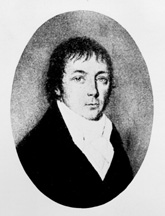
William Smith
Former U.S. Senator from South Carolina · 1816–1831 · Jackson · Class 3
William Smith represented South Carolina in the United States Senate (1816–1831) for the Jackson party. The page below collects sourced biographical facts, term history, committee roles, and provenance for Smith.
Bioguide ID: S000628
Key facts
- Full name
- William Smith
- State
- South Carolina
- Party
- Jackson
- Senate class
- Class III
- Senate service
- 1816–1831
- First Senate term
- 1816
- Status
- Left office
- Current term ends
- —
- Born
- —
- Bioguide ID
- S000628
- Committee assignments
- —
- Dataset version
- 1.20260602
Biographical narrative
1,115 words · sourced from the Wikipedia REST extract
William Smith was a prominent American lawyer, judge, plantation owner, and politician who served as a U.S. Senator from South Carolina during the early 19th century. A member of the Jackson Party, Smith's political career spanned three terms in the Senate, where he was known for his strong advocacy of states' rights and pro-slavery positions. His tenure was marked by significant rivalry with fellow South Carolinian John C. Calhoun, and he played a notable role in the political landscape of South Carolina and the broader United States during a tumultuous period in American history.
Early life and career
William Smith was born around 1762, with some historical accounts suggesting he hailed from either North Carolina or York County, South Carolina. The ambiguity surrounding his birthplace is reflected in various memoirs and accounts from his descendants. A memoirist known as "Septugenarian" noted that Smith was associated with Tryon County, North Carolina, which included areas that are now part of South Carolina. This connection to the region is further supported by familial anecdotes, including a statement from Smith's granddaughter, Mary Taylor Calhoun, who suggested that boundary adjustments may have influenced the perception of his birthplace.
Smith's early life was shaped by his family's financial circumstances. His father, once a man of considerable means, faced financial difficulties due to the depreciation of Continental currency during the American Revolutionary War. Despite these challenges, he managed to provide his sons with a classical education, which was a significant achievement for the time. Smith received his education at a local school near Bullock's Creek, where he formed friendships with future political figures, including Andrew Jackson and William H. Crawford. This early education was pivotal in shaping Smith's future career in law and politics.
After his initial schooling, Smith attended Mt. Zion College in Winnsboro, South Carolina, recognized as the first preparatory school in the region. His educational background laid the foundation for his legal career, which began in earnest in January 1786. Smith's early professional life was characterized by a commitment to his legal practice, and he quickly established himself as a capable lawyer. His personal life also played a role in his development; he made a promise to his wife, Margaret Duff, to abstain from alcohol, which he credited as a turning point in his life and career.
Senate tenure
William Smith's political career in the United States Senate began in 1816 when he was first elected to represent South Carolina. He served two discontinuous terms, with his first term lasting until 1823 and his second term from 1826 until 1831. Throughout his time in the Senate, Smith emerged as a significant figure in South Carolina politics, often engaging in fierce debates over the direction of the nation, particularly regarding the issues of states' rights and slavery.
Smith's rivalry with John C. Calhoun was a defining aspect of his Senate career. While both men were influential in South Carolina politics, they held differing views on key issues. Smith was a staunch advocate for states' rights, opposing Calhoun's more nationalist perspectives. His commitment to the pro-slavery cause was evident in his legislative actions, as he consistently defended the institution of slavery and opposed any movements aimed at its abolition. Smith's opposition to the abolitionist movement was vigorous, and he viewed the efforts to end slavery as a direct threat to the rights of Southern states and their economies.
In addition to his positions on slavery, Smith was also known for his opposition to government spending on infrastructure and public development, often referred to as "internal improvements." His views on this matter led him to vote against the admission of new states, such as Mississippi, Alabama, and Missouri, where slavery would be permitted. Smith believed that the federal government was overreaching in its control over land and resources, which he felt undermined the rights of individual states and citizens.
Smith's political influence extended beyond the Senate. He was awarded electoral votes for the vice presidency in two presidential elections, reflecting his prominence in national politics. Despite his close association with Andrew Jackson, who became president during Smith's political career, Smith declined offers to join the U.S. Supreme Court on two occasions. His reluctance to accept these prestigious positions may have stemmed from his commitment to his political ideals and his ongoing rivalry with Calhoun.
Legislative focus and committees
During his time in the Senate, William Smith's legislative focus was heavily influenced by his advocacy for states' rights and his pro-slavery stance. He was a leading voice for the perpetuation of the slave trade and the expansion of legal slavery across the continent. His commitment to these issues was evident in his speeches and votes, as he sought to protect the interests of Southern states and their economies, which were heavily reliant on slave labor.
Smith's legislative activities also included participation in various committees. Notably, he was a member of the Private Land Claims committee, which oversaw real estate claims and disputes arising from the Louisiana Purchase. This role allowed him to influence land policies and decisions that would have lasting implications for the expansion of slavery into new territories. His involvement in land claims was particularly significant given the context of westward expansion and the contentious debates surrounding the extension of slavery into new states.
In addition to his work on land claims, Smith's opposition to federal spending on internal improvements reflected his broader ideological beliefs. He viewed such spending as an infringement on states' rights and a misallocation of resources that should be directed towards individual states and their citizens. This perspective shaped his voting record and contributed to his reputation as a defender of Southern interests.
Smith's Senate career came to an end in 1831, after which he left South Carolina and relocated to the West. His departure from the Senate was influenced in part by the political dynamics of the time, particularly his rivalry with Calhoun, who had gained significant power and influence in South Carolina politics. Following his exit from the Senate, Smith invested in land development, acquiring vast tracts of land in Alabama and Louisiana, where he established large plantation complexes. His investments proved to be highly profitable, and he became a wealthy landowner, further entrenching his legacy in the agricultural economy of the South.
William Smith's life and career reflect the complexities of American politics in the early 19th century, particularly in relation to issues of slavery and states' rights. His contributions to the Senate and his enduring influence in South Carolina politics underscore the significant role he played during a pivotal period in American history. Smith passed away in 1840, leaving behind a legacy intertwined with the contentious issues of his time.
Notable legislation
Sponsored and co-sponsored legislation for William Smith is pending operator curation. The biographical narrative above carries the same provenance trail until per-bill rows are written.
Sources
- [1]https://en.wikipedia.org/wiki/William_Smith_(South_Carolina_politician%2C_born_1762)Wikipedia · retrieved 2026-06-02
Notable quotes
Sourced quotes for William Smith are pending operator curation. Narrative-scope provenance remains attached below.
Sources
- [1]https://en.wikipedia.org/wiki/William_Smith_(South_Carolina_politician%2C_born_1762)Wikipedia · retrieved 2026-06-02
Key positions
Curated policy positions for William Smith are pending operator review. The biographical narrative above carries the same provenance trail until per-topic positions are written.
Sources
- [1]https://en.wikipedia.org/wiki/William_Smith_(South_Carolina_politician%2C_born_1762)Wikipedia · retrieved 2026-06-02
Terms served
- 1816–1817U.S. Senate · Term 1 · Republican · Class II
- 1817–1823U.S. Senate · Term 2 · Republican · Class II
- 1826–1831U.S. Senate · Term 3 · Jackson · Class III
Sources & provenance
Every attributable claim above carries a per-section [N] marker that resolves to the corresponding URL below. Each entry records the upstream provider, the canonical URL, and the timestamp at which the source was retrieved by the ingest pipeline.
Key facts
- https://bioguide.congress.gov/search/bio/S000628bioguide · retrieved 2026-06-02
- https://www.govtrack.us/congress/members/410101govtrack · retrieved 2026-06-02
Biographical narrative
- https://en.wikipedia.org/wiki/William_Smith_(South_Carolina_politician%2C_born_1762)wikipedia · retrieved 2026-06-02
Find your senator
Every U.S. state elects two senators. Browse South Carolina’s delegation, the full former-senator roster, or explore the role and term length.
Related on The Candidate
- Preceded by Pierce ButlerEarlier holder of the South Carolina Class III Senate seat · Republican.Open
- Succeeded by Stephen MillerLater holder of the South Carolina Class III Senate seat · Nullifier.Open
- Alva LumpkinFormer U.S. Senator from South Carolina · DemocraticOpen
- Andrew ButlerFormer U.S. Senator from South Carolina · DemocraticOpen
- Arthur HayneFormer U.S. Senator from South Carolina · DemocraticOpen
- Asbury LatimerFormer U.S. Senator from South Carolina · DemocraticOpen