
Historical · U.S. Senate · Texas
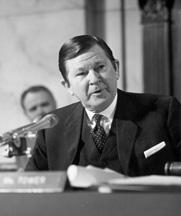
John Tower
Former U.S. Senator from Texas · 1961–1985 · Republican · Class 2
John Tower represented Texas in the United States Senate (1961–1985) for the Republican party. The page below collects sourced biographical facts, term history, committee roles, and provenance for Tower.
Bioguide ID: T000322
Key facts
- Full name
- John Tower
- State
- Texas
- Party
- Republican
- Senate class
- Class II
- Senate service
- 1961–1985
- First Senate term
- 1961
- Status
- Left office
- Current term ends
- —
- Born
- 1925
- Bioguide ID
- T000322
- Committee assignments
- —
- Dataset version
- 1.20260602
Biographical narrative
1,176 words · sourced from the Wikipedia REST extract
John G. Tower was a prominent American politician who served as a U.S. Senator from Texas. A member of the Republican Party, Tower's political career spanned over two decades, during which he became known for his conservative viewpoints and significant influence in national politics. His tenure in the Senate began in 1961 and concluded in 1985, marking a period of substantial change in both the state of Texas and the broader political landscape of the United States.
Early life and career
John G. Tower was born on September 29, 1925. His early life laid the foundation for his future in politics, as he grew up in a time of significant national and global upheaval. Tower's formative years were influenced by the events of World War II, which saw him serve in the United States Army Air Forces. This experience not only instilled in him a sense of duty and patriotism but also shaped his views on military and foreign policy, which would later become central themes in his political career.
Following his military service, Tower pursued higher education, attending the University of Texas at Austin. He graduated with a degree in political science, which equipped him with a solid understanding of governmental structures and political theory. His academic background provided a strong foundation for his subsequent entry into politics. Tower's early career included work in various capacities, including as a businessman and educator, which further developed his leadership skills and public speaking abilities.
Tower's political journey began in earnest when he was elected to the Texas State Senate in 1956. His time in the state legislature was marked by a commitment to conservative principles, which resonated with the electorate in Texas. His ability to connect with constituents and articulate the concerns of his community helped him build a reputation as a dedicated public servant. This experience at the state level served as a springboard for his later ambitions on the national stage.
In 1960, Tower made the decision to run for the U.S. Senate. His campaign focused on issues that were important to Texas voters, including economic development, national security, and states' rights. Tower's message and political philosophy appealed to a growing base of conservative voters in Texas, and he successfully won election to the Senate, marking the beginning of a significant chapter in his political career.
Senate tenure
John G. Tower's Senate career began in 1961, following his election to the 87th Congress. During his time in the Senate, Tower served four consecutive terms, demonstrating a remarkable ability to maintain electoral support in a rapidly changing political environment. His tenure was characterized by a commitment to conservative values and a focus on national defense, economic growth, and limited government intervention.
Throughout the 1960s and 1970s, Tower was an active participant in key legislative debates and discussions. He was known for his strong advocacy of military preparedness and defense spending, reflecting his belief in a robust national defense as essential to American security. This focus was particularly relevant during the Cold War era, when tensions between the United States and the Soviet Union were high. Tower's stance on defense issues earned him respect among his peers and solidified his position as a leading voice on military matters in the Senate.
In addition to his work on defense, Tower was involved in various other legislative initiatives. He participated in discussions surrounding civil rights, economic policy, and foreign relations, often aligning with the Republican Party's platform. His ability to navigate complex political landscapes allowed him to build coalitions with colleagues from both parties, although he remained steadfast in his conservative principles.
Tower's influence extended beyond his legislative work; he also played a significant role in shaping the Republican Party's direction during a transformative period in American politics. As the party began to embrace a more conservative ideology, Tower's leadership and advocacy helped to solidify this shift, particularly in the Southern states. His efforts contributed to the Republican Party's growing strength in Texas, which would become a crucial battleground in subsequent elections.
Despite the challenges of maintaining a political career over two decades, Tower was able to adapt to changing political dynamics. His ability to connect with constituents and address their concerns was a key factor in his electoral success. However, as the political landscape evolved, so too did the challenges he faced, particularly as the Republican Party began to experience internal divisions and shifts in voter demographics.
Tower's Senate tenure came to an end on January 3, 1985, concluding a significant chapter in his political life. His departure from the Senate marked not only the end of his own political career but also reflected broader changes within the Republican Party and American politics as a whole.
Legislative focus and committees
During his time in the Senate, John G. Tower was known for his involvement in several key committees that shaped national policy. His committee assignments allowed him to influence a wide range of issues, from defense and foreign relations to finance and government operations. These roles provided him with a platform to advocate for his policy priorities and engage with colleagues on critical legislative matters.
Tower served on the Senate Armed Services Committee, where he was able to leverage his expertise in defense issues. His work on this committee was particularly significant during a period marked by heightened military tensions and evolving security challenges. Tower's advocacy for increased defense spending and military readiness was a cornerstone of his legislative agenda, and he played a key role in shaping defense policy during his tenure.
In addition to his work on defense, Tower was also involved in the Senate Finance Committee, where he contributed to discussions on tax policy and economic issues. His focus on fiscal responsibility and limited government intervention resonated with many constituents and aligned with the broader Republican agenda. Tower's participation in these committees allowed him to engage with complex economic issues and advocate for policies that he believed would benefit the American economy.
Tower's legislative focus extended beyond domestic policy; he was also active in foreign relations. His understanding of international affairs, shaped by his military background and conservative ideology, informed his approach to foreign policy discussions. He was known for his support of strong U.S. alliances and a proactive stance in global affairs, which reflected the prevailing attitudes of the Republican Party during his time in office.
Throughout his Senate career, Tower's contributions to legislative debates and policy formulation were marked by a commitment to conservative principles and a focus on the needs of his constituents. His ability to navigate complex political landscapes and build bipartisan coalitions was a hallmark of his tenure, allowing him to make significant contributions to the legislative process.
In summary, John G. Tower's career as a U.S. Senator from Texas was characterized by a dedication to conservative values, a focus on national defense, and active participation in key legislative committees. His influence on American politics during a transformative period in the nation's history left a lasting impact on both the Republican Party and the state of Texas.
Notable legislation
Sponsored and co-sponsored legislation for John Tower is pending operator curation. The biographical narrative above carries the same provenance trail until per-bill rows are written.
Sources
- [1]https://en.wikipedia.org/wiki/John_TowerWikipedia · retrieved 2026-06-02
Notable quotes
Sourced quotes for John Tower are pending operator curation. Narrative-scope provenance remains attached below.
Sources
- [1]https://en.wikipedia.org/wiki/John_TowerWikipedia · retrieved 2026-06-02
Key positions
Curated policy positions for John Tower are pending operator review. The biographical narrative above carries the same provenance trail until per-topic positions are written.
Sources
- [1]https://en.wikipedia.org/wiki/John_TowerWikipedia · retrieved 2026-06-02
Terms served
- 1961–1967U.S. Senate · Term 1 · Republican · Class II
- 1967–1973U.S. Senate · Term 2 · Republican · Class II
- 1973–1979U.S. Senate · Term 3 · Republican · Class II
- 1979–1985U.S. Senate · Term 4 · Republican · Class II
Sources & provenance
Every attributable claim above carries a per-section [N] marker that resolves to the corresponding URL below. Each entry records the upstream provider, the canonical URL, and the timestamp at which the source was retrieved by the ingest pipeline.
Key facts
- https://bioguide.congress.gov/search/bio/T000322bioguide · retrieved 2026-06-02
- https://www.govtrack.us/congress/members/410894govtrack · retrieved 2026-06-02
Biographical narrative
- https://en.wikipedia.org/wiki/John_Towerwikipedia · retrieved 2026-06-02
Find your senator
Every U.S. state elects two senators. Browse Texas’s delegation, the full former-senator roster, or explore the role and term length.
Related on The Candidate
- Preceded by Lyndon JohnsonEarlier holder of the Texas Class II Senate seat · Democratic.Open
- Succeeded by Phil GrammLater holder of the Texas Class II Senate seat · Republican.Open
- Andrew HoustonFormer U.S. Senator from Texas · DemocraticOpen
- Charles CulbersonFormer U.S. Senator from Texas · DemocraticOpen
- Earle MayfieldFormer U.S. Senator from Texas · DemocraticOpen
- Horace ChiltonFormer U.S. Senator from Texas · DemocraticOpen