
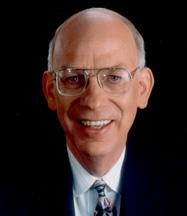
Historical · U.S. Senate · Utah
Robert Bennett
Former U.S. Senator from Utah · 1993–2011 · Republican · Class 3
Robert Bennett represented Utah in the United States Senate (1993–2011) for the Republican party. The page below collects sourced biographical facts, term history, committee roles, and provenance for Bennett.
Bioguide ID: B000382
Key facts
- Full name
- Robert Bennett
- State
- Utah
- Party
- Republican
- Senate class
- Class III
- Senate service
- 1993–2011
- First Senate term
- 1993
- Status
- Left office
- Current term ends
- —
- Born
- 1933
- Bioguide ID
- B000382
- Committee assignments
- —
- Dataset version
- 1.20260601-4
Biographical narrative
1,026 words · sourced from the Wikipedia REST extract
Robert F. Bennett was an American politician and businessman who served as a United States senator from Utah from 1993 until 2011. A member of the Republican Party, Bennett held various leadership roles and committee positions during his time in the Senate, where he was known for his conservative stance on many issues. His political career was marked by significant events, including a notable challenge from the Tea Party movement in the latter part of his tenure, which ultimately led to his departure from the Senate.
Early life and career
Robert Foster Bennett was born on September 18, 1933, in Salt Lake City, Utah. He was raised in a politically active family; his father, Wallace Foster Bennett, served as a U.S. Senator, and his grandfather, Heber J. Grant, was the seventh president of the Church of Jesus Christ of Latter-day Saints. This familial background provided Bennett with early exposure to politics and public service. He also had notable ancestors, including early mayors of Salt Lake City and prominent figures in the LDS Church.
Bennett attended East High School in Salt Lake City and later enrolled at the University of Utah, where he earned a Bachelor of Science degree in Political Science in 1957. While at the university, he was actively involved in student government, serving as the Student Body President, and was initiated into the Owl and Key honor society. After completing his education, Bennett joined the Utah Army National Guard, where he served on active duty for six months before being commissioned as a Chaplain, a role he maintained until 1960.
His professional career began in Washington, D.C., where he worked as press secretary for Congressman Sherman P. Lloyd in 1963. Following this role, he served as an administrative assistant to his father, Senator Wallace Bennett. In 1965, he became the head of the Governmental Affairs office for the J.C. Penney Company. His career in public service continued when he was appointed as the Director of Congressional Affairs in the U.S. Department of Transportation during the Nixon Administration, a position he held until 1971.
After leaving the Department of Transportation, Bennett purchased the Robert Mullen Company, a public relations firm in Washington, D.C. His work with the firm included involvement with various committees that facilitated corporate donations to Nixon's re-election campaign in 1972. In the years that followed, he held leadership positions in several companies, including serving as chairman of American Computer Corporation and president of Microsonics Corporation. In 1984, he became the CEO of the Franklin International Institute, which later evolved into Franklin Quest, a company known for producing Franklin Day Planners. Under his leadership, Franklin Quest was listed on the New York Stock Exchange in 1992. Bennett's entrepreneurial success earned him recognition as the Entrepreneur of the Year for the Rocky Mountain Region by Inc. Magazine.
Senate tenure
Bennett's political career took a significant turn when he decided to run for the U.S. Senate. In 1992, a Senate seat became available when incumbent Jake Garn opted not to seek a fourth term. Bennett won a competitive Republican primary election, securing approximately 51% of the votes against his opponent, Joseph A. Cannon. He then faced Democratic Congressman Wayne Owens in the general election, emerging victorious and officially beginning his Senate term in 1993.
During his time in the Senate, Bennett was re-elected in 1998 and again in 2004, reflecting a strong support base among Utah voters. However, his political landscape shifted dramatically in 2010 when he faced a challenging re-election campaign. In a crowded field that included seven Republican challengers and two Democratic candidates, Bennett's standing was notably affected by the rise of the Tea Party movement. Critics within this movement targeted him for his support of certain policies, including the bank bailout during the Bush administration, arguing that he was not conservative enough. Despite endorsements from prominent figures, including Mitt Romney, Bennett was ultimately unable to secure a place on the primary ballot after finishing third at the Utah State Republican Convention in May 2010.
Following his defeat, Bennett was encouraged by constituents and colleagues to consider a write-in campaign to retain his Senate seat. However, he declined this option, citing concerns about the divisive political climate that such a campaign might exacerbate.
Legislative focus and committees
Throughout his Senate career, Bennett was involved in various legislative efforts and held significant positions on several key committees. He served on the Banking, Housing and Urban Affairs Committee, the Appropriations Committee, the Rules and Administration Committee, the Energy and Natural Resources Committee, and the Joint Economic Committee. His roles on these committees allowed him to influence a wide range of policy areas, including economic development, energy policy, and budgetary matters.
Bennett was recognized for his conservative positions on many issues, earning favorable ratings from several conservative organizations, including the National Rifle Association Political Victory Fund and the American Conservative Union. His legislative focus often aligned with traditional Republican values, emphasizing fiscal responsibility and limited government intervention.
After leaving the Senate in 2011, Bennett transitioned into the private sector, joining the law firm Arent Fox as a senior policy advisor. He also became the chairman of the Bennett Group, a consulting firm with offices in both Salt Lake City and Washington, D.C. In 2013, he announced his intention to register as a lobbyist after the legally required two-year waiting period following his departure from office. Additionally, Bennett contributed to public discourse as a senior fellow at the Bipartisan Policy Center, where he concentrated on issues related to budget, energy, and health care. His academic involvement included teaching and lecturing at the University of Utah's Hinckley Institute of Politics and serving as a fellow at the George Washington University School of Media and Public Affairs. He also participated on the board of the German Marshall Fund, further extending his influence in both political and academic circles.
Bennett passed away on May 4, 2016, leaving behind a legacy shaped by his extensive career in public service and business. His tenure in the Senate and subsequent activities reflect a commitment to the political process and an engagement with key issues affecting both Utah and the nation.
Notable legislation
Sponsored and co-sponsored legislation for Robert Bennett is pending operator curation. The biographical narrative above carries the same provenance trail until per-bill rows are written.
Sources
- [1]https://en.wikipedia.org/wiki/Bob_Bennett_(politician)Wikipedia · retrieved 2026-06-01
Notable quotes
Sourced quotes for Robert Bennett are pending operator curation. Narrative-scope provenance remains attached below.
Sources
- [1]https://en.wikipedia.org/wiki/Bob_Bennett_(politician)Wikipedia · retrieved 2026-06-01
Key positions
Curated policy positions for Robert Bennett are pending operator review. The biographical narrative above carries the same provenance trail until per-topic positions are written.
Sources
- [1]https://en.wikipedia.org/wiki/Bob_Bennett_(politician)Wikipedia · retrieved 2026-06-01
Terms served
- 1993–1999U.S. Senate · Term 1 · Republican · Class III
- 1999–2005U.S. Senate · Term 2 · Republican · Class III
- 2005–2011U.S. Senate · Term 3 · Republican · Class III
Sources & provenance
Every attributable claim above carries a per-section [N] marker that resolves to the corresponding URL below. Each entry records the upstream provider, the canonical URL, and the timestamp at which the source was retrieved by the ingest pipeline.
Key facts
- https://bioguide.congress.gov/search/bio/B000382bioguide · retrieved 2026-06-01
- http://bennett.senate.govsenate.gov · retrieved 2026-06-01
Biographical narrative
- https://en.wikipedia.org/wiki/Bob_Bennett_(politician)wikipedia · retrieved 2026-06-01
Find your senator
Every U.S. state elects two senators. Browse Utah’s delegation, the full former-senator roster, or explore the role and term length.
Related on The Candidate
- Preceded by Jake GarnEarlier holder of the Utah Class III Senate seat · Republican.Open
- Abe Murdock Jr.Former U.S. Senator from Utah · DemocraticOpen
- Arthur BrownFormer U.S. Senator from Utah · RepublicanOpen
- Arthur WatkinsFormer U.S. Senator from Utah · RepublicanOpen
- Elbert ThomasFormer U.S. Senator from Utah · DemocraticOpen
- Republican PartyFederal candidates and office holders on the Republican line.Open