
Historical · U.S. Senate · Vermont
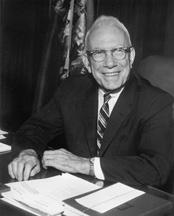
George Aiken
Former U.S. Senator from Vermont · 1941–1975 · Republican · Class 3
George Aiken represented Vermont in the United States Senate (1941–1975) for the Republican party. The page below collects sourced biographical facts, term history, committee roles, and provenance for Aiken.
Bioguide ID: A000062
Key facts
- Full name
- George Aiken
- State
- Vermont
- Party
- Republican
- Senate class
- Class III
- Senate service
- 1941–1975
- First Senate term
- 1941
- Status
- Left office
- Current term ends
- —
- Born
- 1892
- Bioguide ID
- A000062
- Committee assignments
- —
- Dataset version
- 1.20260602
Biographical narrative
869 words · sourced from the Wikipedia REST extract
George Aiken was a prominent American politician who served as a U.S. Senator from Vermont, representing the Republican Party. His tenure in the Senate spanned over three decades, beginning in 1941 and concluding in 1975. Aiken was known for his moderate political stance and his ability to work across party lines, contributing to various legislative efforts during a transformative period in American history.
Early life and career
George Aiken was born on August 20, 1892, in a small town in Vermont. He grew up in a rural environment that shaped his values and perspectives on agriculture and community. Aiken's early life was marked by a strong connection to the land, which would later influence his political priorities. He pursued education in local schools, where he developed a keen interest in public service and leadership.
Before entering politics, Aiken worked in various capacities, including as a farmer and a businessman. His experiences in agriculture provided him with firsthand knowledge of the challenges faced by rural communities, which would become a focal point of his political career. Aiken's engagement in local affairs eventually led him to seek public office, where he aimed to represent the interests of his constituents.
Aiken's political career began at the state level, where he served in the Vermont House of Representatives. His work in the state legislature helped him build a reputation as a dedicated public servant, committed to addressing the needs of Vermonters. His growing prominence in state politics paved the way for his election to the U.S. Senate, where he would serve for an extended period.
Senate tenure
George Aiken was elected to the U.S. Senate in 1941, marking the beginning of a significant chapter in his political career. He was part of the Senate Class 3 and served a total of six terms in this capacity. Aiken's tenure spanned a time of considerable change in the United States, including World War II, the Cold War, and the civil rights movement. Throughout these years, he established himself as a pragmatic legislator who prioritized bipartisanship and collaboration.
During his time in the Senate, Aiken was known for his willingness to engage with colleagues from both parties. His moderate views allowed him to navigate the complexities of a changing political landscape, and he often sought common ground on contentious issues. Aiken's approach to governance emphasized the importance of dialogue and cooperation, which resonated with many of his constituents and colleagues alike.
Aiken's influence in the Senate extended beyond party lines, as he was involved in various significant legislative efforts. His commitment to public service and his understanding of the needs of rural communities informed his work on agricultural policies and rural development initiatives. He advocated for programs that supported farmers and promoted sustainable agricultural practices, reflecting his background and the interests of his constituents.
Throughout his Senate career, Aiken faced various challenges, including shifts in political dynamics and evolving public sentiments. Despite these challenges, he remained a steadfast advocate for Vermont and its residents. His ability to adapt to changing circumstances and maintain a focus on the needs of his constituents contributed to his longevity in office.
Aiken's Senate career came to an end on January 3, 1975, when he completed his final term. His departure marked the conclusion of a significant era in Vermont's political history, as he had become a well-respected figure in the Senate. Aiken's legacy continued to influence Vermont politics and the Republican Party long after his retirement.
Legislative focus and committees
Throughout his tenure in the Senate, George Aiken focused on a range of legislative issues, with particular emphasis on agriculture, rural development, and environmental conservation. His background as a farmer informed his understanding of the challenges faced by the agricultural sector, and he consistently advocated for policies that supported farmers and rural communities.
Aiken was an active member of several Senate committees, where he played a crucial role in shaping legislation related to his areas of focus. His participation in these committees allowed him to influence key policies and advocate for the interests of his constituents effectively. Aiken's work on agricultural issues included support for programs that aimed to stabilize farm prices and promote sustainable farming practices.
In addition to his agricultural focus, Aiken was also concerned with environmental issues. He recognized the importance of preserving natural resources and promoting conservation efforts. His commitment to environmental stewardship was reflected in his support for legislation aimed at protecting Vermont's landscapes and ecosystems.
Aiken's legislative priorities were often shaped by the needs of his constituents and the changing political landscape. He was known for his ability to listen to the concerns of Vermonters and translate those concerns into actionable policies. His approach to governance emphasized the importance of community engagement and public input, which contributed to his effectiveness as a legislator.
Throughout his Senate career, Aiken maintained a reputation as a moderate Republican who sought to bridge divides and foster collaboration. His willingness to work with colleagues from both parties allowed him to navigate complex political issues and contribute to meaningful legislative outcomes. Aiken's legacy as a pragmatic and dedicated public servant continues to be recognized in discussions of Vermont's political history and the broader context of American governance.
Notable legislation
Sponsored and co-sponsored legislation for George Aiken is pending operator curation. The biographical narrative above carries the same provenance trail until per-bill rows are written.
Sources
- [1]https://en.wikipedia.org/wiki/George_AikenWikipedia · retrieved 2026-06-02
Notable quotes
Sourced quotes for George Aiken are pending operator curation. Narrative-scope provenance remains attached below.
Sources
- [1]https://en.wikipedia.org/wiki/George_AikenWikipedia · retrieved 2026-06-02
Key positions
Curated policy positions for George Aiken are pending operator review. The biographical narrative above carries the same provenance trail until per-topic positions are written.
Sources
- [1]https://en.wikipedia.org/wiki/George_AikenWikipedia · retrieved 2026-06-02
Terms served
- 1941–1945U.S. Senate · Term 1 · Republican · Class III
- 1945–1951U.S. Senate · Term 2 · Republican · Class III
- 1951–1957U.S. Senate · Term 3 · Republican · Class III
- 1957–1963U.S. Senate · Term 4 · Republican · Class III
- 1963–1969U.S. Senate · Term 5 · Republican · Class III
- 1969–1975U.S. Senate · Term 6 · Republican · Class III
Sources & provenance
Every attributable claim above carries a per-section [N] marker that resolves to the corresponding URL below. Each entry records the upstream provider, the canonical URL, and the timestamp at which the source was retrieved by the ingest pipeline.
Key facts
- https://bioguide.congress.gov/search/bio/A000062bioguide · retrieved 2026-06-02
- https://www.govtrack.us/congress/members/400722govtrack · retrieved 2026-06-02
Biographical narrative
- https://en.wikipedia.org/wiki/George_Aikenwikipedia · retrieved 2026-06-02
Find your senator
Every U.S. state elects two senators. Browse Vermont’s delegation, the full former-senator roster, or explore the role and term length.
Related on The Candidate
- Preceded by Ernest GibsonEarlier holder of the Vermont Class III Senate seat · Republican.Open
- Succeeded by Patrick LeahyLater holder of the Vermont Class III Senate seat · Democratic.Open
- Benjamin SwiftFormer U.S. Senator from Vermont · WhigOpen
- Carroll PageFormer U.S. Senator from Vermont · RepublicanOpen
- Dudley ChaseFormer U.S. Senator from Vermont · AdamsOpen
- Elijah PaineFormer U.S. Senator from Vermont · FederalistOpen