
Historical · U.S. Senate · Vermont
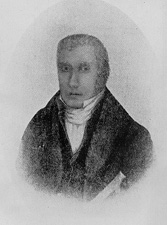
James Fisk
Former U.S. Senator from Vermont · 1817–1819 · Republican · Class 3
James Fisk represented Vermont in the United States Senate (1817–1819) for the Republican party. The page below collects sourced biographical facts, term history, committee roles, and provenance for Fisk.
Bioguide ID: F000154
Key facts
- Full name
- James Fisk
- State
- Vermont
- Party
- Republican
- Senate class
- Class III
- Senate service
- 1817–1819
- First Senate term
- 1817
- Status
- Left office
- Current term ends
- —
- Born
- 1763
- Bioguide ID
- F000154
- Committee assignments
- —
- Dataset version
- 1.20260602
Biographical narrative
922 words · sourced from the Wikipedia REST extract
James Fisk was an American politician from Vermont who served as a U.S. Senator and held various positions in state and local government. A member of the Republican Party, Fisk's political career spanned several decades, during which he was involved in both legislative and judicial roles. His tenure in the Senate was marked by a brief period of service, and he later took on the role of U.S. collector of customs for Vermont. Fisk's contributions to his state and country were shaped by his early life experiences, military service, and subsequent political engagements.
Early life and career
James Fisk was born on October 4, 1763, in Greenwich, which was part of the Province of Massachusetts Bay at the time of his birth. He was the son of Stephen Fisk and Anna Bradish. Tragically, his father passed away when James was just one year old, leaving him to grow up largely self-educated. As a teenager, he contributed to his family's livelihood by working on their farm, which instilled in him a strong work ethic and an understanding of rural life.
Fisk's early life was significantly shaped by his military service during the American Revolutionary War. He enlisted as a private in Captain Willis' Company, part of Colonel Brooks' Regiment, serving from 1779 to 1782. This experience not only contributed to his personal development but also instilled a sense of civic duty that would later influence his political career.
After the war, Fisk returned to farming in Greenwich. His political career began in earnest when he was elected to the Massachusetts General Court in 1785. In addition to his agricultural pursuits, he was ordained as a Universalist minister, a role he fulfilled intermittently throughout his life. In 1786, he married Priscilla West, and together they would raise a family.
In 1798, Fisk relocated to what is now Barre City, Vermont. There, he continued his work as a farmer while also pursuing a legal career. He studied law, was admitted to the bar, and became the first attorney in Barre. His involvement in local governance began when he was elected to the town's board of selectmen in 1799. Fisk's political influence grew as he represented Barre in the Vermont House of Representatives multiple times between 1800 and 1815. He also served as a judge on the Orange County Court from 1802 to 1809 and again in 1816. His contributions included being a member of the commission that selected Montpelier as the permanent site for Vermont's state capital and chairing a commission focused on resolving the Vermont-Canada boundary dispute.
Senate tenure
Fisk's congressional career began in earnest when he was elected to the United States House of Representatives as a Democratic-Republican in 1804. He served two terms from March 4, 1805, to March 3, 1809, and was reelected in 1806. However, he was unsuccessful in his bid for reelection in 1808. Fisk returned to the House in 1810, serving another two terms from March 4, 1811, to March 3, 1815. During this period, he held the position of chairman of the Committee on Elections.
In 1812, President James Madison appointed Fisk as a United States Judge for the Territory of Indiana, but he declined the appointment. He was also a delegate to the state constitutional convention in 1814 and served as a judge on the Supreme Court of Vermont from 1815 to 1816.
Fisk's tenure in the U.S. Senate began when he was elected in 1817 to fill the vacancy left by the resignation of Dudley Chase. He served in the Senate from November 4, 1817, until he resigned on January 8, 1818. His resignation was prompted by his appointment as the U.S. collector of customs for the district of Vermont, a position he held until 1826. Following his resignation from the Senate, Fisk moved to Swanton, Vermont, in 1819 to be closer to the Canadian border, where customs duties were collected.
Legislative focus and committees
Throughout his political career, Fisk was involved in various legislative matters and committees, particularly during his time in the House of Representatives. As chairman of the Committee on Elections, he played a role in overseeing election-related issues, which were crucial in shaping the democratic processes of the time. His experience as a judge and his legal background likely informed his approach to legislative matters, emphasizing fairness and adherence to the rule of law.
Fisk's legislative focus was influenced by his background as a farmer and a Universalist minister, which may have shaped his views on issues pertinent to rural communities and moral considerations in governance. His involvement in local and state government prior to his congressional service provided him with a deep understanding of the needs and concerns of his constituents.
After his Senate tenure, Fisk continued to serve the public in his role as collector of customs, where he was responsible for overseeing the collection of duties on goods entering the United States. This position was significant, especially given Vermont's proximity to Canada, which necessitated careful management of cross-border trade and customs regulations.
James Fisk passed away on November 17, 1844, in Swanton, Vermont. His legacy includes a diverse career in public service, marked by significant contributions to both state and national governance. He is remembered for his roles in the military, local government, and Congress, reflecting a commitment to public service that spanned several decades. His family also continued his legacy, with his daughter marrying Orlando Stevens, who served as Fisk's deputy collector and later held positions in the legislatures of both Vermont and Minnesota.
Notable legislation
Sponsored and co-sponsored legislation for James Fisk is pending operator curation. The biographical narrative above carries the same provenance trail until per-bill rows are written.
Sources
- [1]https://en.wikipedia.org/wiki/James_Fisk_(politician)Wikipedia · retrieved 2026-06-02
Notable quotes
Sourced quotes for James Fisk are pending operator curation. Narrative-scope provenance remains attached below.
Sources
- [1]https://en.wikipedia.org/wiki/James_Fisk_(politician)Wikipedia · retrieved 2026-06-02
Key positions
Curated policy positions for James Fisk are pending operator review. The biographical narrative above carries the same provenance trail until per-topic positions are written.
Sources
- [1]https://en.wikipedia.org/wiki/James_Fisk_(politician)Wikipedia · retrieved 2026-06-02
Terms served
- 1805–1807U.S. House · District 3 · Term 1 · Republican
- 1807–1809U.S. House · District 3 · Term 2 · Republican
- 1811–1813U.S. House · District 3 · Term 3 · Republican
- 1813–1815U.S. House · District 0 · Term 4 · Republican
- 1817–1819U.S. Senate · Term 5 · Republican · Class III
Sources & provenance
Every attributable claim above carries a per-section [N] marker that resolves to the corresponding URL below. Each entry records the upstream provider, the canonical URL, and the timestamp at which the source was retrieved by the ingest pipeline.
Key facts
- https://bioguide.congress.gov/search/bio/F000154bioguide · retrieved 2026-06-02
- https://www.govtrack.us/congress/members/404109govtrack · retrieved 2026-06-02
Biographical narrative
- https://en.wikipedia.org/wiki/James_Fisk_(politician)wikipedia · retrieved 2026-06-02
Find your senator
Every U.S. state elects two senators. Browse Vermont’s delegation, the full former-senator roster, or explore the role and term length.
Related on The Candidate
- Preceded by Stephen BradleyEarlier holder of the Vermont Class III Senate seat · Republican.Open
- Succeeded by Samuel PrentissLater holder of the Vermont Class III Senate seat · Whig.Open
- Benjamin SwiftFormer U.S. Senator from Vermont · WhigOpen
- Carroll PageFormer U.S. Senator from Vermont · RepublicanOpen
- Dudley ChaseFormer U.S. Senator from Vermont · AdamsOpen
- Elijah PaineFormer U.S. Senator from Vermont · FederalistOpen