
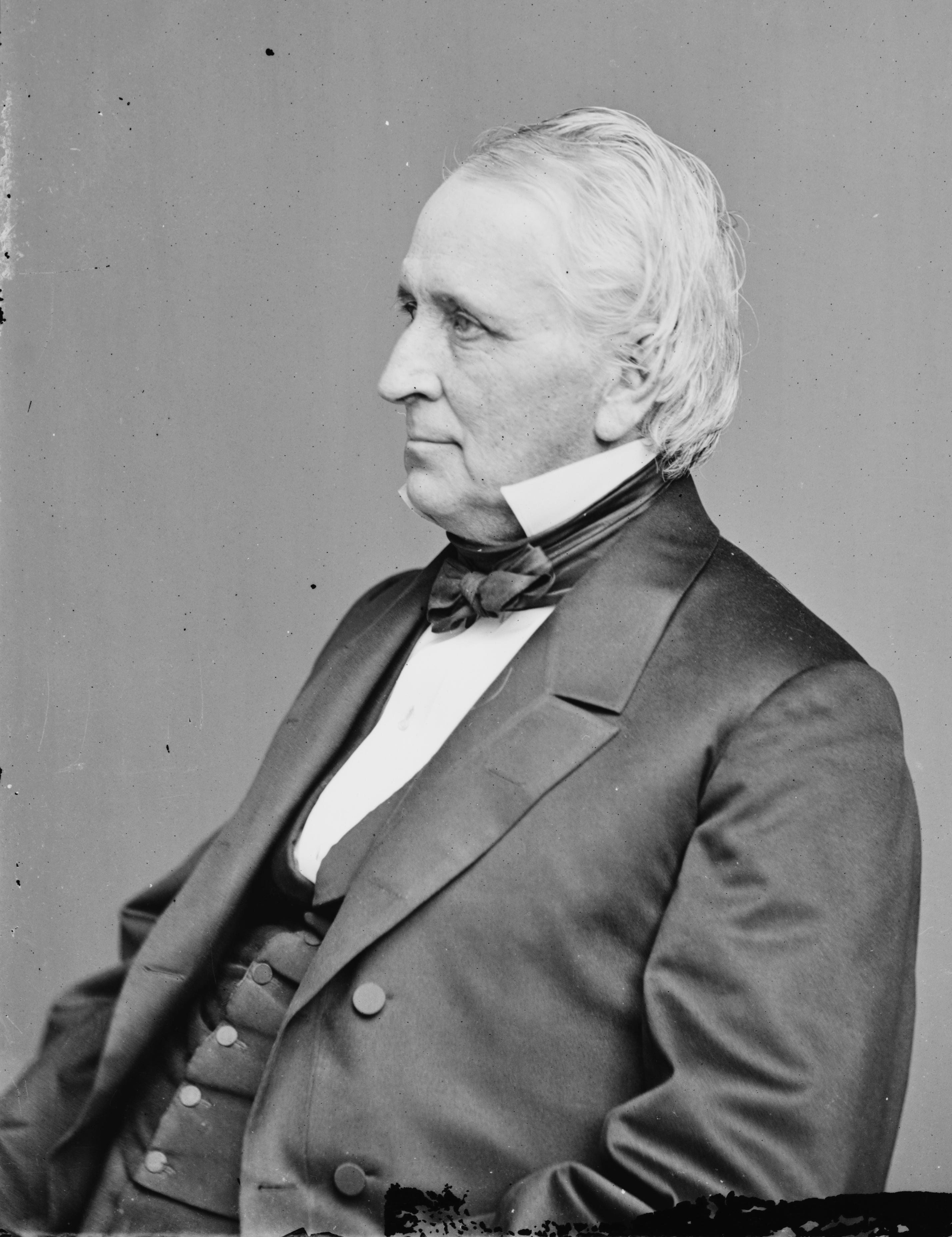
Historical · U.S. Senate · Vermont
Solomon Foot
Former U.S. Senator from Vermont · 1851–1867 · Republican · Class 1
Solomon Foot represented Vermont in the United States Senate (1851–1867) for the Republican party. The page below collects sourced biographical facts, term history, committee roles, and provenance for Foot.
Bioguide ID: F000248
Key facts
- Full name
- Solomon Foot
- State
- Vermont
- Party
- Republican
- Senate class
- Class I
- Senate service
- 1851–1867
- First Senate term
- 1851
- Status
- Left office
- Current term ends
- —
- Born
- 1802
- Bioguide ID
- F000248
- Committee assignments
- —
- Dataset version
- 1.20260602
Biographical narrative
804 words · sourced from the Wikipedia REST extract
Solomon Foot was an American politician and attorney who served as a United States Senator from Vermont. A member of the Republican Party, Foot's political career spanned several decades during which he held various significant positions, including Speaker of the Vermont House of Representatives and a member of the United States House of Representatives. His tenure in the Senate began in 1851 and lasted until his death in 1866, during which he was known for his advocacy for the Union during the American Civil War and his involvement in the construction of the United States Capitol.
Early life and career
Solomon Foot was born on November 19, 1802, in Cornwall, Vermont. He was the son of Dr. Solomon Foot and Betsey Crossett Foot. Following the death of his father when Foot was just nine years old, he took on work on local farms to help support his family. This early experience instilled in him a strong work ethic and a sense of responsibility. Foot pursued his education diligently, graduating from Middlebury College in 1826, where he also earned a master's degree.
After completing his studies, Foot engaged in various educational roles, including serving as a tutor in Middlebury and Burlington. He was the preceptor of Castleton Academy and later became a professor of natural philosophy at the Vermont Medical School located in Castleton. During this time, he also studied law under the guidance of attorneys Benjamin F. Langdon and Reuben R. Thrall. In 1831, he gained admission to the bar and subsequently opened a law practice in Rutland, Vermont.
Foot's entry into politics began with his election to the Vermont House of Representatives in 1833. He was also a delegate to the Vermont State Constitutional Convention in 1836. He returned to the Vermont House from 1836 to 1839, serving as Speaker from 1837 to 1839. In addition to his legislative roles, Foot held the position of Rutland County State's Attorney from 1836 to 1842, further establishing his reputation in public service.
Senate tenure
In 1850, Solomon Foot was elected to the United States Senate as a member of the Whig Party. His Senate career began on March 4, 1851, and he became a Republican with the founding of the party. He was reelected to the Senate in 1856 and again in 1862, serving until his death in 1866. During his time in the Senate, Foot was actively involved in significant national issues, particularly those surrounding the American Civil War.
In early 1861, Foot participated in a meeting with Vermont delegates at the Peace Conference, which aimed to prevent the onset of the Civil War. He expressed skepticism about the conference's effectiveness, viewing it as a tactic employed by secessionists to buy time for their plans to withdraw from the Union. His commitment to the Union was further demonstrated when he served as Chairman of the Senate committee responsible for the inauguration of President Abraham Lincoln in 1861.
Foot's role in the Senate expanded when he was appointed President pro tempore from 1861 to 1864. In this capacity, he often presided over Senate sessions, particularly during the Civil War, as Vice President Hannibal Hamlin was frequently absent. Foot was recognized for his ability to manage the Senate proceedings with tact and fairness, contributing to the legislative process during a tumultuous period in American history.
Legislative focus and committees
Throughout his Senate career, Solomon Foot was known for his strong advocacy for the Union and his involvement in various legislative initiatives. He served as the Chairman of the Joint Congressional Committee on Public Buildings and Grounds from 1861 until his passing. This committee was responsible for overseeing the completion of the United States Capitol's construction, a significant undertaking that symbolized the resilience of the nation during the Civil War.
Foot's legislative focus included issues related to national unity and infrastructure, reflecting the broader concerns of the time. His commitment to the Union was evident in his actions and speeches, as he worked to support policies that would strengthen the federal government and preserve the nation during a period of deep division.
In addition to his roles in the Senate, Foot's earlier political career included notable positions such as his service in the United States House of Representatives from 1843 to 1847, where he opposed the extension of slavery and the Mexican-American War. His principled stance on these issues contributed to his reputation as a dedicated public servant.
Solomon Foot passed away on March 28, 1866, in Washington, D.C. His contributions to the Senate and his commitment to the Union during a critical time in American history are remembered as part of his legacy. He was laid to rest at Evergreen Cemetery in Rutland, Vermont, marking the end of a significant chapter in the political landscape of the United States during the 19th century.
Notable legislation
Sponsored and co-sponsored legislation for Solomon Foot is pending operator curation. The biographical narrative above carries the same provenance trail until per-bill rows are written.
Sources
- [1]https://en.wikipedia.org/wiki/Solomon_FootWikipedia · retrieved 2026-06-02
Notable quotes
Sourced quotes for Solomon Foot are pending operator curation. Narrative-scope provenance remains attached below.
Sources
- [1]https://en.wikipedia.org/wiki/Solomon_FootWikipedia · retrieved 2026-06-02
Key positions
Curated policy positions for Solomon Foot are pending operator review. The biographical narrative above carries the same provenance trail until per-topic positions are written.
Sources
- [1]https://en.wikipedia.org/wiki/Solomon_FootWikipedia · retrieved 2026-06-02
Terms served
- 1843–1845U.S. House · District 1 · Term 1 · Whig
- 1845–1847U.S. House · District 1 · Term 2 · Whig
- 1851–1857U.S. Senate · Term 3 · Ind. Republican-Democrat · Class I
- 1857–1863U.S. Senate · Term 4 · Republican · Class I
- 1863–1867U.S. Senate · Term 5 · Republican · Class I
Sources & provenance
Every attributable claim above carries a per-section [N] marker that resolves to the corresponding URL below. Each entry records the upstream provider, the canonical URL, and the timestamp at which the source was retrieved by the ingest pipeline.
Key facts
- https://bioguide.congress.gov/search/bio/F000248bioguide · retrieved 2026-06-02
- https://www.govtrack.us/congress/members/404201govtrack · retrieved 2026-06-02
Biographical narrative
- https://en.wikipedia.org/wiki/Solomon_Footwikipedia · retrieved 2026-06-02
Find your senator
Every U.S. state elects two senators. Browse Vermont’s delegation, the full former-senator roster, or explore the role and term length.
Related on The Candidate
- Preceded by Benjamin SwiftEarlier holder of the Vermont Class I Senate seat · Whig.Open
- Succeeded by Redfield ProctorLater holder of the Vermont Class I Senate seat · Republican.Open
- Carroll PageFormer U.S. Senator from Vermont · RepublicanOpen
- Dudley ChaseFormer U.S. Senator from Vermont · AdamsOpen
- Elijah PaineFormer U.S. Senator from Vermont · FederalistOpen
- Republican PartyFederal candidates and office holders on the Republican line.Open