
Historical · U.S. Senate · West Virginia
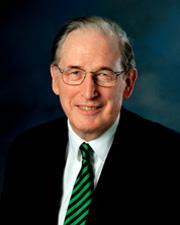
Jay Rockefeller IV
Former U.S. Senator from West Virginia · 1985–2015 · Democratic · Class 2
Jay Rockefeller IV represented West Virginia in the United States Senate (1985–2015) for the Democratic party. The page below collects sourced biographical facts, term history, committee roles, and provenance for IV.
Bioguide ID: R000361
Key facts
- Full name
- Jay Rockefeller IV
- State
- West Virginia
- Party
- Democratic
- Senate class
- Class II
- Senate service
- 1985–2015
- First Senate term
- 1985
- Status
- Left office
- Current term ends
- —
- Born
- 1937
- Bioguide ID
- R000361
- Committee assignments
- —
- Dataset version
- 1.20260602
Biographical narrative
927 words · sourced from the Wikipedia REST extract
John D. Rockefeller IV is a retired American politician who served as a United States Senator from West Virginia from 1985 until 2015. A member of the Democratic Party, Rockefeller's political career also includes a tenure as the Governor of West Virginia from 1977 to 1985. Born into the prominent Rockefeller family, he has been involved in public service for several decades, focusing on healthcare reform, veterans' issues, and economic development.
Early life and career
John Davison Rockefeller IV was born on June 18, 1937, in Manhattan, New York City, to John Davison Rockefeller III and Blanchette Ferry Hooker. He is a descendant of the renowned Rockefeller family, being the grandson of John D. Rockefeller Jr. His early life was marked by privilege and education, as he graduated from Phillips Exeter Academy in 1955. Following high school, he attended Harvard University, where he majored in Far Eastern languages and history, graduating in 1961. During his time at Harvard, Rockefeller spent a significant period studying Japanese at the International Christian University in Tokyo.
After completing his undergraduate studies, Rockefeller engaged in public service through the Peace Corps, where he worked in Washington, D.C., under President John F. Kennedy. He developed a close relationship with Attorney General Robert F. Kennedy during this time and served as the operations director for the Corps' largest overseas program in the Philippines. Following his Peace Corps service, he briefly worked in the Bureau of East Asian and Pacific Affairs before continuing his commitment to public service with the Volunteers in Service to America (VISTA) program in 1964, which led him to relocate to Emmons, West Virginia.
Rockefeller's political career began in earnest when he was elected to the West Virginia House of Delegates in 1966. His political aspirations continued to grow, and he was elected as West Virginia's Secretary of State in 1968. Although he sought the governorship in 1972, he was unsuccessful in that election against the Republican incumbent. Following this setback, he served as president of West Virginia Wesleyan College from 1973 to 1975. His political fortunes changed when he was elected Governor of West Virginia in 1976, a position he held until 1985, during which he was re-elected in 1980. His governorship coincided with a challenging economic period for the state, marked by the closure of manufacturing plants and coal mines, leading to high unemployment rates.
Senate tenure
Rockefeller's transition to the U.S. Senate began when he was elected in 1984, narrowly defeating businessman John Raese. His election occurred during a period when Ronald Reagan was popular in West Virginia, yet Rockefeller managed to secure his seat despite the political climate. He invested significant resources into his campaign, spending over $12 million to win the Senate seat. Following his initial election, he was re-elected multiple times, securing victories in 1990, 1996, 2002, and 2008 by substantial margins.
Throughout his Senate career, Rockefeller held several key leadership positions. He served as the chair of the Senate Committee on Veterans' Affairs during multiple terms, focusing on issues affecting veterans, including healthcare and treatment for service-related illnesses. He also chaired the Senate Committee on Commerce, Science, and Transportation from 2009 until the end of his Senate tenure in 2015. Additionally, he was a member of the Senate Intelligence Committee, where he provided commentary on national security issues, particularly during the Iraq War.
In 1992, Rockefeller briefly considered a run for the presidency but ultimately decided against it, choosing instead to support Bill Clinton's candidacy. His involvement in national politics included a prominent role in the Democratic Party, where he served as the finance chairman. He was a key supporter of healthcare reform initiatives, notably working alongside Ted Kennedy to support the Clinton administration's healthcare reform efforts in the early 1990s, although these efforts ultimately did not succeed.
Legislative focus and committees
Rockefeller's legislative focus during his time in the Senate was primarily centered on healthcare, veterans' affairs, and economic development. He became a leading advocate for healthcare reform, emphasizing the need for modernized Medicare and expanded access to healthcare services. One of his significant legislative achievements was the establishment of the Children's Health Insurance Program (CHIP), which has provided healthcare coverage to millions of low-income children across the United States.
In addition to his healthcare initiatives, Rockefeller was deeply committed to veterans' issues. He served on the Senate Committee on Veterans' Affairs for his entire Senate career, advocating for improvements in the Veterans Affairs healthcare system and addressing the needs of veterans suffering from service-related conditions. His efforts included pushing for increased research and treatment options for illnesses such as Gulf War Illness and those related to Agent Orange exposure.
Rockefeller's tenure in the Senate also included a focus on economic issues, particularly those affecting West Virginia. He worked to address the challenges faced by the state's economy, which was heavily reliant on coal and manufacturing. His leadership roles in various Senate committees allowed him to influence legislation that aimed to support economic development and job creation in West Virginia.
Rockefeller became the senior U.S. senator from West Virginia following the death of long-serving Senator Robert Byrd in June 2010. He chose not to seek re-election in 2014, concluding his Senate career on January 3, 2015. His departure marked the end of a significant political era for West Virginia, as he was succeeded by Republican U.S. Representative Shelley Moore Capito. Notably, Rockefeller is the only member of the Rockefeller family to have held office as a Democrat, reflecting the political diversity within a family traditionally associated with the Republican Party.
Notable legislation
Sponsored and co-sponsored legislation for Jay Rockefeller IV is pending operator curation. The biographical narrative above carries the same provenance trail until per-bill rows are written.
Sources
- [1]https://en.wikipedia.org/wiki/Jay_RockefellerWikipedia · retrieved 2026-06-02
Notable quotes
Sourced quotes for Jay Rockefeller IV are pending operator curation. Narrative-scope provenance remains attached below.
Sources
- [1]https://en.wikipedia.org/wiki/Jay_RockefellerWikipedia · retrieved 2026-06-02
Key positions
Curated policy positions for Jay Rockefeller IV are pending operator review. The biographical narrative above carries the same provenance trail until per-topic positions are written.
Sources
- [1]https://en.wikipedia.org/wiki/Jay_RockefellerWikipedia · retrieved 2026-06-02
Terms served
- 1985–1991U.S. Senate · Term 1 · Democratic · Class II
- 1991–1997U.S. Senate · Term 2 · Democratic · Class II
- 1997–2003U.S. Senate · Term 3 · Democratic · Class II
- 2003–2009U.S. Senate · Term 4 · Democratic · Class II
- 2009–2015U.S. Senate · Term 5 · Democratic · Class II
Sources & provenance
Every attributable claim above carries a per-section [N] marker that resolves to the corresponding URL below. Each entry records the upstream provider, the canonical URL, and the timestamp at which the source was retrieved by the ingest pipeline.
Key facts
- https://bioguide.congress.gov/search/bio/R000361bioguide · retrieved 2026-06-02
- http://www.rockefeller.senate.govsenate.gov · retrieved 2026-06-02
Biographical narrative
- https://en.wikipedia.org/wiki/Jay_Rockefellerwikipedia · retrieved 2026-06-02
Find your senator
Every U.S. state elects two senators. Browse West Virginia’s delegation, the full former-senator roster, or explore the role and term length.
Related on The Candidate
- Preceded by Jennings RandolphEarlier holder of the West Virginia Class II Senate seat · Democratic.Open
- Allen CapertonFormer U.S. Senator from West Virginia · DemocraticOpen
- Arthur BoremanFormer U.S. Senator from West Virginia · RepublicanOpen
- Carte GoodwinFormer U.S. Senator from West Virginia · DemocraticOpen
- Charles FaulknerFormer U.S. Senator from West Virginia · DemocraticOpen
- Democratic PartyFederal candidates and office holders on the Democratic line.Open