
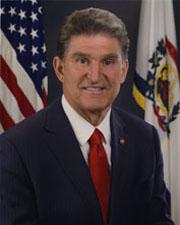
Historical · U.S. Senate · West Virginia
Joe Manchin III
Former U.S. Senator from West Virginia · 2010–2025 · Independent · Class 1
Joe Manchin III represented West Virginia in the United States Senate (2010–2025) for the Independent party. The page below collects sourced biographical facts, term history, committee roles, and provenance for III.
Bioguide ID: M001183
Key facts
- Full name
- Joe Manchin III
- State
- West Virginia
- Party
- Independent
- Senate class
- Class I
- Senate service
- 2010–2025
- First Senate term
- 2010
- Status
- Left office
- Current term ends
- —
- Born
- 1947
- Bioguide ID
- M001183
- Committee assignments
- —
- Dataset version
- 1.20260602
Biographical narrative
1,007 words · sourced from the Wikipedia REST extract
Joseph Anthony Manchin III is an American politician and businessman who served as a United States Senator from West Virginia. He was a member of the Democratic Party for most of his political career, later becoming an Independent in 2024. Manchin's political journey includes significant roles as the Secretary of State and Governor of West Virginia before his election to the U.S. Senate. He is known for his centrist positions and has often been regarded as a pivotal figure in the Senate, particularly during times of political division.
Early life and career
Joseph Anthony Manchin III was born on August 24, 1947, in Farmington, West Virginia, a small town with deep ties to the coal industry. He is the second of five children born to Mary Olga and John Manchin. The Manchin family has a rich heritage, with Italian roots on his father's side and Czech ancestry on his mother's side. His paternal grandparents emigrated from Calabria, Italy, while his maternal grandparents came from the Moravian-Silesian Region of the Czech Republic.
Growing up in a family with a strong community presence, Manchin's father owned a carpet and furniture store, and both his father and grandfather served as mayors of Farmington. Additionally, his uncle, A. James Manchin, held various political offices, including positions in the West Virginia House of Delegates and as Secretary of State and Treasurer of West Virginia. This familial background likely influenced Manchin's eventual foray into politics.
Manchin graduated from Farmington High School in 1965 and attended West Virginia University on a football scholarship. However, an injury during practice curtailed his athletic aspirations. In 1967, he was drafted into the U.S. Army but was deemed unfit for service due to his injury. In 1968, following a significant personal setback when his family's store burned down, Manchin took a semester off from college to assist in rebuilding the business, which was subsequently renamed Manchin's Carpet Center. He completed his degree in business administration in 1970 and began working in the family business.
In 1988, Manchin co-founded Enersystems, a waste coal brokerage company based in Fairmont, West Virginia. He served as president of the company until 2000, when he transitioned into a full-time political career. Under his leadership, Enersystems became a significant player in the coal industry, and Manchin's involvement in the business sector laid the groundwork for his understanding of economic issues, particularly those affecting West Virginia.
Senate tenure
Manchin's political career began in earnest when he was elected to the West Virginia House of Delegates in 1982. He served in this capacity until 1986, when he was elected to the West Virginia Senate, where he remained until 1996. After a brief hiatus from the political spotlight, he was elected Secretary of State of West Virginia in 2000, securing a significant victory against his Libertarian opponent.
In 2004, Manchin successfully ran for Governor of West Virginia, winning both the Democratic primary and the general election by substantial margins. His governorship marked a notable period in West Virginia's political landscape, as he became the first governor from the same party to succeed another since 1964. During his time as governor, he focused on various initiatives, including education reform and economic development.
Manchin's entry into the U.S. Senate came in 2010 when he won a special election to fill the vacancy left by the late Senator Robert Byrd. He subsequently won a full term in 2012 and was re-elected in 2018. Throughout his Senate career, which lasted until January 3, 2025, Manchin became known for his centrist positions and willingness to work across party lines. His tenure coincided with a period of significant political polarization in the United States, particularly following the 2020 elections, which resulted in a 50-50 split in the Senate.
As a member of the Senate, Manchin often found himself in the role of a swing vote, particularly during critical legislative moments when the Democratic Party held a slim majority through the vice president's tiebreaking vote. His ability to navigate the complexities of a divided Senate made him a key figure in discussions on various issues, including infrastructure, healthcare, and energy policy.
In 2023, Manchin announced that he would not seek re-election in 2024, marking a significant transition in his political career. The following year, he officially left the Democratic Party to become an Independent, reflecting the changing political landscape in West Virginia and his own evolving political identity.
Legislative focus and committees
During his time in the U.S. Senate, Manchin's legislative focus was characterized by a commitment to bipartisanship and a pragmatic approach to governance. He often emphasized the importance of working across party lines to achieve meaningful policy outcomes, particularly in an era of heightened political division. His centrist stance allowed him to engage with both Democratic and Republican colleagues on various issues.
Manchin served on several Senate committees, which provided him with platforms to influence key areas of policy. His committee assignments included those related to energy, natural resources, and infrastructure, reflecting his background in the coal industry and his interest in economic development for West Virginia. He advocated for policies that aimed to balance environmental concerns with the economic needs of his state, often emphasizing the importance of job creation and energy independence.
Throughout his Senate career, Manchin was involved in discussions surrounding major legislative initiatives, including infrastructure spending, healthcare reform, and climate change legislation. His role as a centrist allowed him to be a crucial player in negotiations, often bridging the gap between more progressive and conservative members of the Senate.
Manchin's legislative actions and public statements frequently underscored his commitment to the interests of West Virginians, advocating for policies that would benefit the state's economy and workforce. His tenure was marked by a focus on issues relevant to his constituents, including support for the coal industry, healthcare access, and rural development.
As he concluded his Senate career in early 2025, Manchin's legacy reflects a complex interplay of political ideology, regional interests, and a commitment to bipartisanship, positioning him as a notable figure in contemporary American politics.
Notable legislation
Sponsored and co-sponsored legislation for Joe Manchin III is pending operator curation. The biographical narrative above carries the same provenance trail until per-bill rows are written.
Sources
- [1]https://en.wikipedia.org/wiki/Joe_ManchinWikipedia · retrieved 2026-06-02
Notable quotes
Sourced quotes for Joe Manchin III are pending operator curation. Narrative-scope provenance remains attached below.
Sources
- [1]https://en.wikipedia.org/wiki/Joe_ManchinWikipedia · retrieved 2026-06-02
Key positions
Curated policy positions for Joe Manchin III are pending operator review. The biographical narrative above carries the same provenance trail until per-topic positions are written.
Sources
- [1]https://en.wikipedia.org/wiki/Joe_ManchinWikipedia · retrieved 2026-06-02
Terms served
- 2010–2013U.S. Senate · Term 1 · Democratic · Class I
- 2013–2019U.S. Senate · Term 2 · Democratic · Class I
- 2019–2025U.S. Senate · Term 3 · Independent · Class I
Sources & provenance
Every attributable claim above carries a per-section [N] marker that resolves to the corresponding URL below. Each entry records the upstream provider, the canonical URL, and the timestamp at which the source was retrieved by the ingest pipeline.
Key facts
- https://bioguide.congress.gov/search/bio/M001183bioguide · retrieved 2026-06-02
- https://www.manchin.senate.govsenate.gov · retrieved 2026-06-02
Biographical narrative
- https://en.wikipedia.org/wiki/Joe_Manchinwikipedia · retrieved 2026-06-02
Find your senator
Every U.S. state elects two senators. Browse West Virginia’s delegation, the full former-senator roster, or explore the role and term length.
Related on The Candidate
- Preceded by Carte GoodwinEarlier holder of the West Virginia Class I Senate seat · Democratic.Open
- Allen CapertonFormer U.S. Senator from West Virginia · DemocraticOpen
- Arthur BoremanFormer U.S. Senator from West Virginia · RepublicanOpen
- Charles FaulknerFormer U.S. Senator from West Virginia · DemocraticOpen
- Independent PartyFederal candidates and office holders on the Independent line.Open
- Senators from West VirginiaEvery former U.S. Senator who has represented West Virginia.Open