
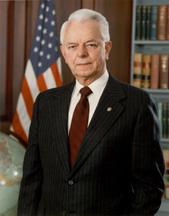
Historical · U.S. Senate · West Virginia
Robert Byrd
Former U.S. Senator from West Virginia · 1959–2010 · Democratic · Class 1
Robert Byrd represented West Virginia in the United States Senate (1959–2010) for the Democratic party. The page below collects sourced biographical facts, term history, committee roles, and provenance for Byrd.
Bioguide ID: B001210
Key facts
- Full name
- Robert Byrd
- State
- West Virginia
- Party
- Democratic
- Senate class
- Class I
- Senate service
- 1959–2010
- First Senate term
- 1959
- Status
- Left office
- Current term ends
- —
- Born
- 1917
- Bioguide ID
- B001210
- Committee assignments
- —
- Dataset version
- 1.20260602
Biographical narrative
922 words · sourced from the Wikipedia REST extract
Robert C. Byrd was a prominent American politician who served as a United States Senator from West Virginia for nearly five decades. A member of the Democratic Party, Byrd's tenure in the Senate began in 1959 and continued until his passing in 2010. He was known for his extensive knowledge of legislative procedures and his dedication to his constituents, which earned him a reputation as a powerful figure in American politics. Byrd's long career in public service is marked by his commitment to the state of West Virginia and his influence on national legislation.
Early life and career
Robert C. Byrd was born on November 20, 1917, in North Wilkesboro, North Carolina. He grew up in a modest environment, which shaped his understanding of the challenges faced by working-class families. Byrd's early life was characterized by hardship, as his family struggled financially during the Great Depression. This experience instilled in him a strong work ethic and a commitment to public service.
Byrd's formal education began in the public school system, where he demonstrated academic promise. He later attended Marshall University in West Virginia, where he studied political science. His academic pursuits were interrupted by World War II, during which he served in the United States Army. After the war, Byrd returned to West Virginia, where he began his political career.
Before entering the Senate, Byrd held various local and state positions. He was first elected to the West Virginia House of Delegates in 1946, where he served for a brief period. His political career continued to ascend as he was elected to the West Virginia Senate in 1950. Byrd's dedication to his constituents and his growing influence within the Democratic Party positioned him as a strong candidate for the U.S. Senate.
Senate tenure
Robert C. Byrd was elected to the U.S. Senate in 1958, beginning a lengthy and impactful tenure that would last until his death in 2010. He was re-elected multiple times, solidifying his status as a key figure in the Senate. Byrd's tenure spanned significant periods in American history, including the Civil Rights Movement, the Vietnam War, and the post-9/11 era.
Throughout his time in the Senate, Byrd was known for his deep understanding of legislative processes and his ability to navigate complex political landscapes. He served in various leadership roles, including as the Senate Majority Leader and the President pro tempore of the Senate. His extensive experience and seniority allowed him to wield considerable influence over legislative decisions and the direction of national policy.
Byrd was a staunch advocate for West Virginia, consistently working to secure funding for infrastructure projects, education, and healthcare in the state. He was known for his ability to bring federal resources to West Virginia, which helped to improve the quality of life for many residents. Byrd's commitment to his state was evident in his efforts to address issues such as coal mining, economic development, and job creation.
During his time in the Senate, Byrd also played a significant role in shaping national policy on various issues, including civil rights, education, and foreign affairs. His legislative efforts often reflected his belief in the importance of government intervention to improve the lives of citizens. Byrd's long service in the Senate made him one of the most senior members, allowing him to mentor younger legislators and influence the next generation of political leaders.
Legislative focus and committees
Throughout his Senate career, Robert C. Byrd focused on a wide range of legislative issues, reflecting both his personal convictions and the needs of his constituents. He was particularly known for his work on appropriations and budget matters, serving on the Senate Appropriations Committee for many years. His role on this committee allowed him to advocate for funding that directly benefited West Virginia and its residents.
Byrd was also a member of several other important committees, including the Senate Judiciary Committee and the Senate Foreign Relations Committee. His involvement in these committees enabled him to engage with critical issues such as judicial appointments, civil rights legislation, and international relations. Byrd's expertise in these areas contributed to his reputation as a knowledgeable and respected lawmaker.
In addition to his committee work, Byrd was known for his commitment to education and the arts. He championed initiatives aimed at improving educational opportunities and access to cultural resources in West Virginia. Byrd's advocacy for education was evident in his support for federal funding for schools and universities, as well as his efforts to promote vocational training programs.
Byrd's legislative focus also included a strong emphasis on civil rights. He initially faced criticism for his early opposition to certain civil rights measures, but over time, he became a vocal supporter of civil rights legislation. His evolution on this issue reflected a broader change in American society and demonstrated his ability to adapt to the changing political landscape.
Throughout his career, Byrd's legislative efforts were characterized by a commitment to bipartisanship and collaboration. He often sought to work across party lines to achieve common goals, believing that effective governance required cooperation and compromise. Byrd's ability to build relationships with colleagues from both parties contributed to his success in passing significant legislation.
In summary, Robert C. Byrd's long and distinguished career in the U.S. Senate was marked by his dedication to public service, his advocacy for West Virginia, and his influence on national policy. His extensive knowledge of legislative processes and his commitment to his constituents made him a significant figure in American politics, leaving a lasting legacy that continues to be felt today.
Notable legislation
Sponsored and co-sponsored legislation for Robert Byrd is pending operator curation. The biographical narrative above carries the same provenance trail until per-bill rows are written.
Sources
- [1]https://en.wikipedia.org/wiki/Robert_ByrdWikipedia · retrieved 2026-06-02
Notable quotes
Sourced quotes for Robert Byrd are pending operator curation. Narrative-scope provenance remains attached below.
Sources
- [1]https://en.wikipedia.org/wiki/Robert_ByrdWikipedia · retrieved 2026-06-02
Key positions
Curated policy positions for Robert Byrd are pending operator review. The biographical narrative above carries the same provenance trail until per-topic positions are written.
Sources
- [1]https://en.wikipedia.org/wiki/Robert_ByrdWikipedia · retrieved 2026-06-02
Terms served
- 1953–1955U.S. House · District 6 · Term 1 · Democratic
- 1955–1957U.S. House · District 6 · Term 2 · Democratic
- 1957–1959U.S. House · District 6 · Term 3 · Democratic
- 1959–1965U.S. Senate · Term 4 · Democratic · Class I
- 1965–1971U.S. Senate · Term 5 · Democratic · Class I
- 1971–1977U.S. Senate · Term 6 · Democratic · Class I
- 1977–1983U.S. Senate · Term 7 · Democratic · Class I
- 1983–1989U.S. Senate · Term 8 · Democratic · Class I
- 1989–1995U.S. Senate · Term 9 · Democratic · Class I
- 1995–2001U.S. Senate · Term 10 · Democratic · Class I
- 2001–2007U.S. Senate · Term 11 · Democratic · Class I
- 2007–2010U.S. Senate · Term 12 · Democratic · Class I
Sources & provenance
Every attributable claim above carries a per-section [N] marker that resolves to the corresponding URL below. Each entry records the upstream provider, the canonical URL, and the timestamp at which the source was retrieved by the ingest pipeline.
Key facts
- https://bioguide.congress.gov/search/bio/B001210bioguide · retrieved 2026-06-02
- http://byrd.senate.govsenate.gov · retrieved 2026-06-02
Biographical narrative
- https://en.wikipedia.org/wiki/Robert_Byrdwikipedia · retrieved 2026-06-02
Find your senator
Every U.S. state elects two senators. Browse West Virginia’s delegation, the full former-senator roster, or explore the role and term length.
Related on The Candidate
- Preceded by William RevercombEarlier holder of the West Virginia Class I Senate seat · Republican.Open
- Succeeded by Carte GoodwinLater holder of the West Virginia Class I Senate seat · Democratic.Open
- Allen CapertonFormer U.S. Senator from West Virginia · DemocraticOpen
- Arthur BoremanFormer U.S. Senator from West Virginia · RepublicanOpen
- Charles FaulknerFormer U.S. Senator from West Virginia · DemocraticOpen
- Democratic PartyFederal candidates and office holders on the Democratic line.Open