
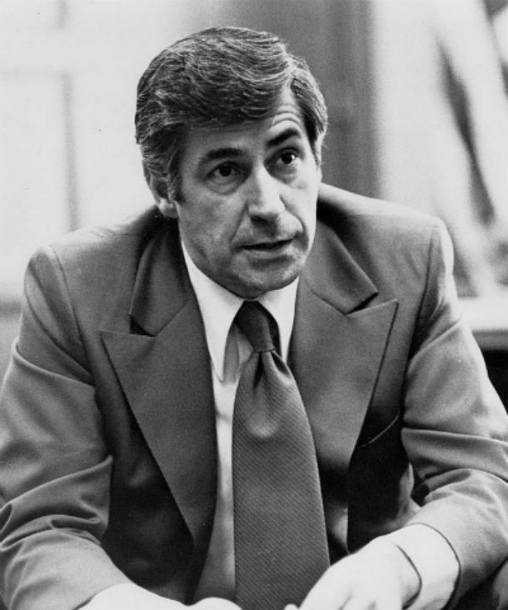
Former · State House · Alaska
Mike Gravel
Former State Representative · Alaska · District 8 · Democratic
Mike Gravel served as a State Representative in the Alaska House of Representatives, representing District 8 for the Democratic party. The page below collects sourced biographical facts, the seat and district served, and provenance for Gravel.
Key facts
- Full name
- Mike Gravel
- Office
- State Representative
- Chamber
- Alaska House of Representatives
- State
- Alaska
- District
- District 8
- Party
- Democratic
- Status
- Left office
- Born
- 1930
- OpenStates ID
- —
- Dataset version
- 1.20260610
Biographical narrative
890 words · sourced from the Wikipedia REST extract
Maurice Robert "Mike" Gravel was an American politician and writer who served as a member of the Alaska State House of Representatives and later represented Alaska in the United States Senate. Born on May 13, 1930, in Springfield, Massachusetts, Gravel's political career spanned several decades, during which he became known for his advocacy on various issues, including direct democracy and opposition to the Vietnam War. He also made two presidential runs, one in 2008 and another in 2020, and was a prominent figure in discussions about the National Initiative. Gravel's life and career reflect a commitment to public service and a distinctive approach to political engagement.
Early life and career
Mike Gravel was born into a working-class family as one of five children to French-Canadian immigrant parents, Alphonse and Marie Gravel. His upbringing in a predominantly French-speaking household shaped his early experiences, as he did not learn English until he was seven years old. Growing up during the Great Depression, Gravel faced various challenges, including struggles in school due to undiagnosed dyslexia, which led to him being held back in third grade. Despite these challenges, he completed elementary school in 1945, where he was recognized by his peers for his charm.
Gravel's early exposure to politics began with a summer job as a soda jerk, where he distributed campaign flyers for local candidates. This experience ignited his interest in political office. He continued his education at Assumption Preparatory School in Worcester, Massachusetts, where he initially performed poorly academically. However, a supportive English teacher helped him improve his language skills and public speaking abilities, leading to better grades and his eventual graduation in 1949.
After high school, Gravel attended Assumption College for one year before transferring to American International College in Springfield, Massachusetts. Influenced by prominent figures such as journalist I. F. Stone and philosopher Bertrand Russell, he began to question societal norms and political authority. In 1951, facing the prospect of being drafted into the military, Gravel enlisted in the U.S. Army, where he served in the Counterintelligence Corps. His military service included assignments in West Germany and France, where he conducted surveillance operations and infiltrated communist rallies.
Following his discharge from the Army, Gravel pursued higher education at Columbia University in New York City, earning a Bachelor of Science degree in economics in 1956. During this time, he supported himself through various jobs, including working as a bar boy and driving a taxi. Eventually, he made the decision to move to Alaska, seeking new opportunities in a less established political landscape.
Legislative service
Gravel relocated to Alaska in August 1956, at a time when the territory was on the brink of statehood. His move was motivated by a desire to become a political pioneer in a place where he believed he could make a significant impact without the constraints of established social or political connections. The state's lower voting age of 19 also attracted him, as it provided a unique opportunity for younger individuals to engage in the political process.
Upon arriving in Alaska, Gravel initially struggled financially but quickly found work in real estate sales. He later worked as a brakeman for the Alaska Railroad during the winter months. Eventually, he established a small real estate brokerage in Anchorage, which allowed him to gain financial stability and pursue his political ambitions.
Gravel's entry into politics began when he was elected to the Alaska House of Representatives, where he served from 1963 to 1967. During his tenure, he became known for his leadership skills and was elected Speaker of the House. His legislative experience laid the groundwork for his subsequent campaign for the U.S. Senate, which he successfully won in 1968.
Policy focus and district
As a member of the Alaska State House, Gravel focused on various issues pertinent to his constituents and the state as a whole. His legislative work was characterized by a commitment to progressive ideals and a willingness to challenge the status quo. Gravel's advocacy for direct democracy and the National Initiative reflected his belief in empowering citizens to have a more direct role in governance.
After serving in the Alaska House, Gravel's political career continued to evolve when he was elected to the U.S. Senate, where he served from 1969 to 1981. His time in the Senate was marked by significant national attention, particularly for his opposition to the Vietnam War and his efforts to end the military draft. Gravel's actions, including his role in making the Pentagon Papers public, showcased his dedication to transparency and accountability in government.
Throughout his career, Gravel remained engaged with the political landscape, running for the Democratic presidential nomination in both 2008 and 2020. Although these campaigns did not achieve significant traction, they underscored his ongoing commitment to advocating for progressive policies and engaging with the electorate.
In addition to his political endeavors, Gravel was involved in various initiatives aimed at promoting civic engagement and political reform. He co-founded The Gravel Institute, a progressive think tank, which sought to advance ideas aligned with his vision for a more participatory democracy.
Gravel's legacy is shaped by his unique journey from a working-class upbringing to a prominent political figure in Alaska and the United States. His contributions to the legislative process and his advocacy for direct democracy continue to resonate in discussions about political engagement and reform.
Notable legislation
Sponsored and co-sponsored legislation for Mike Gravel is pending operator curation. The biographical narrative above carries the same provenance trail until per-bill rows are written.
Sources
- [1]https://en.wikipedia.org/wiki/Mike_GravelWikipedia · retrieved 2026-06-10
Notable quotes
Sourced quotes for Mike Gravel are pending operator curation. Narrative-scope provenance remains attached below.
Sources
- [1]https://en.wikipedia.org/wiki/Mike_GravelWikipedia · retrieved 2026-06-10
Key positions
Curated policy positions for Mike Gravel are pending operator review. The biographical narrative above carries the same provenance trail until per-topic positions are written.
Sources
- [1]https://en.wikipedia.org/wiki/Mike_GravelWikipedia · retrieved 2026-06-10
Legislative service
- Alaska House of RepresentativesDistrict 8 · Democratic
Sources & provenance
Every attributable claim above carries a per-section [N] marker that resolves to the corresponding URL below. Each entry records the upstream provider, the canonical URL, and the timestamp at which the source was retrieved by the ingest pipeline.
Key facts
- https://www.wikidata.org/wiki/Q352422wikidata · retrieved 2026-06-10
- https://ballotpedia.org/Mike_Gravelballotpedia · retrieved 2026-06-10
Biographical narrative
- https://en.wikipedia.org/wiki/Mike_Gravelwikipedia · retrieved 2026-06-10
Explore the State House
Browse Alaska’s District 8 seat, the full Alaska House of Representatives roster, or Alaska’s federal candidates.
Related on The Candidate
- Alaska District 8Every member representing District 8 in the Alaska House of Representatives.Open
- Alaska State HouseThe full roster of the Alaska House of Representatives, by district.Open
- Alaska legislatureBoth chambers of the Alaska state legislature.Open
- Alaska federal candidatesEvery 2026 federal House and Senate candidate in Alaska.Open