
Historical · Governor · American Samoa
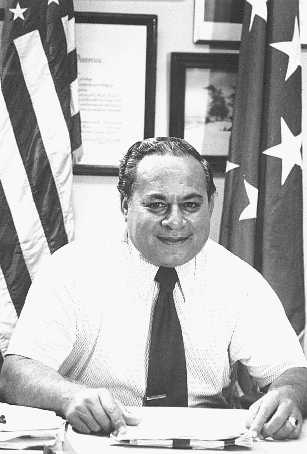
Peter Tali Coleman
Former Governor of American Samoa · 1956–1993 · Republican
Peter Tali Coleman served as Governor of American Samoa (1956–1993) for the Republican party. The page below collects sourced biographical facts, term history, and provenance for Coleman.
Key facts
- Full name
- Peter Tali Coleman
- Office
- Governor of American Samoa
- State
- American Samoa
- Party
- Republican
- Tenure
- 1956–1993
- Took office
- 1956
- Terms recorded
- 3
- Status
- Left office
- Current term ends
- —
- Born
- 1919
- Dataset version
- 1.20260608
Biographical narrative
935 words · sourced from the Wikipedia REST extract
Peter Tali Coleman was an influential American Samoan politician and lawyer who served as the Governor of American Samoa during pivotal periods in the territory's history. His political career spanned over five decades, during which he became the first and only person of Samoan descent to be appointed governor and later the first and third popularly elected governor. His tenure included significant contributions to the legal and political framework of American Samoa, as well as efforts to promote local autonomy and economic development.
Early life and career
Peter Tali Coleman was born on December 8, 1919, in Pago Pago, American Samoa, to an American navy officer, Patrick Dyke Coleman, and a native Samoan mother, Amata Auma. He was raised in a culturally rich environment that blended American and Samoan traditions. Coleman attended local educational institutions, including the faifeau and Marist schools, before graduating from Saint Louis School in Honolulu, Hawaii. His upbringing in American Samoa and Hawaii provided him with a unique perspective on the cultural and political dynamics of the region.
Coleman’s academic pursuits led him to Georgetown University, where he earned a law degree in 1951, becoming the first individual of Samoan ancestry to obtain a law degree from an American university. Following his graduation, he returned to the Samoan Islands in the early 1950s to practice law, working in both Pago Pago and Apia. His legal career included roles as a public defender and as the territory's attorney general, a position he briefly held in 1955 after being appointed by the Republican federal government.
His military service during World War II saw him rise to the rank of captain in the U.S. Army, further shaping his leadership skills and commitment to public service. In 1956, Coleman was appointed governor of American Samoa by President Dwight Eisenhower, marking the beginning of his significant political career. During his first term, he played a crucial role in drafting the Constitution of American Samoa, which included a bill of rights and provisions to protect the land and culture of Samoans. His administration also established the American Samoa Fono legislature and created the official seal and flag of American Samoa.
After his initial term as governor, Coleman held various administrative positions across the Pacific Islands, including serving as district administrator for the Marshall Islands and the Marianas Islands, as well as deputy high commissioner of the Trust Territory of the Pacific Islands. His extensive experience in these roles provided him with a deep understanding of governance and the challenges faced by Pacific territories.
Governorship
Coleman returned to American Samoa in 1977 to participate in the territory's first gubernatorial election, which was made possible after American Samoans voted to elect their own governor. He was elected as the first popularly elected governor in American Samoa, a significant milestone in the territory's political evolution. His victory marked a major step toward self-determination for the residents of American Samoa, as they had previously rejected the idea of electing their governor in three plebiscites.
Coleman was re-elected in 1980, further solidifying his political influence. However, he faced a setback in the 1984 election when he lost to his Democratic opponent, A. P. Lutali. Despite this defeat, Coleman made a political comeback in 1988, winning the governorship once again and serving until 1993. Throughout his time in office, he was known for his efforts to enhance local governance and promote economic development.
As governor, Coleman focused on various initiatives aimed at improving the quality of life in American Samoa. He advocated for the incorporation of American Samoa into the Social Security system, which would provide essential benefits to the territory's residents. Additionally, he recognized the potential of tourism as a vital economic driver and initiated projects to enhance the territory's infrastructure, including the expansion of the Tafuna Airstrip to accommodate jet planes.
Coleman’s leadership also extended to the judiciary, where he oversaw the establishment of district and village courts, thereby improving access to justice for the local population. His administration introduced the Teacher Corps program, which aimed to enhance educational opportunities for students in American Samoa. Under his leadership, the LBJ Hospital also saw the addition of renal dialysis services, addressing critical healthcare needs in the community.
Policy focus and legacy
Coleman's legacy is marked by his commitment to the principles of local autonomy and self-determination for American Samoa. He played a pivotal role in advancing the territory's political structure and ensuring that the voices of its residents were heard in governance. His efforts to promote tourism and economic development laid the groundwork for future growth in the territory.
In recognition of his contributions, Coleman received several honors, including the American Samoan Governor's Humanitarian Award in 1997. He was also bestowed with the chiefly title Uifa’atali from his home village of Pago Pago, reflecting his deep-rooted connections to his cultural heritage. The Peter Tali Coleman Lecture on Pacific Public Policy, established at Georgetown University, serves as a testament to his influence and commitment to public service.
Coleman’s family legacy continues through his children, with his daughter Aumua Amata Radewagen becoming the first woman to represent American Samoa in the United States House of Representatives. His passing on April 28, 1997, in Honolulu marked the end of a significant chapter in American Samoa's political history, but his contributions to the territory's governance and development remain influential.
In summary, Peter Tali Coleman’s life and career encapsulate the evolution of American Samoa's political landscape during the latter half of the 20th century. His leadership and initiatives have left a lasting impact on the territory, shaping its path toward self-governance and economic development.
Notable legislation
Sponsored and co-sponsored legislation for Peter Tali Coleman is pending operator curation. The biographical narrative above carries the same provenance trail until per-bill rows are written.
Sources
- [1]https://en.wikipedia.org/wiki/Peter_Tali_ColemanWikipedia · retrieved 2026-06-08
Notable quotes
Sourced quotes for Peter Tali Coleman are pending operator curation. Narrative-scope provenance remains attached below.
Sources
- [1]https://en.wikipedia.org/wiki/Peter_Tali_ColemanWikipedia · retrieved 2026-06-08
Key positions
Curated policy positions for Peter Tali Coleman are pending operator review. The biographical narrative above carries the same provenance trail until per-topic positions are written.
Sources
- [1]https://en.wikipedia.org/wiki/Peter_Tali_ColemanWikipedia · retrieved 2026-06-08
Terms served
- 1956–1961Governor of American Samoa · Term 1 · Republican
- 1978–1985Governor of American Samoa · Term 2 · Republican
- 1989–1993Governor of American Samoa · Term 3 · Republican
Sources & provenance
Every attributable claim above carries a per-section [N] marker that resolves to the corresponding URL below. Each entry records the upstream provider, the canonical URL, and the timestamp at which the source was retrieved by the ingest pipeline.
Key facts
- https://www.wikidata.org/wiki/Q2331562wikidata · retrieved 2026-06-08
- https://ballotpedia.org/Peter_Tali_Colemanballotpedia · retrieved 2026-06-08
Biographical narrative
- https://en.wikipedia.org/wiki/Peter_Tali_Colemanwikipedia · retrieved 2026-06-08
Explore governors
Every U.S. state elects a governor. Browse American Samoa’s gubernatorial lineage, the full roster of sitting governors, or American Samoa’s federal candidates.