
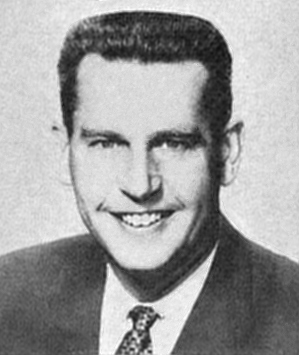
Former · State House · California
Glenard P. Lipscomb
Former State Representative · California · District 56 · Republican
Glenard P. Lipscomb served as a State Representative in the California House of Representatives, representing District 56 for the Republican party. The page below collects sourced biographical facts, the seat and district served, and provenance for Lipscomb.
Key facts
- Full name
- Glenard P. Lipscomb
- Office
- State Representative
- Chamber
- California House of Representatives
- State
- California
- District
- District 56
- Party
- Republican
- Status
- Left office
- Born
- 1915
- OpenStates ID
- —
- Dataset version
- 1.20260610-1
Biographical narrative
984 words · sourced from the Wikipedia REST extract
Glenard P. Lipscomb was a notable American politician who served as a member of the California State Assembly and later as a United States Congressman. He was affiliated with the Republican Party and represented California's 56th State Assembly district from 1947 until 1953. Following his tenure in the state legislature, he was elected to the U.S. House of Representatives, where he served from 1953 until his death in 1970. Lipscomb's political career was marked by significant legislative actions, particularly in the realm of civil rights, and he played a role in shaping policies during a transformative period in American history.
Early life and career
Glenard Paul Lipscomb was born on August 19, 1915, in Jackson, Michigan. His family relocated to California in 1920, settling in Los Angeles, where Lipscomb spent much of his formative years. He received his education in the public school system of Los Angeles, culminating his secondary education at Belmont High School. Following high school, Lipscomb pursued higher education at the University of Southern California and later attended Woodbury College, which is now located in Burbank, California. His academic background laid the foundation for his career as an accountant, a profession he entered after completing his studies.
During World War II, Lipscomb served in the Army's Financial Corps, where he gained valuable experience in financial management and operations. This military service not only contributed to his professional development but also instilled in him a sense of duty and public service that would later influence his political career. After the war, Lipscomb transitioned into politics, and in 1947, he successfully ran for a seat in the California State Assembly, representing the 56th district. His election marked the beginning of his formal political career, during which he would engage with various legislative issues affecting his constituents and the state.
Legislative service
Lipscomb's tenure in the California State Assembly lasted from 1947 until 1953. During this period, he was involved in a range of legislative activities that addressed the needs and concerns of his district. As a member of the Assembly, he participated in discussions and debates on various issues, contributing to the legislative process in California. His service in the state legislature provided him with a platform to advocate for policies that aligned with his Republican values and the interests of his constituents.
In 1953, Lipscomb transitioned to federal politics when he won a special election to the U.S. House of Representatives. This election was necessitated by the vacancy left by Norris Poulson, who had been elected mayor of Los Angeles. Lipscomb represented California's 24th congressional district, where he continued to engage in legislative work on a broader scale. His time in Congress was characterized by a focus on various national issues, including civil rights, which were at the forefront of American political discourse during the 1950s and 1960s.
Throughout his congressional career, Lipscomb participated in significant legislative actions, including voting on key civil rights legislation. He supported the Civil Rights Acts of 1957 and 1960, which aimed to address racial discrimination and protect the voting rights of African Americans. Additionally, he voted in favor of the 24th Amendment to the U.S. Constitution, which prohibited poll taxes in federal elections, and the Voting Rights Act of 1965, a landmark piece of legislation that aimed to eliminate barriers to voting for African Americans. However, he also voted against the Civil Rights Acts of 1964 and 1968, reflecting a complex stance on civil rights issues that has been a subject of historical analysis.
Lipscomb's legislative career continued until his death in 1970. He served in Congress for nearly two decades, during which he was involved in numerous legislative initiatives and debates. His long tenure allowed him to build relationships with colleagues and constituents, further solidifying his role in American politics during a time of significant change.
Policy focus and district
As a member of the California State Assembly and later the U.S. House of Representatives, Lipscomb's policy focus was shaped by the needs of his constituents and the broader political landscape of the time. Representing California's 56th State Assembly district, he was tasked with addressing local issues while also engaging with national matters as a congressman. His political affiliation with the Republican Party influenced his legislative priorities and the policies he championed.
During his time in the California State Assembly, Lipscomb worked on various issues that were pertinent to his district and the state. The post-war era was marked by significant economic and social changes, and Lipscomb's legislative efforts likely reflected the concerns of his constituents regarding these developments. As he transitioned to Congress, his focus expanded to include national issues, particularly those related to civil rights, which were increasingly prominent in American society.
Lipscomb's voting record indicates a nuanced approach to civil rights legislation. His support for certain civil rights measures, such as the Civil Rights Acts of 1957 and 1960, demonstrates a recognition of the need for legislative action to address racial inequality. However, his opposition to the Civil Rights Acts of 1964 and 1968 suggests a more complex perspective on the methods and implications of civil rights reforms. This duality in his legislative actions reflects the broader tensions within the Republican Party and American society regarding civil rights during this period.
In addition to his legislative work, Lipscomb's legacy includes the naming of the submarine USS Glenard P. Lipscomb in his honor, recognizing his contributions to public service. He was married to Virginia Sognalian Lipscomb, a classmate from Belmont High School, and they shared a life that intertwined personal and public commitments. Lipscomb passed away from cancer on February 1, 1970, at Bethesda Naval Hospital, leaving behind a legacy that continues to be studied and discussed in the context of American political history. His burial took place at Forest Lawn Memorial Park-Hollywood Hills, a site that serves as a final resting place for many notable figures in American history.
Notable legislation
Sponsored and co-sponsored legislation for Glenard P. Lipscomb is pending operator curation. The biographical narrative above carries the same provenance trail until per-bill rows are written.
Sources
- [1]https://en.wikipedia.org/wiki/Glenard_P._LipscombWikipedia · retrieved 2026-06-10
Notable quotes
Sourced quotes for Glenard P. Lipscomb are pending operator curation. Narrative-scope provenance remains attached below.
Sources
- [1]https://en.wikipedia.org/wiki/Glenard_P._LipscombWikipedia · retrieved 2026-06-10
Key positions
Curated policy positions for Glenard P. Lipscomb are pending operator review. The biographical narrative above carries the same provenance trail until per-topic positions are written.
Sources
- [1]https://en.wikipedia.org/wiki/Glenard_P._LipscombWikipedia · retrieved 2026-06-10
Legislative service
- California House of Representatives1948–1953District 56 · Republican
Sources & provenance
Every attributable claim above carries a per-section [N] marker that resolves to the corresponding URL below. Each entry records the upstream provider, the canonical URL, and the timestamp at which the source was retrieved by the ingest pipeline.
Key facts
- https://www.wikidata.org/wiki/Q1530879wikidata · retrieved 2026-06-10
- https://ballotpedia.org/Glenard_P._Lipscombballotpedia · retrieved 2026-06-10
Biographical narrative
- https://en.wikipedia.org/wiki/Glenard_P._Lipscombwikipedia · retrieved 2026-06-10
Explore the State House
Browse California’s District 56 seat, the full California House of Representatives roster, or California’s federal candidates.
Related on The Candidate
- California District 56Every member representing District 56 in the California House of Representatives.Open
- California State HouseThe full roster of the California House of Representatives, by district.Open
- California legislatureBoth chambers of the California state legislature.Open
- California federal candidatesEvery 2026 federal House and Senate candidate in California.Open