
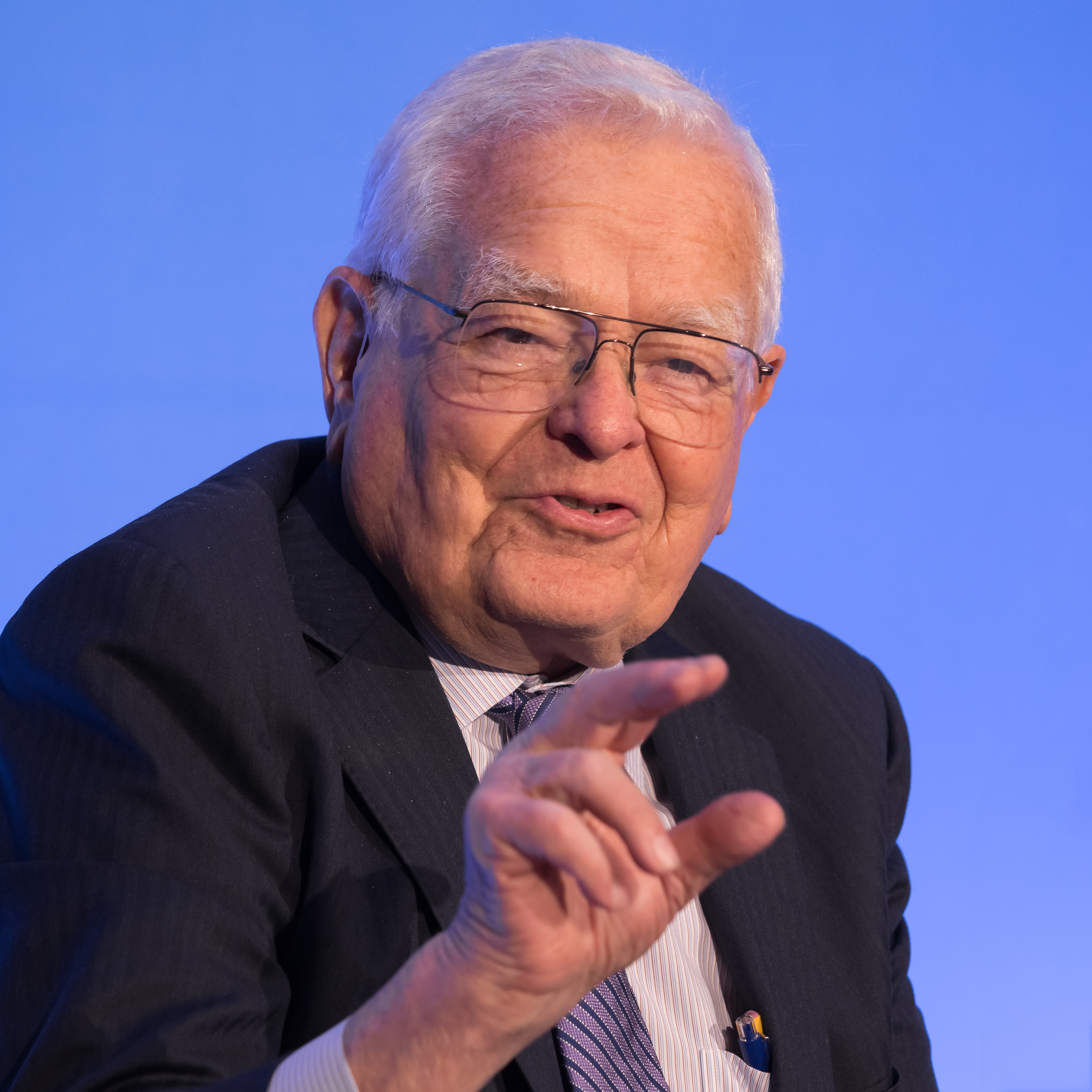
Historical · Governor · Colorado
Roy Romer
Former Governor of Colorado · 1987–1999 · Democratic
Roy Romer served as Governor of Colorado (1987–1999) for the Democratic party. The page below collects sourced biographical facts, term history, and provenance for Romer.
Key facts
- Full name
- Roy Romer
- Office
- Governor of Colorado
- State
- Colorado
- Party
- Democratic
- Tenure
- 1987–1999
- Took office
- 1987
- Terms recorded
- 1
- Status
- Left office
- Current term ends
- —
- Born
- 1928
- Dataset version
- 1.20260608
Biographical narrative
806 words · sourced from the Wikipedia REST extract
Roy Romer is an American politician who served as the 39th governor of Colorado from 1987 to 1999. A member of the Democratic Party, Romer is notable for his extensive political career, which includes significant roles in both state and national politics. After his tenure as governor, he served as the superintendent of the Los Angeles Unified School District from 2000 to 2006. He is recognized as the oldest living former governor of any U.S. state and the last living former American governor born in the 1920s.
Early life and career
Roy Rudolf Romer was born on October 31, 1928, in Garden City, Kansas. He was raised in Holly, a small town in southeastern Colorado. Romer pursued higher education at Colorado State University, where he earned a bachelor's degree in agricultural economics in 1950. During his time at the university, he demonstrated leadership skills by serving as the president of the Associated Students of Colorado State University for a year. Following his undergraduate studies, he attended the University of Colorado School of Law, obtaining his law degree in 1952. Additionally, Romer spent a year studying ethics at Yale Divinity School, which contributed to his broad educational background.
Romer's early career included a stint as a legal officer in the U.S. Air Force, which provided him with valuable experience in legal matters and public service. His political career began in the late 1950s when he was elected to the Colorado House of Representatives, serving from 1958 to 1962. He then moved to the Colorado Senate, where he served from 1962 to 1966. In 1966, Romer made an unsuccessful bid for a U.S. Senate seat, challenging the incumbent Republican Gordon Allott.
Following his time in the legislature, Romer was appointed Colorado State Treasurer, a position he held from 1977 to 1987. He was re-elected to full four-year terms in 1978 and 1982, solidifying his reputation in state politics. During this period, he also served as a member of the governor's cabinet, gaining further insight into the workings of state government.
Governorship
Romer's political ascent culminated in his election as governor of Colorado in 1986. He was re-elected in 1990 and again in 1994, making him the second governor in Colorado's history to serve three terms. His governorship was marked by a focus on education reform, economic development, and environmental issues. In 1997, he played a pivotal role in the establishment of Western Governors University, a collaborative effort with governors from Utah and Wyoming, aimed at providing accessible higher education through online learning.
Romer's tenure was also characterized by his involvement in national politics. He chaired the Democratic Governors Association in 1991 and served as co-chairman of the Democratic National Platform Committee in 1992. He was a prominent figure in the Democratic Leadership Council and was a national co-chairman of the Clinton-Gore campaign in 1996. His leadership extended to the National Governors Association, where he served as chair from 1992 to 1993.
During his governorship, Romer was involved in a significant legal case known as Romer v. Evans. This case arose from a constitutional amendment in Colorado that sought to prevent the state from granting protected status based on sexual orientation. Although Romer opposed the amendment, he defended it in court as part of his official duties. The Supreme Court ultimately ruled against the state's defense, declaring the amendment unconstitutional under the due process clause of the Fourteenth Amendment.
Policy focus and legacy
Throughout his time in office, Romer emphasized the importance of education and economic growth. His administration implemented various initiatives aimed at improving the state's educational system and fostering economic development. Romer's commitment to education continued after his governorship when he took on the role of superintendent of the Los Angeles Unified School District in 2000. He served in this capacity for six years, focusing on improving educational outcomes in one of the largest school districts in the United States.
In 2007, Romer became the chairman and lead spokesman for Strong American Schools, a nonprofit initiative aimed at encouraging presidential candidates to prioritize education in their campaign platforms. This role further demonstrated his enduring commitment to educational reform and advocacy.
Romer's contributions to education were recognized in 2008 when a middle school in Los Angeles was named in his honor. The Roy Romer Middle School opened its doors to students in September of that year, reflecting his lasting impact on the educational landscape.
In summary, Roy Romer's political career spans several decades, marked by significant roles in both state and national politics. His governorship in Colorado was characterized by a focus on education, economic development, and legal challenges that shaped the state's policies. His legacy continues through his contributions to education and public service, as well as through his family, which includes notable figures such as his son Paul Romer, a Nobel Prize-winning economist.
Notable legislation
Sponsored and co-sponsored legislation for Roy Romer is pending operator curation. The biographical narrative above carries the same provenance trail until per-bill rows are written.
Sources
- [1]https://en.wikipedia.org/wiki/Roy_RomerWikipedia · retrieved 2026-06-08
Notable quotes
Sourced quotes for Roy Romer are pending operator curation. Narrative-scope provenance remains attached below.
Sources
- [1]https://en.wikipedia.org/wiki/Roy_RomerWikipedia · retrieved 2026-06-08
Key positions
Curated policy positions for Roy Romer are pending operator review. The biographical narrative above carries the same provenance trail until per-topic positions are written.
Sources
- [1]https://en.wikipedia.org/wiki/Roy_RomerWikipedia · retrieved 2026-06-08
Terms served
- 1987–1999Governor of Colorado · Term 1 · Democratic
Sources & provenance
Every attributable claim above carries a per-section [N] marker that resolves to the corresponding URL below. Each entry records the upstream provider, the canonical URL, and the timestamp at which the source was retrieved by the ingest pipeline.
Key facts
- https://www.wikidata.org/wiki/Q328508wikidata · retrieved 2026-06-08
- https://ballotpedia.org/Roy_Romerballotpedia · retrieved 2026-06-08
Biographical narrative
- https://en.wikipedia.org/wiki/Roy_Romerwikipedia · retrieved 2026-06-08
Explore governors
Every U.S. state elects a governor. Browse Colorado’s gubernatorial lineage, the full roster of sitting governors, or Colorado’s federal candidates.