
Historical · Governor · Connecticut
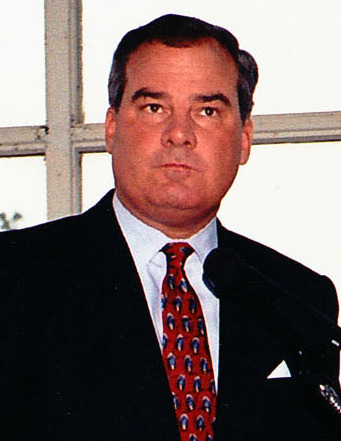
John G. Rowland
Former Governor of Connecticut · 1995–2004 · Republican
John G. Rowland served as Governor of Connecticut (1995–2004) for the Republican party. The page below collects sourced biographical facts, term history, and provenance for Rowland.
Key facts
- Full name
- John G. Rowland
- Office
- Governor of Connecticut
- State
- Connecticut
- Party
- Republican
- Tenure
- 1995–2004
- Took office
- 1995
- Terms recorded
- 1
- Status
- Left office
- Current term ends
- —
- Born
- 1957
- Dataset version
- 1.20260608
Biographical narrative
842 words · sourced from the Wikipedia REST extract
John G. Rowland is a former American politician who served as the 86th governor of Connecticut from 1995 to 2004. A member of the Republican Party, Rowland's political career began in the state legislature before he transitioned to national politics as a representative in the United States House of Representatives. His governorship was marked by significant initiatives in urban development and healthcare, but it was also overshadowed by scandals that ultimately led to his resignation and subsequent legal troubles.
Early life and career
John Grosvenor Rowland was born on May 24, 1957, in Waterbury, Connecticut. He was the eldest of five children in the Rowland family, born to Sherwood L. Rowland, an insurance agent, and Florence "Cerie" Rowland. Growing up in a large family, Rowland attended Kingsbury Elementary School and later graduated from Holy Cross High School, a private institution in Waterbury. He pursued higher education at Villanova University, where he earned a Bachelor of Science degree in 1979.
Rowland's entry into politics began at a young age. At 23, he was elected to the Connecticut State House of Representatives, where he served from 1980 until 1984. His political career progressed as he won election to represent Connecticut's 5th congressional district in the United States House of Representatives, a position he held from 1985 to 1991. During his time in Congress, Rowland was reelected twice, in 1986 and 1988. However, his bid for the governorship in 1990 was unsuccessful, as he lost to Lowell Weicker.
Following his congressional tenure, Rowland worked as a consultant for United Technologies Corporation. This experience in the private sector would later inform his governance style and policy decisions.
Governorship
Rowland's political aspirations culminated in his election as governor of Connecticut in 1994, making him the youngest individual to hold the office in the state's history at the age of 37. His tenure as governor lasted from 1995 to 2004, during which he was reelected twice, defeating Democratic opponents in both 1998 and 2002.
One of Rowland's significant initiatives during his governorship was the Adriaen's Landing project, which aimed to revitalize Hartford through a series of ambitious urban development plans. This included the construction of a convention center and improvements to the riverfront, with the state committing substantial financial resources to support these efforts. The project was seen as a critical step in transforming Hartford into a cultural and economic hub.
However, Rowland's administration was not without controversy. In 1997, he became embroiled in the Geargate political scandal, which involved the misuse of surplus military equipment intended for the Connecticut State Police. This equipment was improperly diverted for personal use by Rowland and his associates, leading to a joint investigation by the State Police and the Department of Defense. The scandal raised questions about ethics and governance during his administration.
In addition to urban development, Rowland focused on healthcare initiatives, notably implementing the HUSKY Plan, which aimed to provide health insurance to uninsured children in Connecticut. His administration also saw a significant increase in funding for the Department of Children and Families, reflecting a commitment to child welfare. Furthermore, Rowland's approach to crime was characterized by a tough stance, resulting in a rapid increase in the prison population. This approach drew criticism from some lawmakers who advocated for more lenient policies for nonviolent offenders.
Rowland's governorship came to an abrupt end in July 2004 when he resigned amid a corruption investigation. His departure from office was marked by legal challenges that would follow him for years. After resigning, Rowland pleaded guilty to charges related to conspiracy, mail fraud, and tax fraud, leading to a federal prison sentence.
Policy focus and legacy
Rowland's legacy as governor is multifaceted, encompassing both his policy initiatives and the controversies that marred his administration. His efforts in urban development, particularly the Adriaen's Landing project, are often cited as significant contributions to Hartford's revitalization. The project aimed to enhance the city's economic prospects and cultural offerings, and it received considerable attention during his time in office.
In the realm of healthcare, Rowland's implementation of the HUSKY Plan marked a notable achievement in expanding access to health insurance for children, reflecting a commitment to addressing the needs of vulnerable populations. His administration's focus on child welfare and family services also led to increased funding and the establishment of the state's first Child Advocate.
However, Rowland's governorship was overshadowed by ethical scandals and legal issues. The Geargate scandal and subsequent corruption investigation raised serious questions about governance and accountability in his administration. After his resignation, Rowland faced legal repercussions, including a prison sentence for his involvement in fraudulent activities. His later indictment in 2014 for election fraud further complicated his legacy, as he was convicted on multiple counts and served additional time in prison.
Despite the controversies, Rowland's political career reflects the complexities of governance and the challenges faced by public officials. His time as governor of Connecticut remains a significant chapter in the state's political history, illustrating both the potential for impactful leadership and the consequences of ethical lapses in public service.
Notable legislation
Sponsored and co-sponsored legislation for John G. Rowland is pending operator curation. The biographical narrative above carries the same provenance trail until per-bill rows are written.
Sources
- [1]https://en.wikipedia.org/wiki/John_G._RowlandWikipedia · retrieved 2026-06-08
Notable quotes
Sourced quotes for John G. Rowland are pending operator curation. Narrative-scope provenance remains attached below.
Sources
- [1]https://en.wikipedia.org/wiki/John_G._RowlandWikipedia · retrieved 2026-06-08
Key positions
Curated policy positions for John G. Rowland are pending operator review. The biographical narrative above carries the same provenance trail until per-topic positions are written.
Sources
- [1]https://en.wikipedia.org/wiki/John_G._RowlandWikipedia · retrieved 2026-06-08
Terms served
- 1995–2004Governor of Connecticut · Term 1 · Republican
Sources & provenance
Every attributable claim above carries a per-section [N] marker that resolves to the corresponding URL below. Each entry records the upstream provider, the canonical URL, and the timestamp at which the source was retrieved by the ingest pipeline.
Key facts
- https://www.wikidata.org/wiki/Q885204wikidata · retrieved 2026-06-08
- https://ballotpedia.org/John_G._Rowlandballotpedia · retrieved 2026-06-08
Biographical narrative
- https://en.wikipedia.org/wiki/John_G._Rowlandwikipedia · retrieved 2026-06-08
Explore governors
Every U.S. state elects a governor. Browse Connecticut’s gubernatorial lineage, the full roster of sitting governors, or Connecticut’s federal candidates.