
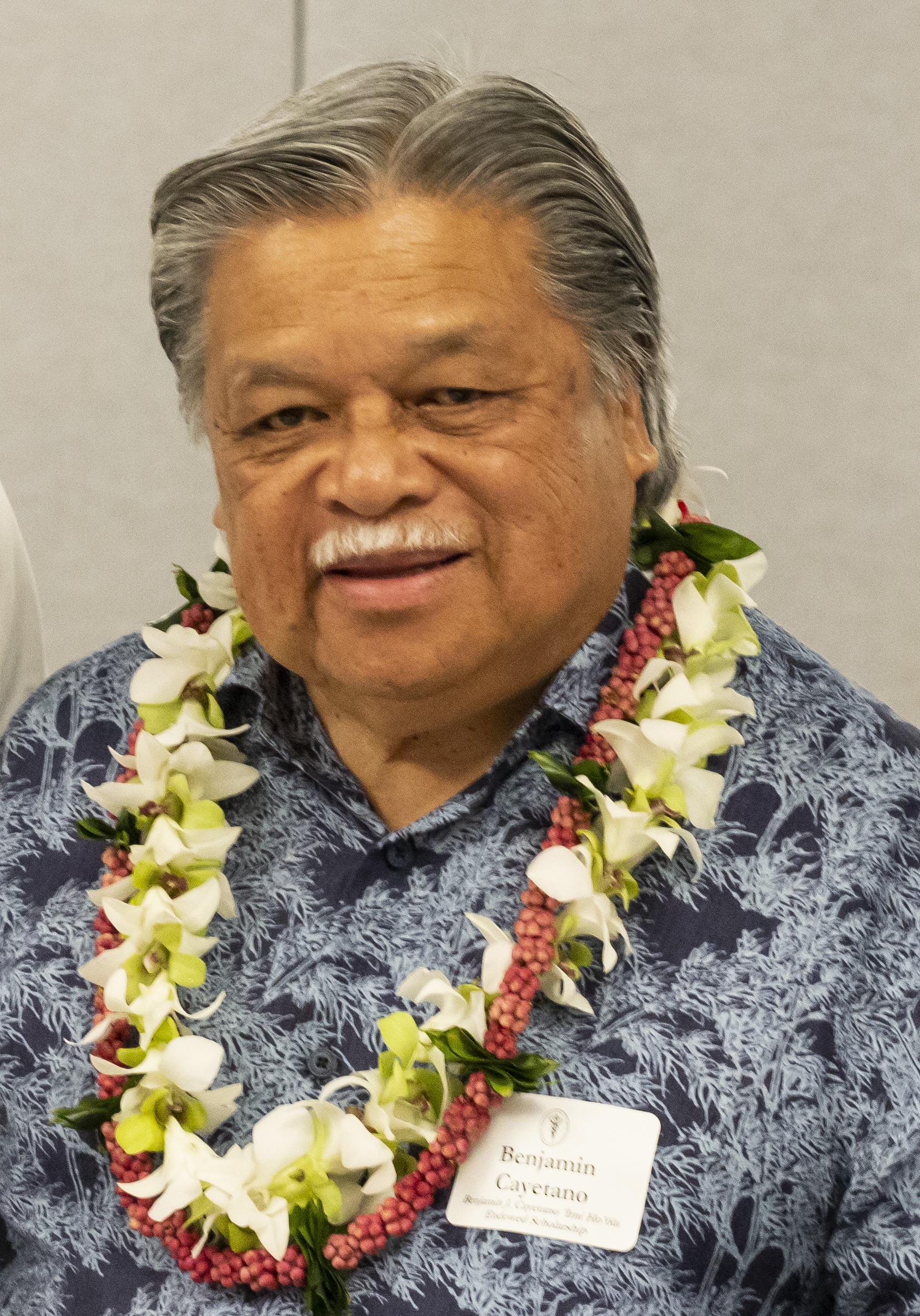
Historical · Governor · Hawaii
Ben Cayetano
Former Governor of Hawaii · 1994–2002 · Democratic
Ben Cayetano served as Governor of Hawaii (1994–2002) for the Democratic party. The page below collects sourced biographical facts, term history, and provenance for Cayetano.
Key facts
- Full name
- Ben Cayetano
- Office
- Governor of Hawaii
- State
- Hawaii
- Party
- Democratic
- Tenure
- 1994–2002
- Took office
- 1994
- Terms recorded
- 1
- Status
- Left office
- Current term ends
- —
- Born
- 1939
- Dataset version
- 1.20260608
Biographical narrative
907 words · sourced from the Wikipedia REST extract
Benjamin Jerome Cayetano is an American politician and author who served as the fifth governor of Hawaii from 1994 to 2002. He is notable for being the first Filipino American to hold the office of state governor in the United States. Cayetano's political career spans several decades, during which he has held various positions, including lieutenant governor, and has been involved in significant educational and fiscal reforms in Hawaii.
Early life and career
Cayetano was born on November 14, 1939, in Honolulu, Hawaii. His early life was marked by challenges, as he experienced estrangement from his mother at a young age. Raised by his father in Kalihi, a neighborhood in Honolulu with a significant Filipino population, Cayetano grew up in a working-class environment. He attended Wallace Rider Farrington High School, a public school known for its historical significance in Hawaii's political landscape. Despite facing academic difficulties and disciplinary issues during his schooling, he managed to graduate.
After completing high school, Cayetano married Lorraine Gueco, his high school sweetheart. The couple welcomed their son, Brandon, in 1959. During this period, Cayetano worked in various entry-level jobs, including roles as a metal packer, truck driver, apprentice electrician, and draftsman. Frustrated by perceived racial discrimination and inequities in hiring practices, he moved with his family to Los Angeles, California, in 1963, seeking better educational opportunities.
Cayetano began his higher education at Los Angeles Harbor College before transferring to the University of California, Los Angeles (UCLA) in 1966. He graduated from UCLA in 1968 with a degree in political science and a minor in American history. Following this, he pursued a legal education and earned his Juris Doctor degree from Loyola Law School at Loyola Marymount University in 1971.
His political career began in earnest when he was appointed to the Hawaii Housing Authority by Governor John A. Burns in 1972. In 1974, Cayetano was elected to the Hawaii State House of Representatives as a Democrat, representing the Pearl City district.
Governorship
Cayetano's ascent to the governorship came after he served as lieutenant governor under John D. Waihe'e III from 1986 to 1994. During his tenure as lieutenant governor, he was the first Filipino American to hold this position in the United States. He was re-elected alongside Waihe'e in 1990 and was instrumental in establishing the A+ Program, a state-funded initiative providing after-school care for elementary school students across Hawaii.
In 1994, following term limits that prevented Waihe'e from seeking re-election, Cayetano was nominated by the Democratic Party to run for governor. He won the gubernatorial election with attorney Mazie Hirono as his running mate. His first term as governor began amid economic uncertainty and fiscal challenges, including declining tax revenues that led to budget shortfalls. Throughout his governorship, Cayetano often found himself at odds with members of his own party in the state legislature as he sought to implement budget cuts to address the financial issues facing the state.
Cayetano's administration focused on education, resulting in the construction of thirteen new schools and an agreement with the teachers' union to extend the school year by seven days. Additionally, he facilitated the University of Hawaii System's autonomy over its internal affairs. However, his tenure was not without conflict; in April 2001, labor disputes led to strikes by both university professors and public school teachers, disrupting the state's educational system for three weeks.
Cayetano was re-elected in 1998, facing a competitive challenge from Republican candidate Linda Lingle, who campaigned on a platform of government reform. The election was marked by intense media coverage and polling, with Cayetano initially trailing Lingle. Ultimately, he won a narrow victory, which was confirmed by an official recount of the ballots. He completed his second term and left office in December 2002, succeeded by Lingle.
Policy focus and legacy
During his time in office, Cayetano's administration was characterized by a focus on education, fiscal responsibility, and government reform. His efforts to enhance the educational landscape in Hawaii included the construction of new schools and initiatives aimed at improving educational outcomes for students. The establishment of the A+ Program as lieutenant governor reflected his commitment to providing support for families and children.
Cayetano's governorship also faced significant challenges, particularly in managing the state's budget amid economic difficulties. His attempts to implement budget cuts and address fiscal shortfalls often put him at odds with fellow Democrats in the legislature, highlighting the complexities of governance during a time of economic strain.
After leaving office, Cayetano remained active in public life. In 2012, he ran for the office of Honolulu Mayor, focusing on issues such as government transparency and opposition to the Honolulu Rail Transit Project. Although he garnered significant support in the primary election, he ultimately lost in the general election to Kirk Caldwell. His continued opposition to the rail project underscored his commitment to local governance and civic engagement.
Cayetano's personal life includes a notable milestone as the first sitting governor of Hawaii to divorce while in office. He was married to Lorraine Cayetano for 37 years before their divorce in 1996. He later married Vicky Cayetano in 1997. Together, they have five children from their respective previous marriages.
Cayetano's legacy as a politician is marked by his pioneering role as the first Filipino American governor in the United States and his contributions to education and fiscal policy in Hawaii. His experiences and challenges reflect the broader narrative of governance in a diverse and dynamic state.
Notable legislation
Sponsored and co-sponsored legislation for Ben Cayetano is pending operator curation. The biographical narrative above carries the same provenance trail until per-bill rows are written.
Sources
- [1]https://en.wikipedia.org/wiki/Ben_CayetanoWikipedia · retrieved 2026-06-08
Notable quotes
Sourced quotes for Ben Cayetano are pending operator curation. Narrative-scope provenance remains attached below.
Sources
- [1]https://en.wikipedia.org/wiki/Ben_CayetanoWikipedia · retrieved 2026-06-08
Key positions
Curated policy positions for Ben Cayetano are pending operator review. The biographical narrative above carries the same provenance trail until per-topic positions are written.
Sources
- [1]https://en.wikipedia.org/wiki/Ben_CayetanoWikipedia · retrieved 2026-06-08
Terms served
- 1994–2002Governor of Hawaii · Term 1 · Democratic
Sources & provenance
Every attributable claim above carries a per-section [N] marker that resolves to the corresponding URL below. Each entry records the upstream provider, the canonical URL, and the timestamp at which the source was retrieved by the ingest pipeline.
Key facts
- https://www.wikidata.org/wiki/Q816457wikidata · retrieved 2026-06-08
- https://ballotpedia.org/Ben_Cayetanoballotpedia · retrieved 2026-06-08
Biographical narrative
- https://en.wikipedia.org/wiki/Ben_Cayetanowikipedia · retrieved 2026-06-08
Explore governors
Every U.S. state elects a governor. Browse Hawaii’s gubernatorial lineage, the full roster of sitting governors, or Hawaii’s federal candidates.