
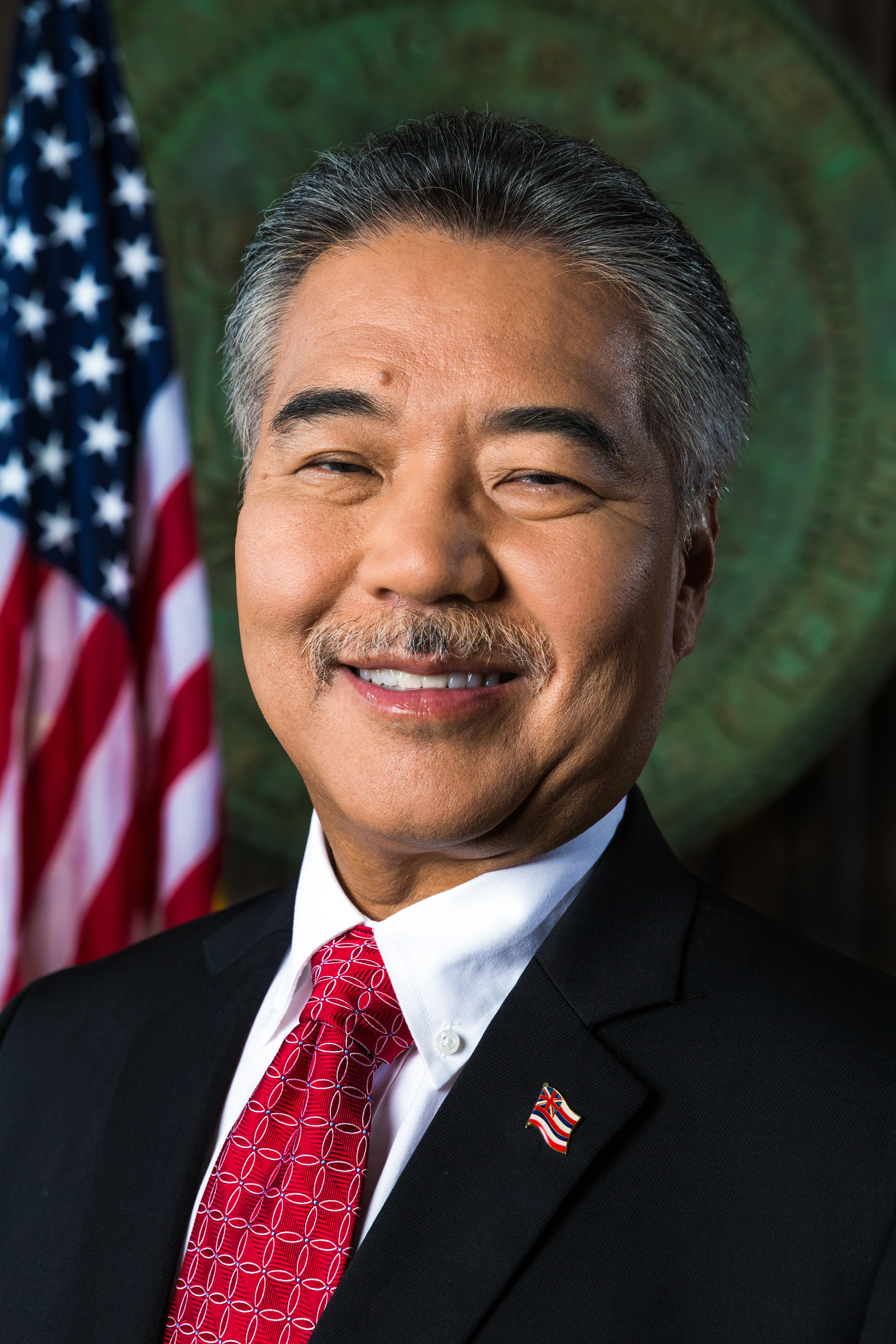
Historical · Governor · Hawaii
David Ige
Former Governor of Hawaii · 2014–2022 · Democratic
David Ige served as Governor of Hawaii (2014–2022) for the Democratic party. The page below collects sourced biographical facts, term history, and provenance for Ige.
Key facts
- Full name
- David Ige
- Office
- Governor of Hawaii
- State
- Hawaii
- Party
- Democratic
- Tenure
- 2014–2022
- Took office
- 2014
- Terms recorded
- 1
- Status
- Left office
- Current term ends
- —
- Born
- 1957
- Dataset version
- 1.20260608
Biographical narrative
1,224 words · sourced from the Wikipedia REST extract
David Ige is an American politician and engineer who served as the eighth governor of Hawaii from 2014 to 2022. A member of the Democratic Party, Ige's political career spans several decades, during which he held various legislative positions, including a significant tenure in the Hawaii State Senate. His governorship is noted for addressing issues such as homelessness and climate change, as well as for his response to a false missile alert incident that garnered national attention.
Early life and career
David Ige was born on January 15, 1957, in Pearl City, Hawaii, where he was raised as the fifth of six sons in a family of Okinawan descent. His father, Tokio Ige, served in the 100th Battalion/442nd Infantry Regimental Combat Team during World War II, earning a Purple Heart and a Bronze Star for his service. After the war, Tokio worked as an ironworker, while his mother, Tsurue Ige, was employed as a nurse and dental hygienist. The family instilled values of hard work and community service in their children. Tokio Ige passed away in 2005, and Tsurue Ige died in 2021.
Ige attended public schools in Pearl City, including Pearl City Elementary School, Highlands Intermediate School, and Pearl City High School. During his time in high school, he was actively involved in various extracurricular activities. He served as student body vice president in his junior year and was elected senior class president the following year. His campaign for student body president focused on promoting diversity and combating bullying. In addition to his leadership roles, Ige was a member of the varsity tennis team, leading them to a championship and earning the title of "Scholar-Athlete of the Year." He graduated fifth in his class of over 500 students in 1975.
Following high school, Ige was accepted into the Massachusetts Institute of Technology but chose to attend the University of Hawaii at Manoa, where he earned a Bachelor of Science degree in electrical engineering. While at the university, he was active in student government, serving as student body secretary, and held leadership positions in several honor societies. He was also involved in his fraternity, Phi Delta Sigma, where he served as treasurer and vice president. It was at the University of Hawaii that Ige met his future wife, Dawn. The couple has three children: Lauren, Amy, and Matthew.
After completing his undergraduate studies, Ige began his professional career as an engineer with GTE Hawaiian Tel. He later pursued graduate studies at the University of Hawaii, earning a Master of Business Administration degree with a focus on decision sciences. His academic achievements were recognized when Hawaii Business Magazine named him one of the university's Top 10 MBA students in 1986. Prior to his election as governor, Ige held several significant positions in the engineering field, including project manager at Robert A. Ige and Associates, Inc., vice president of engineering at NetEnterprise, and senior principal engineer at Pihana Pacific, where he contributed to establishing a world-class data center and carrier-neutral Internet exchange in Hawaii.
Ige's political career began when he was appointed to the Hawaii House of Representatives on December 2, 1985, by Governor George Ariyoshi. He served in the House until 1994, after which he was elected to the Hawaii State Senate, where he remained until 2015. Throughout his legislative career, Ige chaired nine different committees and focused on information and telecommunications policy. He co-authored the Hawaii Telecommunications and Information Industries Act, which established the state information network and created the Hawaii Information Network Corporation. Ige also played a crucial role in efforts to diversify Hawaii's economy, advocating for seed capital and venture capital programs, software development initiatives, and technology transfer programs. In 1997, he was part of the inaugural class of the Pacific Century Fellows.
Governorship
David Ige's journey to the governorship began with his campaign for the 2014 gubernatorial election. He challenged incumbent Governor Neil Abercrombie in the Democratic primary, capitalizing on dissatisfaction among Abercrombie's supporters, particularly those aligned with the late U.S. Senator Daniel Inouye. Despite being outspent in the race, Ige achieved a significant victory, becoming the first candidate to defeat an incumbent governor of Hawaii in a primary election. In the general election, he faced Republican nominee Duke Aiona and Independent candidate Mufi Hannemann, ultimately winning by a margin of 12 percentage points.
Ige was inaugurated as the eighth governor of Hawaii on December 1, 2014. His inauguration ceremony highlighted themes of honoring the past while looking toward the future, reflecting on his father's military service during World War II. Ige's election marked a historic moment, as he became the first individual of Okinawan descent to be elected governor of a U.S. state.
During his tenure, Ige faced a range of challenges and opportunities. In October 2015, he declared a state of emergency in response to the growing homelessness crisis in Hawaii, which had the highest rate of homeless individuals per capita in the United States at that time. His administration focused on implementing strategies to address this pressing issue.
In June 2017, following President Donald Trump's decision to withdraw the United States from the Paris Agreement on climate change, Ige signed two significant bills. These measures committed Hawaii to meeting its greenhouse gas emission targets in alignment with the Paris Agreement and established a task force dedicated to carbon reduction and soil health.
One of the most notable incidents during Ige's governorship occurred on January 13, 2018, when an erroneous missile alert was sent to smartphones across the state and broadcast on local television and radio. The alert caused widespread panic among residents and visitors. Ige publicly apologized for the mistake, attributing it to human error and emphasizing the need for improved emergency response protocols.
Ige was reelected in 2018, defeating Republican nominee Andria Tupola. His second term continued to focus on issues such as climate change, homelessness, and economic diversification.
Policy focus and legacy
Throughout his time in office, David Ige's policy focus centered on several key areas, including economic diversification, environmental sustainability, and social issues. His legislative background informed his approach to governance, as he sought to leverage technology and innovation to address the challenges facing Hawaii.
Ige's administration prioritized initiatives aimed at reducing homelessness, recognizing the urgent need for comprehensive solutions to this complex issue. His declaration of a state of emergency underscored the seriousness of the situation and aimed to mobilize resources and support for those affected.
In terms of environmental policy, Ige's commitment to addressing climate change was evident in his actions following the U.S. withdrawal from the Paris Agreement. By signing legislation to uphold Hawaii's emission targets, he positioned the state as a leader in climate action, emphasizing the importance of sustainability for future generations.
Ige's governorship also reflected a commitment to transparency and accountability in government. His administration faced challenges, including the missile alert incident, which highlighted the need for effective communication and crisis management. The response to this event prompted discussions about emergency preparedness and the importance of clear protocols in safeguarding public safety.
As Ige concluded his tenure in 2022, his legacy included a focus on pressing social issues, a commitment to environmental stewardship, and a dedication to fostering economic growth in Hawaii. His time in office was marked by efforts to navigate complex challenges while striving to create a better future for the people of Hawaii.
Notable legislation
Sponsored and co-sponsored legislation for David Ige is pending operator curation. The biographical narrative above carries the same provenance trail until per-bill rows are written.
Sources
- [1]https://en.wikipedia.org/wiki/David_IgeWikipedia · retrieved 2026-06-08
Notable quotes
Sourced quotes for David Ige are pending operator curation. Narrative-scope provenance remains attached below.
Sources
- [1]https://en.wikipedia.org/wiki/David_IgeWikipedia · retrieved 2026-06-08
Key positions
Curated policy positions for David Ige are pending operator review. The biographical narrative above carries the same provenance trail until per-topic positions are written.
Sources
- [1]https://en.wikipedia.org/wiki/David_IgeWikipedia · retrieved 2026-06-08
Terms served
- 2014–2022Governor of Hawaii · Term 1 · Democratic
Sources & provenance
Every attributable claim above carries a per-section [N] marker that resolves to the corresponding URL below. Each entry records the upstream provider, the canonical URL, and the timestamp at which the source was retrieved by the ingest pipeline.
Key facts
- https://www.wikidata.org/wiki/Q16189318wikidata · retrieved 2026-06-08
- https://ballotpedia.org/David_Igeballotpedia · retrieved 2026-06-08
Biographical narrative
- https://en.wikipedia.org/wiki/David_Igewikipedia · retrieved 2026-06-08
Explore governors
Every U.S. state elects a governor. Browse Hawaii’s gubernatorial lineage, the full roster of sitting governors, or Hawaii’s federal candidates.