
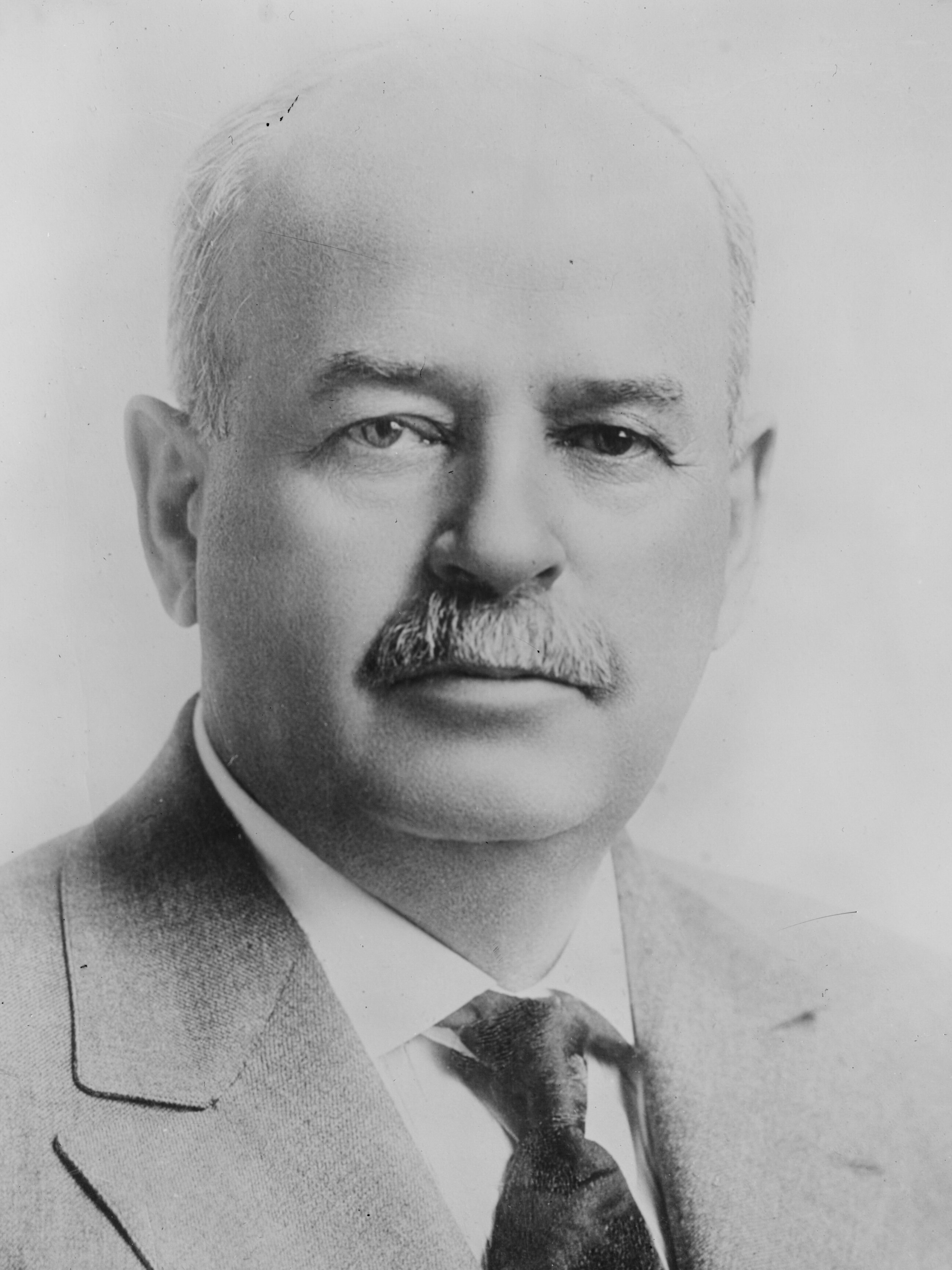
Former · State Senate · Illinois
Len Small
Former State Senator · Illinois · District 20 · Republican
Len Small served as a State Senator in the Illinois State Senate, representing District 20 for the Republican party. The page below collects sourced biographical facts, the seat and district served, and provenance for Small.
Key facts
- Full name
- Len Small
- Office
- State Senator
- Chamber
- Illinois State Senate
- State
- Illinois
- District
- District 20
- Party
- Republican
- Status
- Left office
- Born
- 1862
- OpenStates ID
- —
- Dataset version
- 1.20260610
Biographical narrative
843 words · sourced from the Wikipedia REST extract
Lennington "Len" Small was an American politician who served as a member of the Illinois State Senate and later as the 26th Governor of Illinois. His political career spanned several decades, during which he held various significant positions, including state treasurer and assistant U.S. treasurer. Small's tenure in office was marked by both infrastructure development and controversy, particularly regarding allegations of embezzlement. He was born on June 16, 1862, in Kankakee County, Illinois, and passed away on May 17, 1936.
Early life and career
Len Small was born in Kankakee County, Illinois, to Abram Small, a physician, and Calista Currier. He received his early education in public schools and attended the Northern Indiana Normal School, which is now known as Valparaiso University, where he completed his studies through his senior year. Following his education, Small embarked on a career as a teacher, which laid the foundation for his later endeavors in public service and business.
In addition to his teaching career, Small ventured into real estate, ultimately becoming a successful businessman. He owned a farm and a bank and was also involved in the media industry, acquiring Kankakee's daily newspaper, the Daily Journal. His diverse business interests contributed to his prominence in the local community.
On November 21, 1883, Small married Ida Moore, and together they had three children: Budd, Leslie, and May. Ida Small's life was tragically cut short when she passed away suddenly from a stroke on June 26, 1922, at the age of 60. This event occurred shortly after Small was acquitted of serious charges related to embezzlement, a situation that would shadow his political career.
Legislative service
Small's political career commenced in 1896 when he was elected as Clerk of the Kankakee County Circuit Court. This role provided him with valuable experience in public service and governance. In 1900, he was elected to represent the 20th District in the Illinois State Senate, a position he held from 1901 to 1905. The 20th District encompassed several counties, including Grundy, Iroquois, and Kankakee, and Small's election marked the beginning of his significant involvement in state politics.
Following his tenure in the Illinois Senate, Small was elected as the Illinois State Treasurer, serving from 1905 to 1908 and again from 1917 to 1919. His responsibilities in this role included overseeing the state’s financial operations, which would later become a focal point of controversy during his governorship. Additionally, Small served as the assistant U.S. Treasurer in charge of the subtreasury in Chicago from 1908 to 1912. His political influence extended to the national level when he was a delegate to the Republican National Convention in 1908, 1912, and 1932.
In 1920, Small was elected Governor of Illinois, a position he would hold until 1929 after being re-elected in 1924. His governorship was characterized by significant infrastructure projects, particularly in road development, but it was also marred by legal troubles stemming from accusations of financial misconduct.
Policy focus and district
During his time in the Illinois State Senate and later as governor, Small focused on various policies that aimed to improve the state's infrastructure and economy. One of his notable achievements was the implementation of an extensive highway program, which involved the expenditure of approximately $200 million on the construction of around 7,000 miles of concrete-paved roads. This initiative positioned Illinois as a leader in road development in the United States, enhancing transportation and commerce throughout the state.
However, Small's administration was not without controversy. Shortly after taking office as governor, he faced serious allegations of embezzlement related to his previous role as state treasurer. He was accused of orchestrating a money-laundering scheme that involved diverting state funds into a fictitious bank. Although Small was acquitted of these charges, the circumstances surrounding the trial raised suspicions of jury tampering, particularly as several jurors subsequently received state jobs. Despite the legal challenges, Small opted to settle the case by paying $650,000.
In addition to his infrastructure initiatives, Small's governorship was marked by a series of controversial pardons. He pardoned members of the Communist Labor Party of America, who had been convicted under the Illinois Sedition Act, as well as over 1,000 convicted felons, including individuals involved in serious crimes. These actions drew criticism and contributed to his complex legacy.
Small's political career faced significant challenges, culminating in his defeat during the 1928 Republican "Pineapple Primary," where he lost to Louis Lincoln Emmerson, the incumbent Secretary of State, by a considerable margin. This defeat was indicative of the growing discontent with Small's administration and the controversies that had surrounded him.
Following his governorship, Small made unsuccessful attempts to regain political office, running for governor again in 1932 and 1936. During these years, he returned to his agricultural roots, living on his farm and managing the Kankakee Daily Republican. Len Small passed away on May 17, 1936, and was laid to rest at Mound Grove Cemetery in Kankakee, Illinois. His life and career remain a subject of interest in the history of Illinois politics, reflecting both the achievements and challenges of early 20th-century governance.
Notable legislation
Sponsored and co-sponsored legislation for Len Small is pending operator curation. The biographical narrative above carries the same provenance trail until per-bill rows are written.
Sources
- [1]https://en.wikipedia.org/wiki/Len_SmallWikipedia · retrieved 2026-06-10
Notable quotes
Sourced quotes for Len Small are pending operator curation. Narrative-scope provenance remains attached below.
Sources
- [1]https://en.wikipedia.org/wiki/Len_SmallWikipedia · retrieved 2026-06-10
Key positions
Curated policy positions for Len Small are pending operator review. The biographical narrative above carries the same provenance trail until per-topic positions are written.
Sources
- [1]https://en.wikipedia.org/wiki/Len_SmallWikipedia · retrieved 2026-06-10
Legislative service
- Illinois State Senate1900–1904District 20 · Republican
Sources & provenance
Every attributable claim above carries a per-section [N] marker that resolves to the corresponding URL below. Each entry records the upstream provider, the canonical URL, and the timestamp at which the source was retrieved by the ingest pipeline.
Key facts
- https://www.wikidata.org/wiki/Q734726wikidata · retrieved 2026-06-10
- https://ballotpedia.org/Len_Smallballotpedia · retrieved 2026-06-10
Biographical narrative
- https://en.wikipedia.org/wiki/Len_Smallwikipedia · retrieved 2026-06-10
Explore the State Senate
Browse Illinois’s District 20 seat, the full Illinois State Senate roster, or Illinois’s federal candidates.
Related on The Candidate
- Illinois District 20Every member representing District 20 in the Illinois State Senate.Open
- Illinois State SenateThe full roster of the Illinois State Senate, by district.Open
- Illinois legislatureBoth chambers of the Illinois state legislature.Open
- Illinois federal candidatesEvery 2026 federal House and Senate candidate in Illinois.Open