
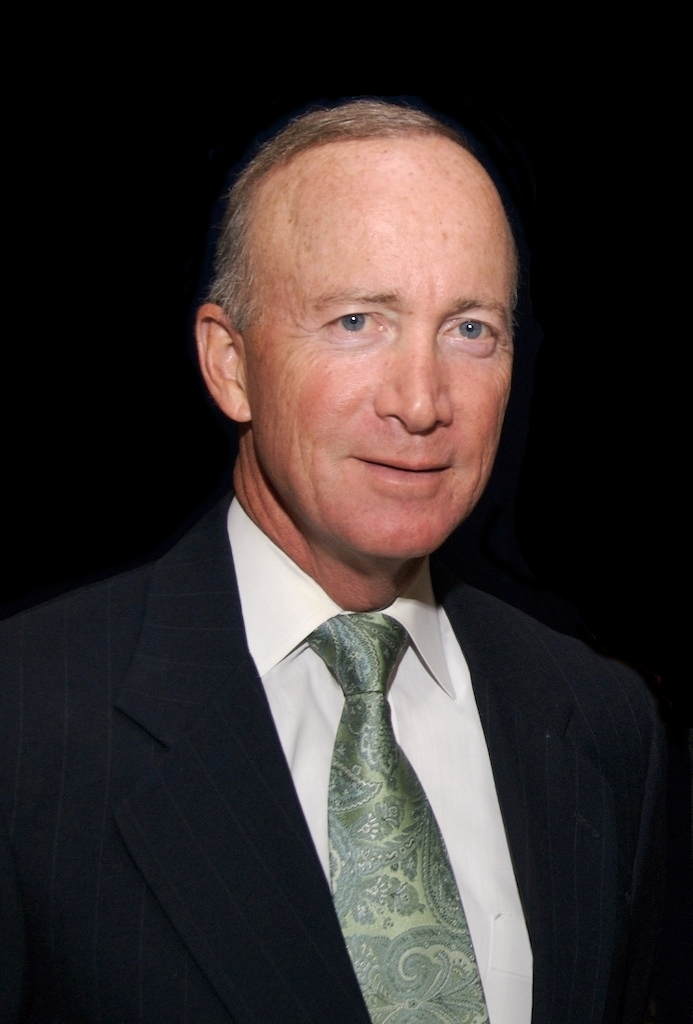
Historical · Governor · Indiana
Mitch Daniels
Former Governor of Indiana · 2005–2013 · Republican
Mitch Daniels served as Governor of Indiana (2005–2013) for the Republican party. The page below collects sourced biographical facts, term history, and provenance for Daniels.
Key facts
- Full name
- Mitch Daniels
- Office
- Governor of Indiana
- State
- Indiana
- Party
- Republican
- Tenure
- 2005–2013
- Took office
- 2005
- Terms recorded
- 1
- Status
- Left office
- Current term ends
- —
- Born
- 1949
- Dataset version
- 1.20260608
Biographical narrative
920 words · sourced from the Wikipedia REST extract
Mitchell Elias Daniels Jr. is a former American politician, businessman, and academic administrator who served as the 49th governor of Indiana from January 2005 to January 2013. A member of the Republican Party, Daniels is recognized for his leadership during a period marked by significant fiscal policy changes and educational reforms in the state. Following his governorship, he became the 12th president of Purdue University, a position he held until January 2023, and is set to return as interim president in July 2026.
Early life and career
Mitch Daniels was born on April 7, 1949, in Monongahela, Pennsylvania. He is the son of Dorothy Mae and Mitchell Elias Daniels, with his paternal grandparents being Syrian immigrants of Antiochian Greek Orthodox descent. His maternal ancestry is primarily English. Daniels spent his early years in Pennsylvania, Tennessee, and Georgia before moving to Indiana in 1959 when his father took a job with the pharmaceutical company Pitman-Moore. The transition from the mountainous terrain of Tennessee to the flatlands of central Indiana was initially challenging for the young Daniels, who was in grade school at the time.
Daniels attended several schools in Indiana, including Delaware Trail Elementary, Westlane Junior High School, and North Central High School, where he served as student body president. He graduated from high school in 1967 and was recognized as one of Indiana's Presidential Scholars, an honor awarded to the state's top male high school graduate.
In pursuit of higher education, Daniels enrolled at Princeton University, where he earned a Bachelor’s degree from the Woodrow Wilson School of Public and International Affairs in 1971. His senior thesis focused on urban policy, specifically "The Politics of Metropolitanization: City-County Consolidation in Indianapolis, Indiana." During his time at Princeton, he was involved in the American Whig–Cliosophic Society, where he interacted with notable peers, including future Supreme Court Justice Samuel Alito.
Daniels initially began studying law at the Indiana McKinney School of Law but later transferred to the Georgetown University Law Center, where he earned his Juris Doctor. His early career included serving as an assistant to U.S. Senator Richard Lugar, where he eventually became the senator's chief of staff from 1977 to 1982. Following this role, he was appointed as the executive director of the National Republican Senatorial Committee during Lugar's chairmanship from 1983 to 1984. In 1985, Daniels worked as a chief political advisor and liaison to President Ronald Reagan.
After his time in Washington, D.C., Daniels returned to Indiana to lead the Hudson Institute, a conservative think tank. He subsequently joined Eli Lilly and Company, where he held several positions, including president of North American Pharmaceutical Operations and senior vice president of corporate strategy and policy. In January 2001, he was appointed by President George W. Bush as the director of the U.S. Office of Management and Budget, a role he held until June 2003.
Governorship
Mitch Daniels entered the political arena as a candidate for governor of Indiana in the 2004 election, following his departure from the Bush administration. He won the Republican primary decisively and went on to defeat the Democratic incumbent, Joe Kernan, in the general election. Daniels took office as governor in January 2005 and was re-elected in 2008, serving until January 2013.
During his tenure, Daniels focused on fiscal responsibility and government efficiency. He implemented measures that resulted in an 18% reduction in the state government workforce and enacted policies to cut and cap property taxes. These actions were part of a broader strategy to balance the state budget, which included austerity measures and limiting spending increases to below the rate of inflation.
Daniels's administration was marked by significant educational reforms, including the introduction of a school voucher program that faced opposition from labor unions and Democrats in the state legislature. His support for privatizing public highways and efforts to pass 'right to work' legislation also led to protests and legislative walkouts in 2011. Ultimately, Indiana became the 23rd state to enact a 'right-to-work law' during his second term.
Despite speculation regarding a potential presidential run in 2012, Daniels opted not to enter the race. After completing his governorship on January 14, 2013, he was recommended by a search committee to become the president of Purdue University, a decision finalized by the university's Board of Trustees, which he had appointed during his governorship.
Policy focus and legacy
Mitch Daniels's governorship is characterized by a commitment to fiscal conservatism and educational reform. His administration's policies aimed to streamline government operations, reduce taxes, and enhance the efficiency of state services. The significant reduction in the state workforce and the implementation of property tax caps were central to his approach to managing Indiana's budget.
The introduction of the school voucher program under his leadership was a pivotal moment in Indiana's educational landscape, allowing families to use state funds for private schooling. This initiative, along with the 'right-to-work' legislation, reflected Daniels's broader vision of promoting economic growth and attracting businesses to Indiana.
Daniels's tenure was not without controversy, as his policies sparked significant debate among various stakeholders, including labor unions and educational advocates. The protests and legislative walkouts that occurred during his administration highlighted the contentious nature of the reforms he pursued.
Following his governorship, Daniels transitioned to academia, serving as president of Purdue University, where he continued to influence educational policy and administration. His legacy as governor is marked by a focus on fiscal discipline, educational reform, and a commitment to conservative principles, shaping the political and economic landscape of Indiana during his time in office.
Notable legislation
Sponsored and co-sponsored legislation for Mitch Daniels is pending operator curation. The biographical narrative above carries the same provenance trail until per-bill rows are written.
Sources
- [1]https://en.wikipedia.org/wiki/Mitch_DanielsWikipedia · retrieved 2026-06-08
Notable quotes
Sourced quotes for Mitch Daniels are pending operator curation. Narrative-scope provenance remains attached below.
Sources
- [1]https://en.wikipedia.org/wiki/Mitch_DanielsWikipedia · retrieved 2026-06-08
Key positions
Curated policy positions for Mitch Daniels are pending operator review. The biographical narrative above carries the same provenance trail until per-topic positions are written.
Sources
- [1]https://en.wikipedia.org/wiki/Mitch_DanielsWikipedia · retrieved 2026-06-08
Terms served
- 2005–2013Governor of Indiana · Term 1 · Republican
Sources & provenance
Every attributable claim above carries a per-section [N] marker that resolves to the corresponding URL below. Each entry records the upstream provider, the canonical URL, and the timestamp at which the source was retrieved by the ingest pipeline.
Key facts
- https://www.wikidata.org/wiki/Q351330wikidata · retrieved 2026-06-08
- https://ballotpedia.org/Mitch_Danielsballotpedia · retrieved 2026-06-08
Biographical narrative
- https://en.wikipedia.org/wiki/Mitch_Danielswikipedia · retrieved 2026-06-08
Explore governors
Every U.S. state elects a governor. Browse Indiana’s gubernatorial lineage, the full roster of sitting governors, or Indiana’s federal candidates.