
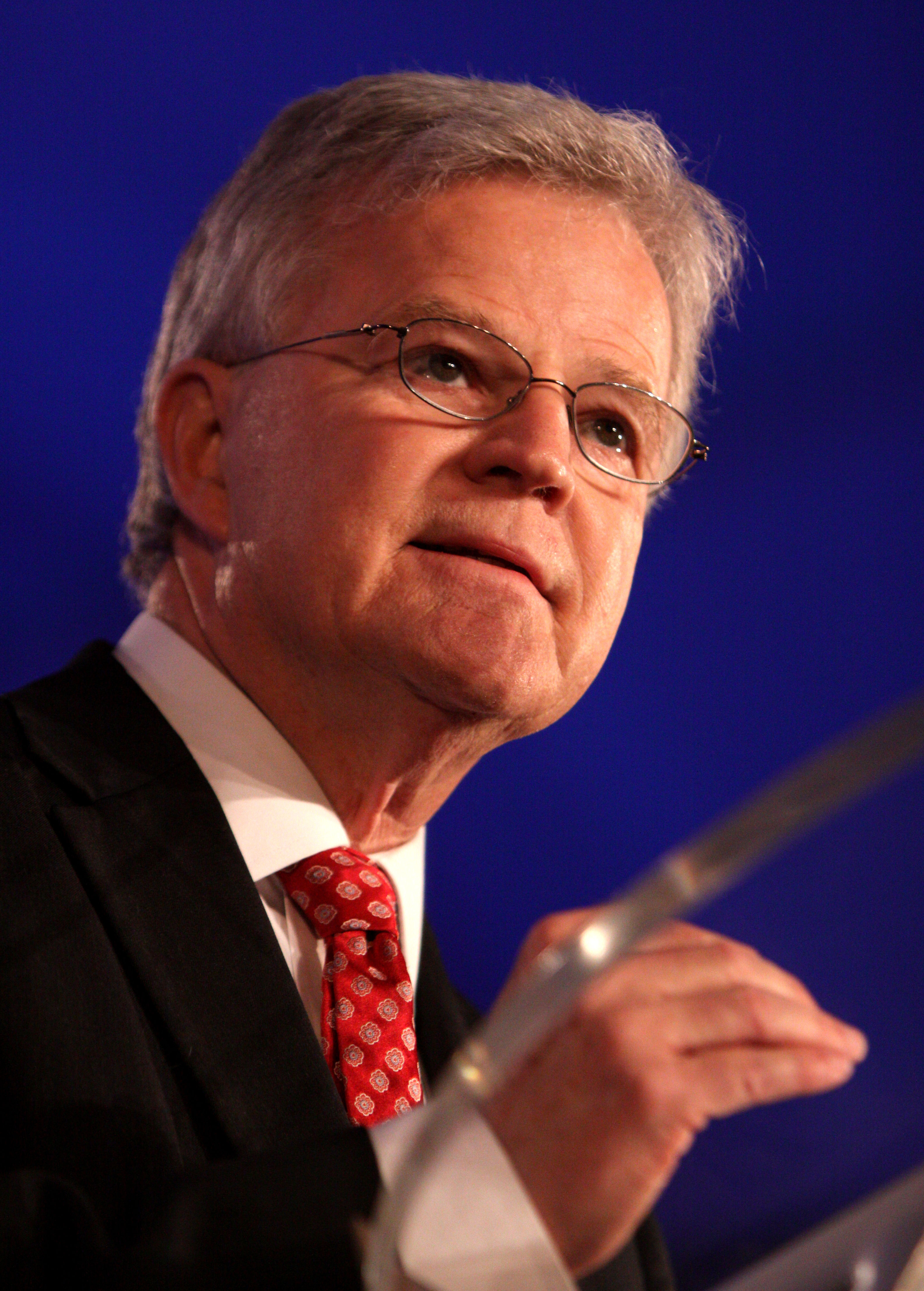
Historical · Governor · Louisiana
Buddy Roemer
Former Governor of Louisiana · 1988–1992 · Reform Party of the United States of America
Buddy Roemer served as Governor of Louisiana (1988–1992) for the Reform Party of the United States of America party. The page below collects sourced biographical facts, term history, and provenance for Roemer.
Key facts
- Full name
- Buddy Roemer
- Office
- Governor of Louisiana
- State
- Louisiana
- Party
- Reform Party of the United States of America
- Tenure
- 1988–1992
- Took office
- 1988
- Terms recorded
- 1
- Status
- Left office
- Current term ends
- —
- Born
- 1943
- Dataset version
- 1.20260608-1
Biographical narrative
813 words · sourced from the Wikipedia REST extract
Charles Elson "Buddy" Roemer III was an American politician who served as the 52nd governor of Louisiana from 1988 to 1992. A member of the Reform Party of the United States of America at the time of his governorship, Roemer previously held a position in the United States House of Representatives from 1981 to 1988. His political career was marked by a significant party switch during his tenure as governor, as well as his later candidacies for the presidency in 2012. Roemer's background in finance and banking, along with his early involvement in politics, shaped his approach to governance and policy-making.
Early life and career
Buddy Roemer was born on October 4, 1943, in Shreveport, Louisiana, to Charles Elson "Budgie" Roemer, II, and Adeline McDade. He grew up on the family plantation, Scopena, located near Bossier City. Roemer attended public schools in the area and graduated as valedictorian from Bossier High School in 1960. He pursued higher education at Harvard University, where he earned a Bachelor of Arts degree in economics in 1964, followed by a Master of Business Administration in finance from Harvard Business School in 1967.
After completing his education, Roemer returned to Louisiana to work in his father's computer business. He later founded two banks, which contributed to his understanding of finance and economic issues. His political career began in earnest in 1972 when he was elected as a delegate to the Louisiana Constitutional Convention held in 1973. During this time, he worked alongside notable figures, including future gubernatorial advisor Robert G. Pugh and future U.S. District Judge Tom Stagg.
Roemer's family had a history of political involvement; his father served as the campaign manager for Edwin Edwards, a prominent Louisiana politician, and later became the commissioner of administration during Edwards' first term as governor. Buddy Roemer himself worked on Edwards' campaign as a regional leader and subsequently established a political consulting firm, further solidifying his connections within the political landscape.
Governorship
Roemer's political ascent continued when he successfully ran for the United States House of Representatives, representing Louisiana's 4th congressional district from 1981 until 1988. His tenure in Congress was characterized by his support for certain Republican initiatives, despite being a member of the Democratic Party at the time. Roemer often found himself at odds with the Democratic leadership, particularly on issues such as tax cuts and foreign aid.
In 1987, Roemer announced his candidacy for governor, entering a crowded field of Democratic candidates seeking to unseat the three-term incumbent, Edwin Edwards. The election was notable for its contentious nature, as Edwards' controversial reputation had polarized voters. Roemer's campaign focused on reform and ethical governance, appealing to constituents seeking change.
Roemer won the gubernatorial election in 1988 and took office as governor. His administration was marked by a commitment to addressing issues such as economic development, education reform, and government transparency. In March 1991, Roemer made a significant political shift by switching his party affiliation from the Democratic Party to the Republican Party. This move reflected his evolving political ideology and was indicative of the changing political landscape in Louisiana.
During his time in office, Roemer faced various challenges, including economic difficulties and public dissatisfaction with the state's governance. His administration implemented several initiatives aimed at improving the state's economy and addressing public concerns. However, his tenure was also marked by political divisions and controversies, which ultimately impacted his popularity.
Policy focus and legacy
Roemer's governorship was characterized by a focus on reforming Louisiana's political and economic systems. He sought to enhance government accountability and transparency, emphasizing the need for ethical standards in public service. His administration aimed to attract investment and stimulate economic growth, particularly in the wake of the state's financial challenges.
In addition to economic initiatives, Roemer prioritized education reform, recognizing the importance of a well-educated workforce for the state's future. His policies aimed to improve educational outcomes and increase access to quality education for Louisiana's residents. Roemer's commitment to these issues reflected his belief in the potential for positive change within the state.
After leaving office in 1992, Roemer remained active in public life, including his involvement in various organizations focused on anti-corruption and political reform. He served on the Advisory Council of Represent.Us, a nonpartisan organization dedicated to combating political corruption and promoting democratic reforms.
In 2012, Roemer sought the presidential nominations of both the Republican Party and the Reform Party, although he ultimately withdrew from the races. He later endorsed Libertarian candidate Gary Johnson for the presidential election. Roemer's political journey, marked by his party switch and candidacy for national office, underscored his ongoing engagement with the political process.
Buddy Roemer passed away on May 17, 2021. His legacy as a governor and public servant is remembered for his efforts to reform Louisiana's political landscape and his commitment to addressing the state's challenges during a transformative period in its history.
Notable legislation
Sponsored and co-sponsored legislation for Buddy Roemer is pending operator curation. The biographical narrative above carries the same provenance trail until per-bill rows are written.
Sources
- [1]https://en.wikipedia.org/wiki/Buddy_RoemerWikipedia · retrieved 2026-06-08
Notable quotes
Sourced quotes for Buddy Roemer are pending operator curation. Narrative-scope provenance remains attached below.
Sources
- [1]https://en.wikipedia.org/wiki/Buddy_RoemerWikipedia · retrieved 2026-06-08
Key positions
Curated policy positions for Buddy Roemer are pending operator review. The biographical narrative above carries the same provenance trail until per-topic positions are written.
Sources
- [1]https://en.wikipedia.org/wiki/Buddy_RoemerWikipedia · retrieved 2026-06-08
Terms served
- 1988–1992Governor of Louisiana · Term 1 · Reform Party of the United States of America
Sources & provenance
Every attributable claim above carries a per-section [N] marker that resolves to the corresponding URL below. Each entry records the upstream provider, the canonical URL, and the timestamp at which the source was retrieved by the ingest pipeline.
Key facts
- https://www.wikidata.org/wiki/Q878651wikidata · retrieved 2026-06-08
- https://ballotpedia.org/Buddy_Roemerballotpedia · retrieved 2026-06-08
Biographical narrative
- https://en.wikipedia.org/wiki/Buddy_Roemerwikipedia · retrieved 2026-06-08
Explore governors
Every U.S. state elects a governor. Browse Louisiana’s gubernatorial lineage, the full roster of sitting governors, or Louisiana’s federal candidates.