
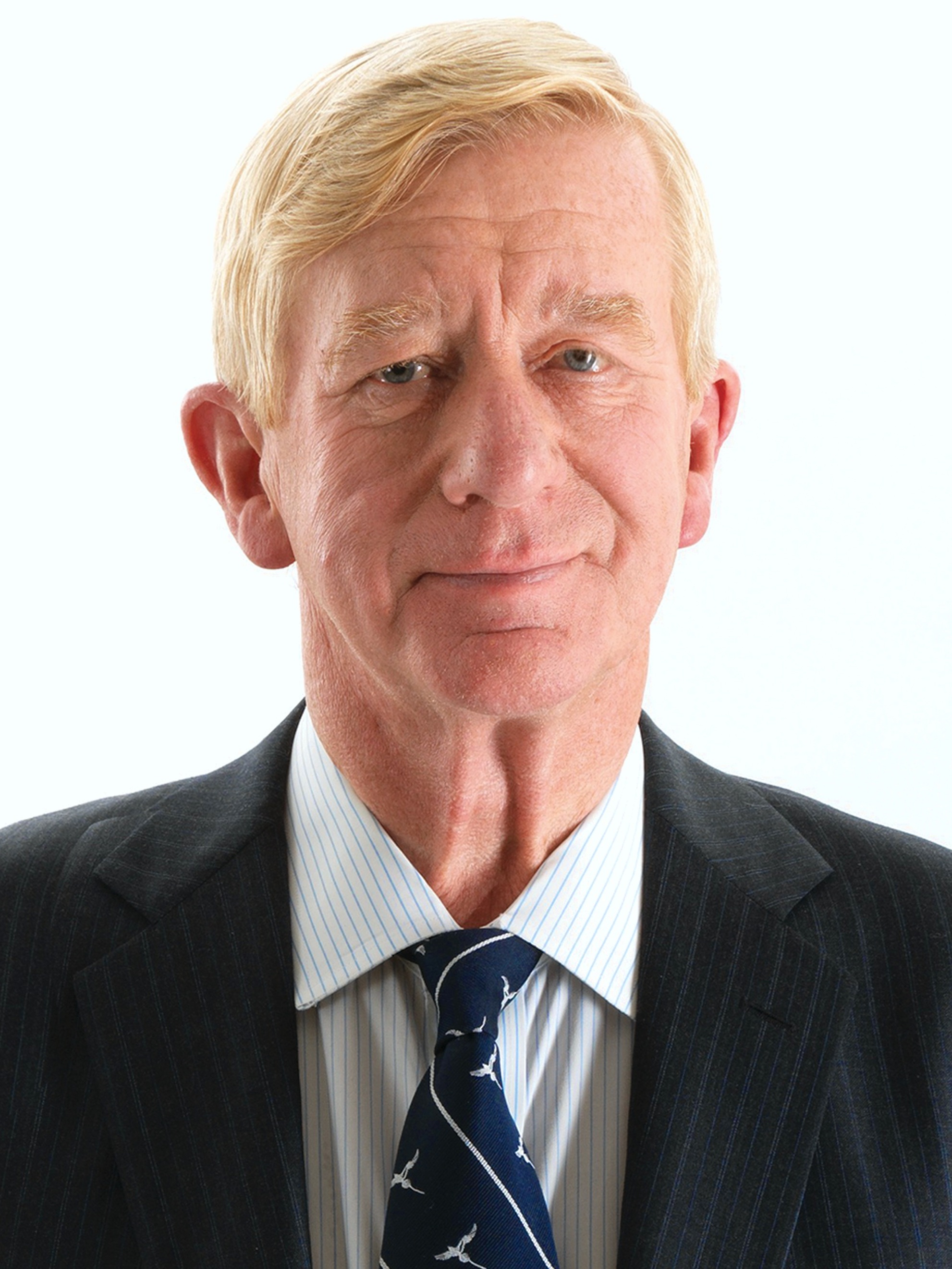
Historical · Governor · Massachusetts
Bill Weld
Former Governor of Massachusetts · 1991–1997 · Libertarian Party
Bill Weld served as Governor of Massachusetts (1991–1997) for the Libertarian Party party. The page below collects sourced biographical facts, term history, and provenance for Weld.
Key facts
- Full name
- Bill Weld
- Office
- Governor of Massachusetts
- State
- Massachusetts
- Party
- Libertarian Party
- Tenure
- 1991–1997
- Took office
- 1991
- Terms recorded
- 1
- Status
- Left office
- Current term ends
- —
- Born
- 1945
- Dataset version
- 1.20260608-1
Biographical narrative
847 words · sourced from the Wikipedia REST extract
William Floyd Weld is an American attorney, businessman, author, and politician who served as the 68th governor of Massachusetts from 1991 to 1997. A member of the Libertarian Party, Weld has also been active in national politics, including running for president in 2020 and serving as the Libertarian Party's vice-presidential nominee in 2016. His career has spanned various roles in public service, law, and business, reflecting a diverse professional background.
Early life and career
William Weld was born on July 31, 1945, in Smithtown, New York. He spent much of his childhood on a farm in Smithtown, although his family maintained a residence in Manhattan. Weld's father, David Weld, was an investment banker, while his mother, Mary Nichols Weld, had familial ties to historical figures, including William Floyd, a signatory of the U.S. Declaration of Independence. The Weld family has a long association with Harvard University, with Weld himself being a graduate. He completed his Bachelor of Arts degree, graduating summa cum laude in classics from Harvard College in 1966, and later earned a Juris Doctor degree, cum laude, from Harvard Law School in 1970. Additionally, he studied economics at University College, Oxford.
Weld's early career began in the legal field, where he served as junior counsel on the U.S. House Judiciary Committee during the impeachment inquiry against President Richard Nixon in 1974. His work contributed to the development of the "Constitutional Grounds for Presidential Impeachment" report, which outlined the historical basis for presidential impeachment. Following this experience, Weld returned to Massachusetts and ran for the position of Massachusetts Attorney General in 1978, although he was unsuccessful in that bid.
In 1981, Weld was appointed by President Ronald Reagan as the U.S. Attorney for Massachusetts, a role in which he gained significant recognition. During his tenure, he prosecuted high-profile cases involving public corruption and white-collar crime, including cases against major financial institutions and the administration of Boston Mayor Kevin White. Weld's efforts in combating public corruption were notable, as he achieved a high conviction rate in related cases, earning him a reputation as a prominent figure in the legal community.
In 1986, Weld was promoted to head the Criminal Division of the U.S. Department of Justice, where he oversaw a large staff and managed federal prosecutions across various jurisdictions. His leadership in this role lasted until 1988, after which he returned to Massachusetts to pursue a political career.
Governorship
Weld's political career took a significant turn when he was elected governor of Massachusetts in 1990. His election marked a notable moment in state politics, as he became the first Republican to hold the office in over a decade. Weld's administration focused on various reforms, including efforts to improve the state's economy and streamline government operations. He was known for his commitment to fiscal responsibility and reducing the size of government.
In 1994, Weld was re-elected as governor, achieving a historic margin of victory, which was the largest in Massachusetts history at that time. His second term continued to emphasize economic growth and government efficiency. Weld's leadership style was characterized by a pragmatic approach to governance, often seeking bipartisan support for his initiatives.
During his tenure, Weld also engaged in national political activities. In 1996, he ran for the U.S. Senate as the Republican nominee but was ultimately defeated by incumbent Democrat John Kerry. Following this electoral loss, Weld resigned as governor in 1997 to pursue a nomination by President Bill Clinton to serve as the U.S. Ambassador to Mexico. However, his nomination faced opposition in the Senate, leading him to withdraw from consideration.
Policy focus and legacy
Throughout his governorship, Weld's policy focus included economic development, education reform, and public safety. He implemented measures aimed at improving the business climate in Massachusetts, which included tax reforms and initiatives to attract investment. His administration also prioritized education, with efforts to enhance the quality of public schooling and increase accountability within the education system.
Weld's legacy is marked by his approach to governance, which combined fiscal conservatism with a willingness to engage in dialogue across party lines. His tenure as governor is often remembered for its emphasis on pragmatic solutions to complex issues facing the state. After leaving office, Weld continued to be active in politics, including his involvement in presidential campaigns. In 2016, he became the Libertarian Party's vice-presidential nominee alongside Gary Johnson, and they garnered a significant number of votes, marking a notable achievement for a third-party ticket.
In 2019, Weld announced his candidacy for the Republican nomination for president in the 2020 election, challenging the incumbent, Donald Trump. His campaign was characterized by a focus on traditional Republican values and a call for party unity. Although he did not secure the nomination, Weld's participation in the primaries was significant, as he won a delegate in the Iowa caucus, a rare achievement for a challenger against an incumbent president.
Weld's political journey reflects a commitment to public service and a willingness to adapt to changing political landscapes. His contributions to Massachusetts and national politics continue to be recognized as part of his multifaceted career.
Notable legislation
Sponsored and co-sponsored legislation for Bill Weld is pending operator curation. The biographical narrative above carries the same provenance trail until per-bill rows are written.
Sources
- [1]https://en.wikipedia.org/wiki/Bill_WeldWikipedia · retrieved 2026-06-08
Notable quotes
Sourced quotes for Bill Weld are pending operator curation. Narrative-scope provenance remains attached below.
Sources
- [1]https://en.wikipedia.org/wiki/Bill_WeldWikipedia · retrieved 2026-06-08
Key positions
Curated policy positions for Bill Weld are pending operator review. The biographical narrative above carries the same provenance trail until per-topic positions are written.
Sources
- [1]https://en.wikipedia.org/wiki/Bill_WeldWikipedia · retrieved 2026-06-08
Terms served
- 1991–1997Governor of Massachusetts · Term 1 · Libertarian Party
Sources & provenance
Every attributable claim above carries a per-section [N] marker that resolves to the corresponding URL below. Each entry records the upstream provider, the canonical URL, and the timestamp at which the source was retrieved by the ingest pipeline.
Key facts
- https://www.wikidata.org/wiki/Q720242wikidata · retrieved 2026-06-08
- https://ballotpedia.org/Bill_Weldballotpedia · retrieved 2026-06-08
Biographical narrative
- https://en.wikipedia.org/wiki/Bill_Weldwikipedia · retrieved 2026-06-08
Explore governors
Every U.S. state elects a governor. Browse Massachusetts’s gubernatorial lineage, the full roster of sitting governors, or Massachusetts’s federal candidates.