
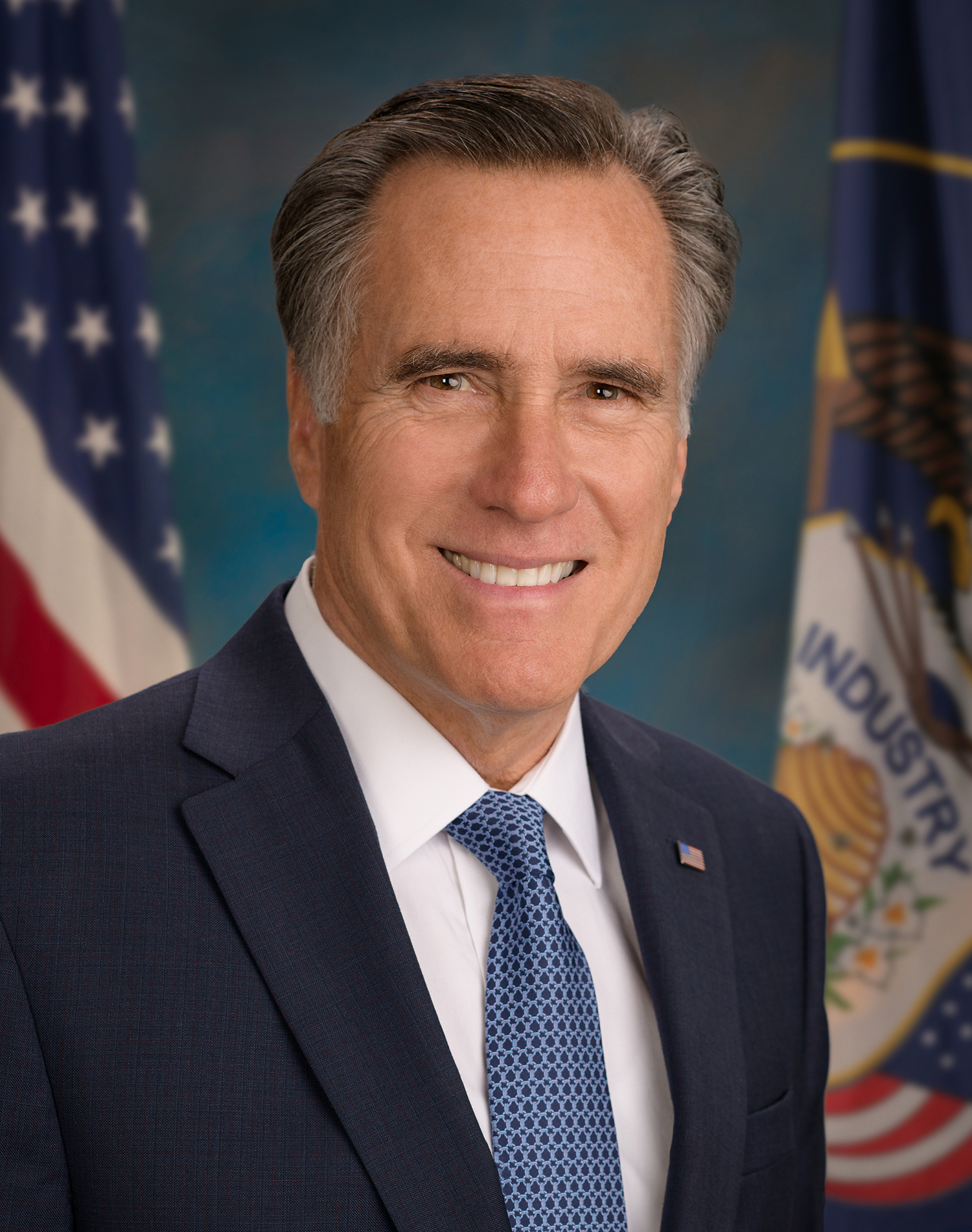
Historical · Governor · Massachusetts
Mitt Romney
Former Governor of Massachusetts · 2003–2007 · Republican
Mitt Romney served as Governor of Massachusetts (2003–2007) for the Republican party. The page below collects sourced biographical facts, term history, and provenance for Romney.
Key facts
- Full name
- Mitt Romney
- Office
- Governor of Massachusetts
- State
- Massachusetts
- Party
- Republican
- Tenure
- 2003–2007
- Took office
- 2003
- Terms recorded
- 1
- Status
- Left office
- Current term ends
- —
- Born
- 1947
- Dataset version
- 1.20260608
Biographical narrative
1,006 words · sourced from the Wikipedia REST extract
Willard Mitt Romney is an American businessman and retired politician who served as the 70th governor of Massachusetts from 2003 to 2007. A member of the Republican Party, he is known for his moderate political stance and has held various significant roles throughout his career, including serving as a U.S. senator from Utah from 2019 to 2025. Romney gained national prominence as the Republican nominee for president in the 2012 election. His political journey has been marked by a blend of business acumen and public service, reflecting his background and upbringing.
Early life and career
Mitt Romney was born on March 12, 1947, in Detroit, Michigan, to George W. Romney and Lenore Romney. His father was a prominent automobile executive and served as the governor of Michigan, while his mother was an actress and homemaker. Growing up in a politically engaged family, Romney was influenced by his father's career and the values instilled in him through his heritage as a fifth-generation member of the Church of Jesus Christ of Latter-day Saints (LDS Church). His family background includes notable figures in early Mormon history, which contributed to his strong ties to the church.
Romney spent his early years in Detroit before moving to Bloomfield Hills, Michigan, where he attended public elementary schools. He later enrolled in Cranbrook School, a prestigious private preparatory institution, where he faced the challenges of being one of the few Mormon students. Although he did not excel academically or athletically, he was active in various school organizations and participated in extracurricular activities, including managing the ice hockey team and joining the pep squad. His high school years were also marked by a budding romance with Ann Davies, whom he began dating during his senior year.
After graduating from high school in 1965, Romney attended Stanford University for a year before embarking on a 30-month mission in France for the LDS Church. Upon returning, he completed his undergraduate education at Brigham Young University, earning a degree in 1971. He then pursued further studies at Harvard University, where he obtained joint JD and MBA degrees in 1975. Following his education, Romney began his professional career at Bain & Company in Boston, where he eventually became the chief executive officer. In 1984, he co-founded Bain Capital, which grew into one of the largest private equity firms in the United States.
Romney's initial foray into politics came in 1994 when he ran as the Republican nominee for the U.S. Senate seat in Massachusetts, challenging incumbent Ted Kennedy. Despite a vigorous campaign, he was unsuccessful in this bid. After returning to Bain Capital, he later took on the role of president and CEO of the organizing committee for the 2002 Winter Olympics in Salt Lake City, which was facing significant challenges. His successful management of the Olympics helped to revitalize his political aspirations and set the stage for his future electoral success.
Governorship
In 2002, Mitt Romney returned to Massachusetts and successfully ran for governor, taking office in 2003. His tenure as the 70th governor of the state was characterized by a focus on fiscal responsibility and health care reform. One of his most notable achievements was the development and implementation of a health care reform law that aimed to provide near-universal access to health insurance for Massachusetts residents. This legislation has since been referred to as "Romneycare" and served as a model for later national health care reforms.
During his governorship, Romney faced significant budget challenges, including a projected deficit of $1.2 to $1.5 billion. To address these financial issues, he implemented a combination of spending cuts and reforms, including the elimination of certain corporate tax loopholes. His administration's efforts were aimed at stabilizing the state's finances while also expanding health care access, which was a central theme of his governorship.
Romney's approach to governance was marked by a willingness to work across party lines, although he often faced criticism from more conservative factions within his party for his moderate positions. He did not seek reelection in 2006, choosing instead to pursue the Republican nomination for the presidency in the 2008 election. His decision to step down as governor allowed him to focus on national politics, where he aimed to build on his gubernatorial experience.
Policy focus and legacy
Throughout his political career, Mitt Romney has been recognized for his moderate or neoconservative Republican stance. His policies and positions have often reflected a pragmatic approach to governance, emphasizing fiscal responsibility, health care reform, and a commitment to bipartisanship. During his time in the Senate, he continued to advocate for various issues, including gun control measures and support for social justice movements, illustrating his willingness to engage with contemporary political debates.
Romney's legacy includes his role in shaping health care policy in Massachusetts, which has had a lasting impact on the state's health care system and served as a precursor to the Affordable Care Act at the national level. His tenure as governor is often viewed through the lens of his health care initiatives, which aimed to expand access to insurance and improve health outcomes for residents.
In addition to his gubernatorial achievements, Romney's political career has been marked by his unique position as a former governor of one state and a sitting senator from another. His election to the U.S. Senate from Utah in 2018 made him the first individual in modern U.S. history to hold both offices in different states. This transition reflects his adaptability and continued relevance in American politics.
Romney's political journey has also been characterized by significant electoral challenges, including his bids for the presidency in 2008 and 2012. While he did not win the presidency, his campaigns brought national attention to his policy positions and political philosophy. His decision to not seek reelection in 2024 and his retirement from the Senate at the end of his term in 2025 mark the conclusion of a notable chapter in his political career, leaving behind a complex legacy that encompasses both his achievements and the controversies that have accompanied his public life.
Notable legislation
Sponsored and co-sponsored legislation for Mitt Romney is pending operator curation. The biographical narrative above carries the same provenance trail until per-bill rows are written.
Sources
- [1]https://en.wikipedia.org/wiki/Mitt_RomneyWikipedia · retrieved 2026-06-08
Notable quotes
Sourced quotes for Mitt Romney are pending operator curation. Narrative-scope provenance remains attached below.
Sources
- [1]https://en.wikipedia.org/wiki/Mitt_RomneyWikipedia · retrieved 2026-06-08
Key positions
Curated policy positions for Mitt Romney are pending operator review. The biographical narrative above carries the same provenance trail until per-topic positions are written.
Sources
- [1]https://en.wikipedia.org/wiki/Mitt_RomneyWikipedia · retrieved 2026-06-08
Terms served
- 2003–2007Governor of Massachusetts · Term 1 · Republican
Sources & provenance
Every attributable claim above carries a per-section [N] marker that resolves to the corresponding URL below. Each entry records the upstream provider, the canonical URL, and the timestamp at which the source was retrieved by the ingest pipeline.
Key facts
- https://www.wikidata.org/wiki/Q4496wikidata · retrieved 2026-06-08
- https://ballotpedia.org/Mitt_Romneyballotpedia · retrieved 2026-06-08
Biographical narrative
- https://en.wikipedia.org/wiki/Mitt_Romneywikipedia · retrieved 2026-06-08
Explore governors
Every U.S. state elects a governor. Browse Massachusetts’s gubernatorial lineage, the full roster of sitting governors, or Massachusetts’s federal candidates.