
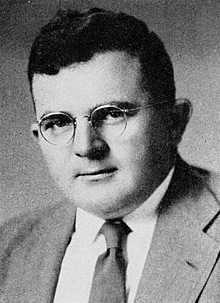
Former · State Senate · Massachusetts
Philip A. Graham
Former State Senator · Massachusetts · senate-s-third-essex · Republican
Philip A. Graham served as a State Senator in the Massachusetts State Senate, representing senate-s-third-essex for the Republican party. The page below collects sourced biographical facts, the seat and district served, and provenance for Graham.
Key facts
- Full name
- Philip A. Graham
- Office
- State Senator
- Chamber
- Massachusetts State Senate
- State
- Massachusetts
- District
- senate-s-third-essex
- Party
- Republican
- Status
- Left office
- Born
- 1910
- OpenStates ID
- —
- Dataset version
- 1.20260610
Biographical narrative
998 words · sourced from the Wikipedia REST extract
Philip A. Graham was an American politician who served as a member of the Massachusetts State Senate for the Third Essex district from 1951 until 1967. A member of the Republican Party, Graham's political career spanned over a decade, during which he held various leadership roles and was involved in significant legislative initiatives. His tenure in the Senate was marked by his advocacy for fiscal policies and his efforts to address government inefficiencies.
Early life and career
Philip A. Graham was born on May 21, 1910, in Lynn, Massachusetts. He grew up in the area, attending public schools in both Lynn and the neighboring town of Swampscott. After completing his secondary education, he pursued higher education at Boston University, where he obtained his degree. Following his academic pursuits, Graham served in the United States Navy during World War II, contributing to the war effort during a pivotal time in history.
After the war, Graham began his political career by being elected to the Swampscott School Committee, where he gained initial experience in public service. He later relocated to Hamilton, Massachusetts, where he transitioned into agriculture, working as a turkey farmer. This experience in both education and agriculture provided him with a unique perspective on the needs of his constituents and the challenges faced by local communities.
In 1950, Graham entered state politics when he was elected to the Massachusetts Senate. His election marked the beginning of a significant legislative career that would last for nearly two decades. During his time in the Senate, he became known for his commitment to public service and his focus on improving the efficiency of government operations.
Legislative service
Graham's legislative service in the Massachusetts Senate began in 1951 and continued until 1967. Throughout his time in office, he was involved in various legislative initiatives and played a role in shaping state policy. One of his notable contributions was his support for the establishment of a state sales tax, a significant fiscal measure aimed at generating revenue for state programs and services. This initiative reflected his understanding of the financial needs of the state and the importance of sustainable funding mechanisms.
In addition to his support for the sales tax, Graham was vocal about issues related to government inefficiency and corruption. He took a strong stance against practices that he believed undermined the integrity of state governance. His advocacy for transparency and accountability resonated with many constituents who were concerned about the effectiveness of their government.
In 1956, Graham sought to elevate his role within the Senate by running for the position of Senate President after Richard I. Furbush chose not to seek re-election. During the Republican caucus preceding the floor vote, Graham emerged victorious against Newland H. Holmes, securing fifteen votes to Holmes' six. However, the political landscape shifted when Holmes opted to challenge Graham and Democratic leader John E. Powers in the subsequent election for Senate President. The first ballot revealed a split Republican vote, with Graham receiving sixteen votes and Holmes five, while all nineteen Democrats supported Powers. After negotiations, Powers aligned with Holmes, leading to a second ballot in which Holmes won the presidency with twenty votes to Graham's sixteen.
Graham's political ambitions extended beyond the Senate, as he ran for Governor of Massachusetts in both 1960 and 1964. However, he was unsuccessful in securing the Republican nomination, losing to John A. Volpe on both occasions. Despite these setbacks, Graham continued to serve in the Senate and was appointed as the Minority Leader from 1963 to 1967, a role that allowed him to influence legislative priorities and represent the interests of his party.
Graham's final term in the Senate was marked by personal health challenges, as he suffered a heart attack during this period. Following this health issue, he chose not to seek re-election. His departure from the Senate did not mark the end of his public service; he was appointed by Governor Volpe to an eight-year term on the Massachusetts Turnpike Authority, where he continued to contribute to the state's infrastructure and transportation initiatives.
Policy focus and district
During his time in the Massachusetts Senate, Philip A. Graham focused on several key policy areas that reflected the needs and concerns of his constituents in the Third Essex district. His advocacy for the state sales tax was a central aspect of his fiscal policy, aimed at ensuring that the state could adequately fund essential services and programs. This initiative was particularly relevant during a time when many states were grappling with budgetary constraints and the need for stable revenue sources.
Graham's commitment to addressing government inefficiency and corruption was another hallmark of his legislative agenda. He sought to implement measures that would enhance transparency and accountability within state government, recognizing that public trust was essential for effective governance. His efforts in this area resonated with constituents who were increasingly aware of the importance of ethical practices in public service.
As a representative of the Third Essex district, Graham's policies were influenced by the unique characteristics and needs of the communities he served. His background as a turkey farmer and his experience in local government provided him with insights into the agricultural and educational concerns of his constituents. This understanding informed his legislative priorities and allowed him to advocate effectively for policies that would benefit the residents of his district.
Graham's legislative career came to an end when he chose not to run for re-election after his health issues. His contributions to the Massachusetts Senate and his commitment to public service left a lasting impact on the state and the communities he represented. Following his departure from the Senate, he continued to serve the public in a different capacity, demonstrating his ongoing dedication to the welfare of Massachusetts residents.
Philip A. Graham passed away on November 1, 1993, at his home in Newbury, Massachusetts. His life and career reflect a commitment to public service and the complexities of state governance during a transformative period in American history.
Notable legislation
Sponsored and co-sponsored legislation for Philip A. Graham is pending operator curation. The biographical narrative above carries the same provenance trail until per-bill rows are written.
Sources
- [1]https://en.wikipedia.org/wiki/Philip_A._GrahamWikipedia · retrieved 2026-06-10
Notable quotes
Sourced quotes for Philip A. Graham are pending operator curation. Narrative-scope provenance remains attached below.
Sources
- [1]https://en.wikipedia.org/wiki/Philip_A._GrahamWikipedia · retrieved 2026-06-10
Key positions
Curated policy positions for Philip A. Graham are pending operator review. The biographical narrative above carries the same provenance trail until per-topic positions are written.
Sources
- [1]https://en.wikipedia.org/wiki/Philip_A._GrahamWikipedia · retrieved 2026-06-10
Legislative service
- Massachusetts State Senate1965–senate-s-third-essex · Republican
Sources & provenance
Every attributable claim above carries a per-section [N] marker that resolves to the corresponding URL below. Each entry records the upstream provider, the canonical URL, and the timestamp at which the source was retrieved by the ingest pipeline.
Key facts
- https://www.wikidata.org/wiki/Q7183091wikidata · retrieved 2026-06-10
- https://ballotpedia.org/Philip_A._Grahamballotpedia · retrieved 2026-06-10
Biographical narrative
- https://en.wikipedia.org/wiki/Philip_A._Grahamwikipedia · retrieved 2026-06-10
Explore the State Senate
Browse Massachusetts’s senate-s-third-essex seat, the full Massachusetts State Senate roster, or Massachusetts’s federal candidates.
Related on The Candidate
- Massachusetts senate-s-third-essexEvery member representing senate-s-third-essex in the Massachusetts State Senate.Open
- Massachusetts State SenateThe full roster of the Massachusetts State Senate, by district.Open
- Massachusetts legislatureBoth chambers of the Massachusetts state legislature.Open
- Massachusetts federal candidatesEvery 2026 federal House and Senate candidate in Massachusetts.Open