
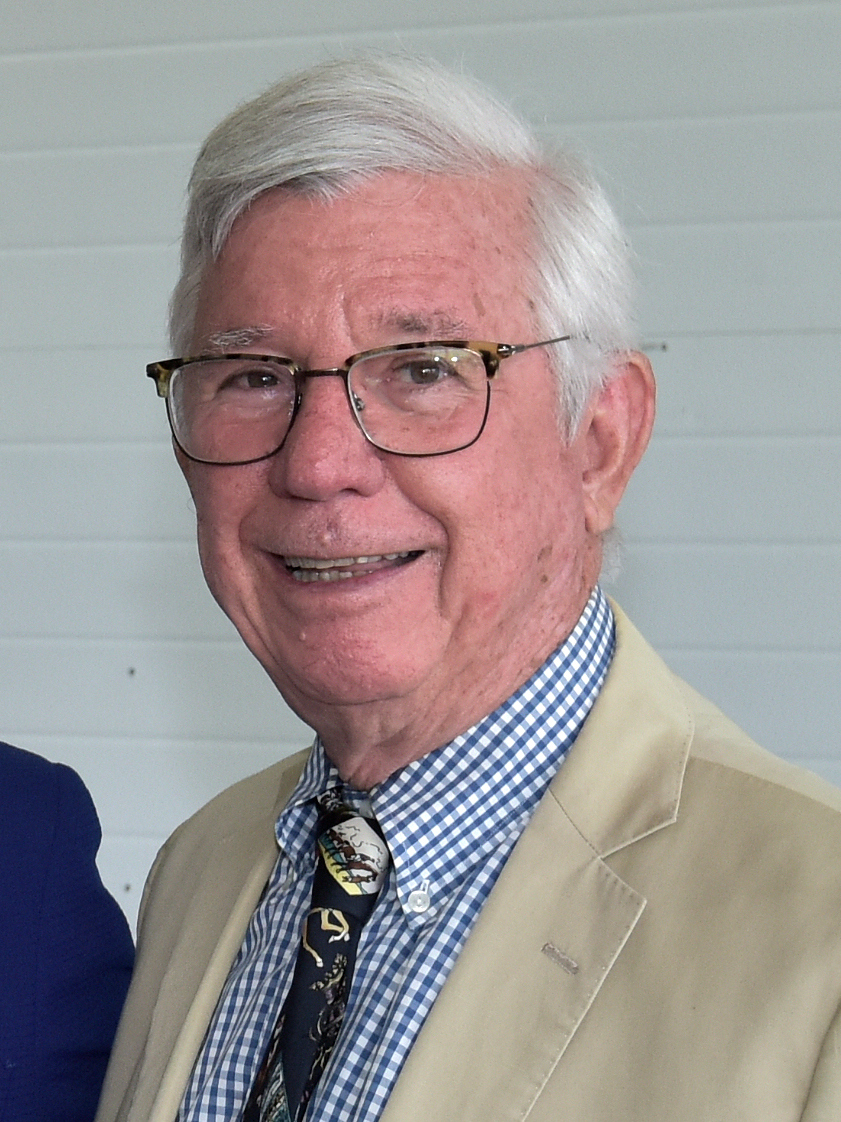
Historical · Governor · Maryland
Parris Glendening
Former Governor of Maryland · 1995–2003 · Democratic
Parris Glendening served as Governor of Maryland (1995–2003) for the Democratic party. The page below collects sourced biographical facts, term history, and provenance for Glendening.
Key facts
- Full name
- Parris Glendening
- Office
- Governor of Maryland
- State
- Maryland
- Party
- Democratic
- Tenure
- 1995–2003
- Took office
- 1995
- Terms recorded
- 1
- Status
- Left office
- Current term ends
- —
- Born
- 1942
- Dataset version
- 1.20260608
Biographical narrative
1,050 words · sourced from the Wikipedia REST extract
Parris Glendening is a former American politician and academic who served as the 59th governor of Maryland from 1995 to 2003. A member of the Democratic Party, Glendening previously held the position of county executive for Prince George's County, Maryland, from 1982 to 1994. His tenure as governor was marked by significant initiatives in education, environmental protection, and economic development, as well as a focus on smart growth policies.
Early life and career
Parris Nelson Glendening was born on June 11, 1942, in The Bronx, New York City. During his childhood, he relocated to Florida, where he was raised in a Catholic household. Glendening attended St. Thomas Aquinas High School in Fort Lauderdale, Florida, where he demonstrated academic promise. He later won a financial scholarship to Broward Community College, which enabled him to pursue higher education.
Glendening's academic journey continued at Florida State University, where he earned a bachelor's degree in 1964, followed by a master's degree in 1965, and ultimately a PhD in 1967. His achievement in obtaining a doctorate made him the youngest student in the history of Florida State University to do so in the field of political science. Following his graduation, he embarked on a career in academia, serving as a professor of government and politics at the University of Maryland at College Park for 27 years. In 1977, he co-authored a book titled "Pragmatic Federalism: An Intergovernmental View of American Government," which contributed to the discourse on American governance.
Glendening's entry into public service began in 1973 when he was elected as a city councilman in Hyattsville, Maryland, a suburb of Washington, D.C. His political career progressed as he was elected to the county council of Prince George's County in 1974, where he served two terms as council chairman. In 1982, he was elected as the county executive of Prince George's County, becoming the first person in Maryland to hold this position for three consecutive terms, serving until 1994. During his time as county executive, Glendening's leadership earned Prince George's County recognition as an "All America County" by the National Civic League, and he was acknowledged by City and State Magazine as the "most valuable county official" in the nation.
Governorship
Parris Glendening was elected as governor of Maryland in 1995, narrowly defeating Republican candidate Ellen Sauerbrey by a margin of just under 6,000 votes. The election was contentious, with Sauerbrey alleging irregularities in the voting process, particularly concerning claims of deceased individuals voting. However, these claims were not substantiated in court, and Glendening's victory was certified. His election marked a significant moment in Maryland's political history, as he became the first governor from the Washington, D.C., metropolitan area since 1867.
In 1998, Glendening successfully won re-election, again facing Sauerbrey, this time with a more comfortable margin of victory. His administration focused on several key areas, including education, environmental protection, tax reform, and economic development. During his first term, Glendening implemented significant tax cuts, reducing or lowering more than 50 taxes in Maryland, including the state personal income tax. His efforts in job creation were particularly notable, as Maryland's ranking in job creation improved significantly during his administration, moving from 43rd to 14th nationally.
Glendening's administration also placed a strong emphasis on biotechnology, aiming to position Maryland as a leader in this field. He successfully attracted several biotechnology companies to the state, contributing to the growth of Maryland's biotech sector, which, as of 2014, was recognized as the second-largest per capita in the United States.
In addition to economic initiatives, Glendening played a crucial role in the relocation of professional sports teams to Maryland. He negotiated agreements that brought the Washington Redskins to a new stadium in Landover and facilitated the return of the Baltimore Ravens to the city after their relocation from Cleveland. These efforts involved navigating complex political landscapes and addressing the infrastructure needs associated with the new stadiums.
During his second term, Glendening's focus shifted to environmental issues, particularly concerning the Chesapeake Bay and the challenges posed by overdevelopment in rural areas. He became known for his advocacy of smart growth policies, which aimed to balance development with environmental stewardship. Glendening is credited with coining the term "Smart Growth," emphasizing sustainable land use and responsible development practices.
In 2001, Glendening championed legislation that banned discrimination based on sexual orientation, marking a significant step forward in civil rights for the state. His administration also took a controversial stance on capital punishment; while overseeing two executions in 1997 and 1998, he later issued an executive order in 2002 to halt executions in Maryland. This decision was reversed by his successor, but the issue remained a topic of significant public debate.
As Glendening's governorship approached its conclusion, he was unable to seek re-election due to term limits established by the state constitution. His lieutenant governor, Kathleen Kennedy Townsend, was nominated by the Democratic Party to succeed him. However, Townsend faced challenges during the election, particularly from rural voters who criticized Glendening's environmental policies, which they felt imposed undue burdens on agricultural practices.
Policy focus and legacy
Parris Glendening's governorship is characterized by a multifaceted approach to governance that encompassed economic growth, environmental sustainability, and social equity. His commitment to education and investment in higher education laid the groundwork for Maryland's future workforce. The tax reforms implemented during his administration aimed to stimulate economic activity and improve the state's fiscal health.
Glendening's focus on biotechnology not only attracted businesses but also positioned Maryland as a significant player in the national biotech landscape. His efforts in this sector contributed to job creation and economic diversification, which have had lasting impacts on the state's economy.
The environmental initiatives he championed, particularly regarding the Chesapeake Bay, reflect a growing awareness of the need for sustainable development practices. His advocacy for smart growth policies has influenced urban planning and development strategies in Maryland and beyond.
Overall, Glendening's legacy as governor is marked by his efforts to balance economic development with environmental protection, his contributions to civil rights, and his role in shaping Maryland's political landscape during a time of significant change. His tenure is often viewed through the lens of the challenges and successes that defined the state during the late 1990s and early 2000s, leaving a complex and enduring impact on Maryland's governance and policy direction.
Notable legislation
Sponsored and co-sponsored legislation for Parris Glendening is pending operator curation. The biographical narrative above carries the same provenance trail until per-bill rows are written.
Sources
- [1]https://en.wikipedia.org/wiki/Parris_GlendeningWikipedia · retrieved 2026-06-08
Notable quotes
Sourced quotes for Parris Glendening are pending operator curation. Narrative-scope provenance remains attached below.
Sources
- [1]https://en.wikipedia.org/wiki/Parris_GlendeningWikipedia · retrieved 2026-06-08
Key positions
Curated policy positions for Parris Glendening are pending operator review. The biographical narrative above carries the same provenance trail until per-topic positions are written.
Sources
- [1]https://en.wikipedia.org/wiki/Parris_GlendeningWikipedia · retrieved 2026-06-08
Terms served
- 1995–2003Governor of Maryland · Term 1 · Democratic
Sources & provenance
Every attributable claim above carries a per-section [N] marker that resolves to the corresponding URL below. Each entry records the upstream provider, the canonical URL, and the timestamp at which the source was retrieved by the ingest pipeline.
Key facts
- https://www.wikidata.org/wiki/Q650928wikidata · retrieved 2026-06-08
- https://ballotpedia.org/Parris_Glendeningballotpedia · retrieved 2026-06-08
Biographical narrative
- https://en.wikipedia.org/wiki/Parris_Glendeningwikipedia · retrieved 2026-06-08
Explore governors
Every U.S. state elects a governor. Browse Maryland’s gubernatorial lineage, the full roster of sitting governors, or Maryland’s federal candidates.