
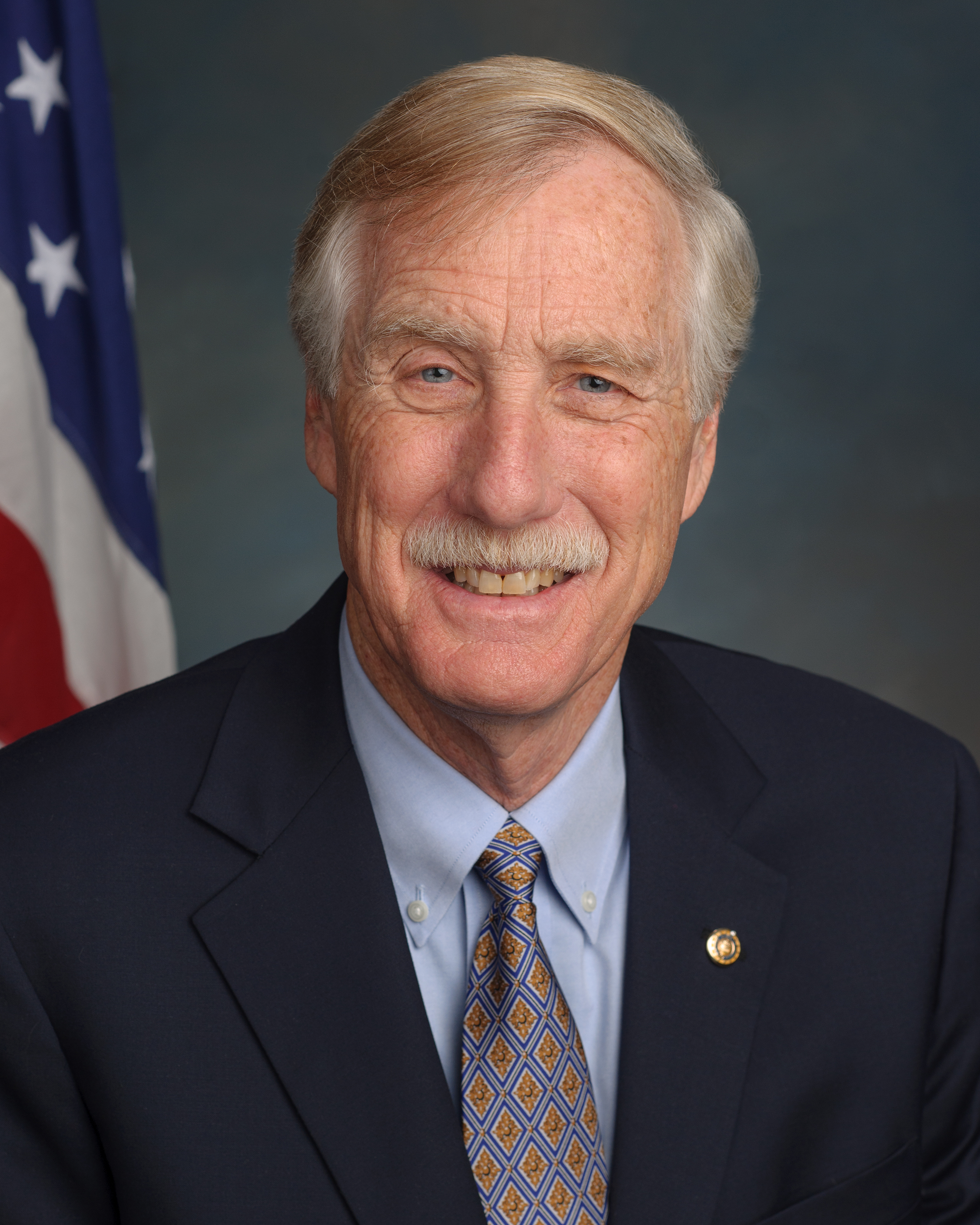
Historical · Governor · Maine
Angus King
Former Governor of Maine · 1995–2003 · Independent
Angus King served as Governor of Maine (1995–2003) for the Independent party. The page below collects sourced biographical facts, term history, and provenance for King.
Key facts
- Full name
- Angus King
- Office
- Governor of Maine
- State
- Maine
- Party
- Independent
- Tenure
- 1995–2003
- Took office
- 1995
- Terms recorded
- 1
- Status
- Left office
- Current term ends
- —
- Born
- 1944
- Dataset version
- 1.20260608-1
Biographical narrative
953 words · sourced from the Wikipedia REST extract
Angus King is an American lawyer and politician who served as the 72nd governor of Maine from 1995 to 2003. An independent, King is notable for being the only governor in the United States not affiliated with a major political party during his time in office. Following his governorship, he transitioned into a political career at the federal level, becoming a U.S. senator in 2013. His governance was characterized by a focus on pragmatic environmentalism, job creation, and education, which contributed to his high approval ratings during his tenure.
Early life and career
Angus Stanley King Jr. was born on March 31, 1944, in Alexandria, Virginia. He is the son of Ellen Archer Ticer and Angus Stanley King, a lawyer who served as a U.S. magistrate for the Eastern District of Virginia. King completed his early education at Francis C. Hammond High School in Alexandria before pursuing higher education at Dartmouth College, where he earned a Bachelor of Arts degree in 1966. While at Dartmouth, he became a member of the Delta Upsilon social fraternity. Following his undergraduate studies, King attended the University of Virginia School of Law, graduating with a Juris Doctor in 1969.
After completing his law degree, King began his professional career in private law practice in Brunswick, Maine. He also worked as a staff attorney for Pine Tree Legal Assistance in Skowhegan, where he provided legal support to low-income individuals. In 1972, he took on the role of chief counsel for the U.S. Senate Subcommittee on Alcoholism and Narcotics, further expanding his experience in legislative matters. During the 1970s, King served as a legislative assistant to Democratic U.S. Senator William Hathaway, which deepened his involvement in political processes.
King's early career was marked by a significant health challenge when he was diagnosed with an aggressive form of melanoma in 1973. His survival, which he attributes to having health insurance, has influenced his views on healthcare policy, particularly his support for the Affordable Care Act. After returning to Maine in 1975, he practiced law with the firm Smith, Loyd and King. In 1983, he transitioned to the energy sector as vice president of Swift River/Hafslund Company, where he worked on developing alternative energy projects, including hydroelectric and biomass initiatives.
In 1989, King founded Northeast Energy Management, Inc., a company focused on electrical energy conservation projects. This venture proved successful, and he sold the company in 1994. By 2012, his investments were estimated to be valued between $4.8 million and $22.5 million, reflecting his successful business career prior to entering politics.
Governorship
King announced his candidacy for governor of Maine in May 1993, running as an independent in the upcoming 1994 election. The incumbent governor, John McKernan Jr., was term-limited and could not seek re-election. King had previously been affiliated with the Democratic Party but chose to run as an independent, citing a belief that the party had shifted away from its foundational principles. The gubernatorial race was highly competitive, featuring four candidates: King, Republican nominee Susan Collins, Democratic nominee Joseph E. Brennan, and Green Party nominee Jonathan Carter.
King's campaign strategy included early investment in television advertising, which helped him gain visibility during the state's early primary season. He positioned himself as a pragmatic environmentalist and businessman, emphasizing job creation and education as key issues. The election culminated in a closely contested general election on November 8, where King narrowly won with 35% of the vote, defeating Brennan, who received 34%. Collins and Carter garnered 23% and 6% of the vote, respectively. King's victory marked a significant moment in Maine's political history, as he became the first independent governor since James B. Longley, who had held the office two decades earlier.
During his governorship, King was recognized for his unique position as the only U.S. governor not affiliated with a political party. His administration was characterized by a high approval rating, which reached 75% as he approached his re-election campaign in 1998. King successfully won re-election, further solidifying his influence in Maine politics. His tenure included the signing of legislation that mandated background checks and fingerprinting for all school employees, reflecting his commitment to education and safety.
Policy focus and legacy
King's governorship was marked by a focus on pragmatic solutions to various issues facing Maine. He advocated for policies that balanced environmental protection with economic growth, positioning himself as a centrist leader. His approach included efforts to streamline regulations while ensuring the preservation of natural resources, which resonated with many constituents. King also emphasized the importance of education and job creation, seeking to enhance opportunities for Maine residents.
His tenure as governor was notable not only for his independent status but also for the high level of public support he received. King’s approval ratings were indicative of his ability to connect with a diverse electorate, transcending traditional party lines. His governance style was characterized by a willingness to engage with various stakeholders and a focus on practical outcomes rather than partisan politics.
After leaving office in 2003, King returned to the private sector, but his political career did not end there. In 2012, he successfully ran for the U.S. Senate, further extending his influence in Maine and national politics. His ability to navigate the political landscape as an independent has made him a unique figure in contemporary American politics, and he continues to serve as a U.S. senator, where he caucuses with the Democratic Party.
King's legacy as governor is marked by his role as a trailblazer for independent candidates in Maine and beyond. His tenure demonstrated that an independent leader could effectively govern and maintain high levels of public support, setting a precedent for future candidates who may seek to challenge the traditional two-party system.
Notable legislation
Sponsored and co-sponsored legislation for Angus King is pending operator curation. The biographical narrative above carries the same provenance trail until per-bill rows are written.
Sources
- [1]https://en.wikipedia.org/wiki/Angus_KingWikipedia · retrieved 2026-06-08
Notable quotes
Sourced quotes for Angus King are pending operator curation. Narrative-scope provenance remains attached below.
Sources
- [1]https://en.wikipedia.org/wiki/Angus_KingWikipedia · retrieved 2026-06-08
Key positions
Curated policy positions for Angus King are pending operator review. The biographical narrative above carries the same provenance trail until per-topic positions are written.
Sources
- [1]https://en.wikipedia.org/wiki/Angus_KingWikipedia · retrieved 2026-06-08
Terms served
- 1995–2003Governor of Maine · Term 1 · Independent
Sources & provenance
Every attributable claim above carries a per-section [N] marker that resolves to the corresponding URL below. Each entry records the upstream provider, the canonical URL, and the timestamp at which the source was retrieved by the ingest pipeline.
Key facts
- https://www.wikidata.org/wiki/Q544464wikidata · retrieved 2026-06-08
- https://ballotpedia.org/Angus_Kingballotpedia · retrieved 2026-06-08
Biographical narrative
- https://en.wikipedia.org/wiki/Angus_Kingwikipedia · retrieved 2026-06-08
Explore governors
Every U.S. state elects a governor. Browse Maine’s gubernatorial lineage, the full roster of sitting governors, or Maine’s federal candidates.