
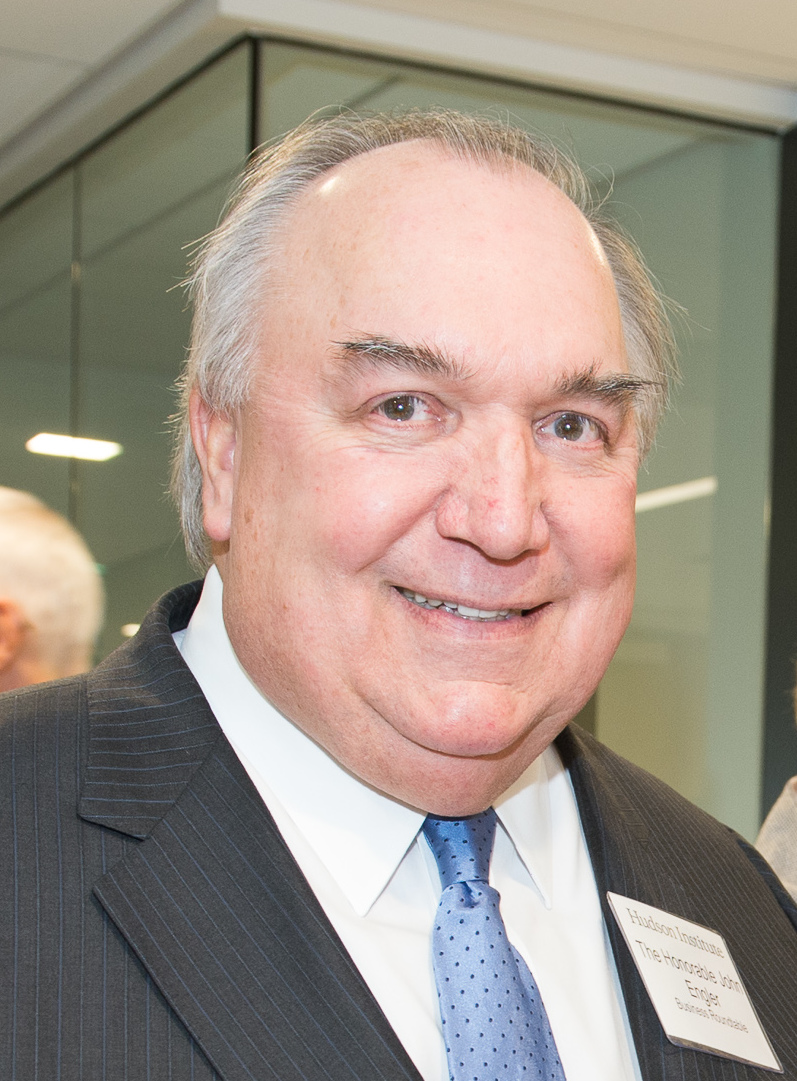
Historical · Governor · Michigan
John Engler
Former Governor of Michigan · 1991–2003 · Republican
John Engler served as Governor of Michigan (1991–2003) for the Republican party. The page below collects sourced biographical facts, term history, and provenance for Engler.
Key facts
- Full name
- John Engler
- Office
- Governor of Michigan
- State
- Michigan
- Party
- Republican
- Tenure
- 1991–2003
- Took office
- 1991
- Terms recorded
- 1
- Status
- Left office
- Current term ends
- —
- Born
- 1948
- Dataset version
- 1.20260608
Biographical narrative
836 words · sourced from the Wikipedia REST extract
John Engler is a former American politician, lawyer, businessman, and lobbyist who served as the 46th governor of Michigan from 1991 to 2003. A member of the Republican Party, Engler is recognized for his significant influence in state politics during his tenure and is noted for his post-governorship work as a prominent lobbyist.
Early life and career
John Mathias Engler was born on October 12, 1948, in Mount Pleasant, Michigan. He was raised on a cattle farm near Beal City, which provided him with a rural upbringing that would shape his understanding of agricultural issues. Engler was raised in a Roman Catholic family, which played a role in his values and community engagement. He pursued higher education at Michigan State University, where he earned a degree in agricultural economics in 1971. Following his undergraduate studies, he attended Thomas M. Cooley Law School, graduating with a Juris Doctor degree in 1981.
Engler's political career began at a young age when he was elected to the Michigan House of Representatives in 1970 at the age of 22. He served in the House from 1971 until 1978, during which time he developed his political acumen and established connections within the Republican Party. His early political involvement included serving as the first Republican youth vice-chair for the Michigan Republican Party, where he won a competitive race against future U.S. Senator Spencer Abraham. Engler's political trajectory continued upward as he was elected to the Michigan Senate, where he served from 1979 and was appointed Senate majority leader in 1984. His leadership in the Senate laid the groundwork for his later gubernatorial campaign.
Engler's ascent to the governorship was marked by his election in 1990, when he challenged incumbent Governor James Blanchard. Despite being viewed as an underdog, Engler won the election by a narrow margin, signaling a shift in Michigan's political landscape. His victory was notable for its unexpectedness, as he had trailed in the polls leading up to the election.
Governorship
Engler's governorship, which lasted from 1991 to 2003, was characterized by a series of significant reforms and policy initiatives. His administration focused on privatizing state services, reducing income taxes, and implementing educational and welfare reforms. Engler's approach to governance included a major reorganization of executive branch departments, which aimed to increase efficiency and reduce government spending.
During his time in office, Engler was elected chairman of the Republican Governors Association in 1996 and later served as the president of the National Governors Association in 2001. These leadership roles allowed him to influence national policy discussions and strengthen his connections with other state leaders.
One of the more controversial aspects of Engler's administration involved environmental policy. In 2002, he and the Michigan Department of Environmental Quality attempted to negotiate a consent order with Dow Chemical, which would have allowed for increased levels of dioxins in the environment. The proposed agreement faced significant public backlash and ultimately fell through, reflecting the complexities and challenges of balancing economic interests with environmental protection.
Engler's electoral success continued throughout his governorship. He was re-elected in 1994, defeating Democratic challenger Howard Wolpe by a substantial margin. His second term saw the Republican Party gain significant ground in the state legislature, reflecting his popularity and the effectiveness of his policies. In 1998, Engler secured a third term in office, achieving a landslide victory over Geoffrey Fieger, which further solidified his position as a leading figure in Michigan politics. He remains the last governor of Michigan to serve more than two terms.
Policy focus and legacy
Engler's policy focus during his governorship included a strong emphasis on economic development, tax reform, and educational initiatives. His administration's efforts to privatize state services were aimed at reducing government costs and improving efficiency. Engler's tax policies included both income tax reductions and an increase in sales tax, which were designed to stimulate economic growth while addressing budgetary needs.
In the realm of education, Engler championed reforms intended to improve the quality of schooling in Michigan. His administration promoted school choice and accountability measures, which aimed to enhance educational outcomes for students across the state. These reforms were part of a broader strategy to modernize Michigan's educational system and prepare students for a competitive workforce.
Engler's legacy is also marked by his post-governorship career as a lobbyist and business leader. After leaving office, he took on significant roles in various organizations, including serving on the board of advisors for the Russell Kirk Center for Cultural Renewal and the board of trustees for the Marguerite Eyer Wilbur Foundation. His involvement in these organizations reflects his continued engagement with conservative thought and policy advocacy.
Engler's tenure as governor and his subsequent activities have left a lasting impact on Michigan's political landscape. His approach to governance, characterized by a focus on privatization, tax reform, and educational initiatives, has influenced subsequent administrations and continues to shape discussions on state policy. Engler's political career exemplifies the complexities of governance and the interplay between economic interests and public policy in the state of Michigan.
Notable legislation
Sponsored and co-sponsored legislation for John Engler is pending operator curation. The biographical narrative above carries the same provenance trail until per-bill rows are written.
Sources
- [1]https://en.wikipedia.org/wiki/John_EnglerWikipedia · retrieved 2026-06-08
Notable quotes
Sourced quotes for John Engler are pending operator curation. Narrative-scope provenance remains attached below.
Sources
- [1]https://en.wikipedia.org/wiki/John_EnglerWikipedia · retrieved 2026-06-08
Key positions
Curated policy positions for John Engler are pending operator review. The biographical narrative above carries the same provenance trail until per-topic positions are written.
Sources
- [1]https://en.wikipedia.org/wiki/John_EnglerWikipedia · retrieved 2026-06-08
Terms served
- 1991–2003Governor of Michigan · Term 1 · Republican
Sources & provenance
Every attributable claim above carries a per-section [N] marker that resolves to the corresponding URL below. Each entry records the upstream provider, the canonical URL, and the timestamp at which the source was retrieved by the ingest pipeline.
Key facts
- https://www.wikidata.org/wiki/Q735182wikidata · retrieved 2026-06-08
- https://ballotpedia.org/John_Englerballotpedia · retrieved 2026-06-08
Biographical narrative
- https://en.wikipedia.org/wiki/John_Englerwikipedia · retrieved 2026-06-08
Explore governors
Every U.S. state elects a governor. Browse Michigan’s gubernatorial lineage, the full roster of sitting governors, or Michigan’s federal candidates.