
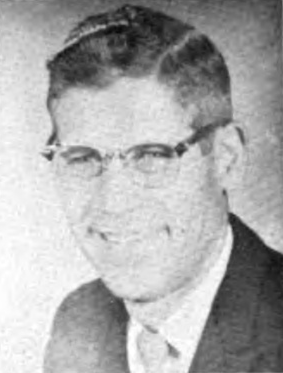
Former · State House · Michigan
Eugene R. Cater
Former State Representative · Michigan · District 98 · Democratic
Eugene R. Cater served as a State Representative in the Michigan House of Representatives, representing District 98 for the Democratic party. The page below collects sourced biographical facts, the seat and district served, and provenance for Cater.
Key facts
- Full name
- Eugene R. Cater
- Office
- State Representative
- Chamber
- Michigan House of Representatives
- State
- Michigan
- District
- District 98
- Party
- Democratic
- Status
- Left office
- Born
- 1923
- OpenStates ID
- —
- Dataset version
- 1.20260610
Biographical narrative
859 words · sourced from the Wikipedia REST extract
Eugene R. Cater was a notable figure in Michigan's political landscape, serving as a member of the Michigan House of Representatives during the mid-1960s. A member of the Democratic Party, he represented the 98th district and was involved in various legislative efforts during his tenure. Cater's life spanned significant historical events, including his military service during World War II, and he was known for his community involvement and business endeavors in Michigan.
Early life and career
Eugene Roy Cater was born on December 8, 1923, in St. Joseph, Missouri. He was of Danish descent and spent his formative years in Michigan, where he graduated from Ludington High School. His early education laid the groundwork for his future endeavors in both business and public service.
Cater's career began in the realm of entrepreneurship when he established and operated a laundry business in Ludington, Michigan. This venture not only provided him with valuable experience in managing a business but also helped him build connections within the local community. His involvement in local affairs and his understanding of the needs of his constituents would later inform his legislative work.
In addition to his business pursuits, Cater served in the United States Army during World War II, a period that significantly shaped his character and sense of duty. Following his military service, he continued to serve his country in a civilian capacity with the United States Coast Guard Auxiliary. His commitment to service extended beyond the military; he was an active member of organizations such as the National Order of the Trench Rats and the Disabled American Veterans, reflecting his dedication to supporting fellow veterans.
Legislative service
Cater's political career began in earnest when he was elected to the Michigan House of Representatives on November 4, 1964. He represented the 98th district, a role he held from January 1, 1965, to January 1, 1967. His election marked a significant step in his public service career, as he transitioned from local business to state-level governance.
During his time in the legislature, Cater was involved in various initiatives aimed at improving the state and addressing the concerns of his constituents. One notable legislative effort was his sponsorship of House Bill 2297, which sought to designate the Petoskey stone as Michigan's state stone. This bill was introduced in May 1965 and garnered bipartisan support, reflecting Cater's ability to work across party lines. The bill successfully passed the state house on May 19, 1965, and was subsequently signed into law by Governor George W. Romney on June 28, 1965. The signing ceremony was a notable event, attended by both Cater and his Republican colleague Stanley M. Powell, who co-sponsored the bill. During this ceremony, Cater presented the governor with a tie clasp and cufflink set made from Petoskey stones, symbolizing the significance of the legislation and its connection to Michigan's natural heritage.
Cater's legislative service was characterized by a commitment to representing the interests of his district while also engaging in collaborative efforts with members of the opposing party. His tenure, though limited to a single term, was marked by a focus on community values and local pride, as evidenced by his support for the Petoskey stone initiative.
Policy focus and district
As a representative of Michigan's 98th House of Representatives district, Cater's policy focus was likely influenced by the needs and interests of his constituents in Ludington and the surrounding areas. While specific details about his legislative priorities beyond the Petoskey stone bill are not extensively documented, it can be inferred that his background in business and his military service informed his approach to governance.
Cater's district was situated in a region known for its natural beauty and recreational opportunities, which may have influenced his legislative interests. His support for the Petoskey stone as a state symbol reflects a broader appreciation for Michigan's natural resources and cultural heritage. This focus on local identity and pride is often a common theme among legislators representing districts with rich histories and unique characteristics.
After his term in the Michigan House of Representatives, Cater relocated to Palmetto, Florida, in 1975. This move marked a new chapter in his life, away from the political scene in Michigan. Despite his departure from the state, Cater's contributions to Michigan's legislative history remained a part of his legacy.
In his personal life, Cater was married twice, first to Donna Mae Fenner in 1948, with whom he had one child. He later married Leota and became a stepfather to three additional children. His family life was complemented by his active participation in various civic organizations, including the Elks, the Fraternal Order of Eagles, and the American Legion. Additionally, Cater was a Freemason and practiced Lutheranism, reflecting his engagement with both community and faith.
Eugene R. Cater passed away on January 15, 1990, in Manatee Memorial Hospital in Bradenton, Florida. His remains were interred at Lakeview Cemetery in Ludington, Michigan, marking the end of a life dedicated to service in both the military and public office. His contributions to Michigan's legislative history, particularly his role in promoting the state's natural heritage, continue to be recognized as part of the state's rich political narrative.
Notable legislation
Sponsored and co-sponsored legislation for Eugene R. Cater is pending operator curation. The biographical narrative above carries the same provenance trail until per-bill rows are written.
Sources
- [1]https://en.wikipedia.org/wiki/Eugene_R._CaterWikipedia · retrieved 2026-06-10
Notable quotes
Sourced quotes for Eugene R. Cater are pending operator curation. Narrative-scope provenance remains attached below.
Sources
- [1]https://en.wikipedia.org/wiki/Eugene_R._CaterWikipedia · retrieved 2026-06-10
Key positions
Curated policy positions for Eugene R. Cater are pending operator review. The biographical narrative above carries the same provenance trail until per-topic positions are written.
Sources
- [1]https://en.wikipedia.org/wiki/Eugene_R._CaterWikipedia · retrieved 2026-06-10
Legislative service
- Michigan House of Representatives1965–1967District 98 · Democratic
Sources & provenance
Every attributable claim above carries a per-section [N] marker that resolves to the corresponding URL below. Each entry records the upstream provider, the canonical URL, and the timestamp at which the source was retrieved by the ingest pipeline.
Key facts
- https://www.wikidata.org/wiki/Q104720645wikidata · retrieved 2026-06-10
- https://ballotpedia.org/Eugene_R._Caterballotpedia · retrieved 2026-06-10
Biographical narrative
- https://en.wikipedia.org/wiki/Eugene_R._Caterwikipedia · retrieved 2026-06-10
Explore the State House
Browse Michigan’s District 98 seat, the full Michigan House of Representatives roster, or Michigan’s federal candidates.
Related on The Candidate
- Michigan District 98Every member representing District 98 in the Michigan House of Representatives.Open
- Michigan State HouseThe full roster of the Michigan House of Representatives, by district.Open
- Michigan legislatureBoth chambers of the Michigan state legislature.Open
- Michigan federal candidatesEvery 2026 federal House and Senate candidate in Michigan.Open