
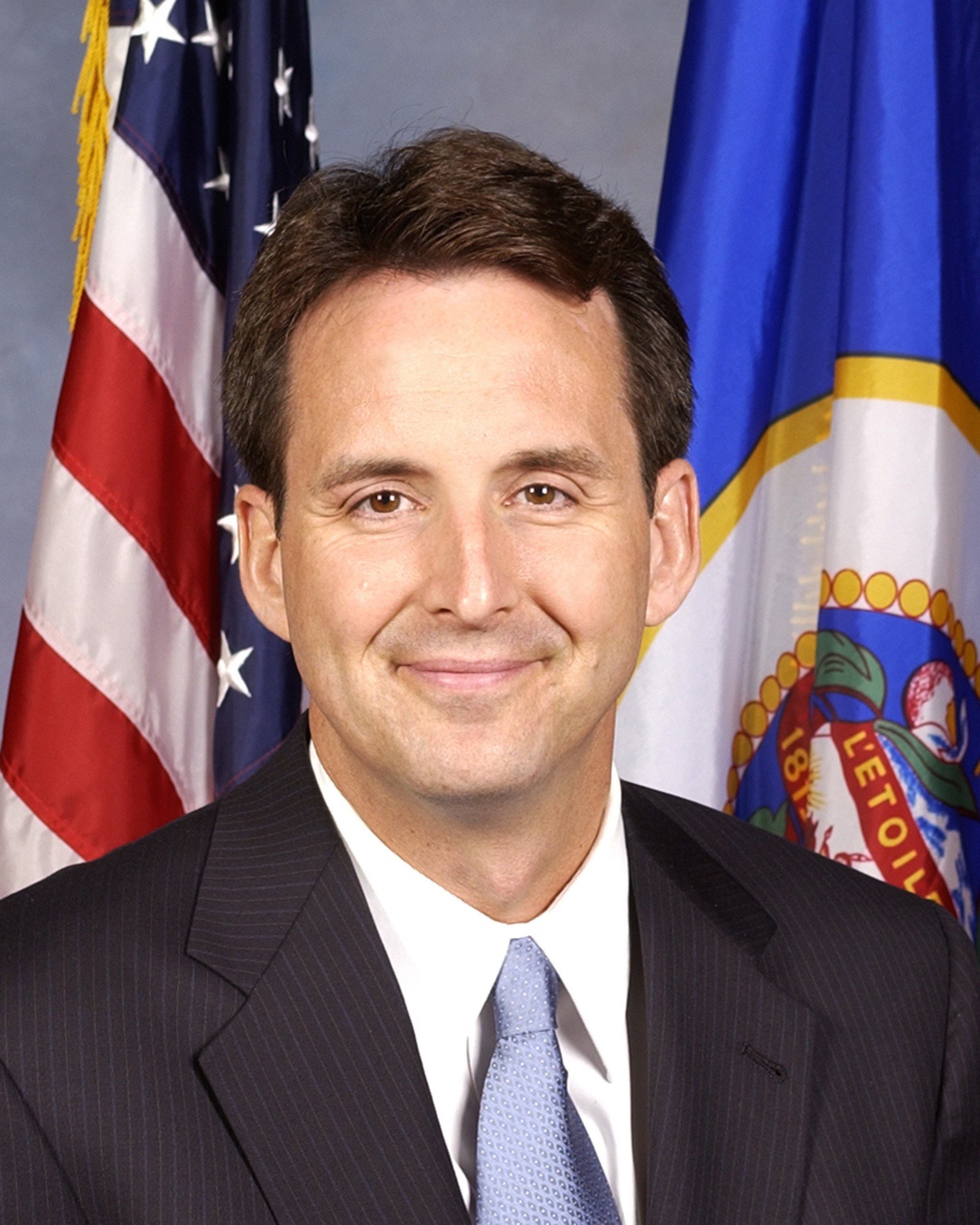
Historical · Governor · Minnesota
Tim Pawlenty
Former Governor of Minnesota · 2003–2011 · Republican
Tim Pawlenty served as Governor of Minnesota (2003–2011) for the Republican party. The page below collects sourced biographical facts, term history, and provenance for Pawlenty.
Key facts
- Full name
- Tim Pawlenty
- Office
- Governor of Minnesota
- State
- Minnesota
- Party
- Republican
- Tenure
- 2003–2011
- Took office
- 2003
- Terms recorded
- 1
- Status
- Left office
- Current term ends
- —
- Born
- 1960
- Dataset version
- 1.20260608
Biographical narrative
988 words · sourced from the Wikipedia REST extract
Tim Pawlenty is an American attorney, businessman, and politician who served as the 39th governor of Minnesota from 2003 to 2011. A member of the Republican Party, he has had a notable political career that includes serving in the Minnesota House of Representatives and running for the Republican presidential nomination in 2012. His governorship was marked by a focus on fiscal conservatism, education reform, and infrastructure development.
Early life and career
Tim Pawlenty was born on November 27, 1960, in Saint Paul, Minnesota, to Eugene Joseph Pawlenty and Virginia Frances (née Oldenburg). His father worked as a milk delivery truck driver and had Polish ancestry, while his mother was of German descent. Virginia Pawlenty passed away from cancer when Tim was 16 years old. He grew up in South St. Paul, where he participated in various activities, including playing ice hockey on his high school's junior varsity team.
Initially aspiring to become a dentist, Pawlenty enrolled at the University of Minnesota, becoming the first member of his family to pursue education beyond high school. However, he shifted his focus to political science and graduated with a Bachelor of Arts degree in 1983. He later earned a Juris Doctor from the University of Minnesota Law School in 1986. During his time in law school, he met Mary Anderson, whom he married in 1987.
Following his graduation, Pawlenty began his career as a labor law attorney at the firm Rider Bennett, where he had previously interned. He later transitioned to the private sector, serving as vice president of Wizmo Inc., a software as a service company. His political career began in local government when he was appointed to the Planning Commission of Eagan, Minnesota, and subsequently elected to the City Council at the age of 28.
Pawlenty's entry into state politics occurred in 1990 when he worked as a campaign advisor for Jon Grunseth's gubernatorial campaign. Although Grunseth withdrew from the race due to a scandal, Pawlenty's involvement marked the beginning of his political journey. In 1992, he was elected to the Minnesota House of Representatives, representing District 38B in suburban Dakota County. Over the course of his tenure in the House, he authored various bills addressing issues such as term limits for committee chairmen, funding for parenting classes, and community notification for sex offenders. He was reelected four times and became House Majority Leader in 1998 after the Republican Party regained control of the State Legislature.
Governorship
Pawlenty's political aspirations culminated in his election as governor of Minnesota in 2002. Initially, he faced challenges in securing the Republican nomination, as party leaders preferred businessman Brian Sullivan. After briefly considering a run for the U.S. Senate, he returned to the gubernatorial race and won a competitive primary against Sullivan. In the general election, Pawlenty faced significant opposition from Democratic-Farmer-Labor (DFL) state senator Roger Moe and Independence Party candidate Tim Penny. The campaign was highly competitive, with all three candidates polling closely until mid-October. Pawlenty's platform included a commitment to not raise taxes to balance the state budget, which resonated with voters.
Pawlenty's first term as governor focused on addressing the state's budget deficit, which he managed to eliminate through a combination of spending cuts and the introduction of user fees. His administration implemented significant reforms in various areas, including education, where he sought to improve the state's educational system. He also enacted legislation allowing for concealed carry of firearms and established a 24-hour waiting period for abortions.
During his governorship, Pawlenty advocated for several major public works projects, including the construction of the Northstar Commuter Rail Line and Target Field, which became the home of the Minnesota Twins. His leadership extended beyond state borders when he served as chair of the National Governors Association from 2007 to 2008, where he engaged with fellow governors on national issues.
Pawlenty was reelected in 2006, albeit by a narrow margin, which underscored the competitive political landscape in Minnesota. However, the onset of the Great Recession in 2007 posed new challenges, leading to a resurgence of the budget deficit that his administration had previously addressed. The effectiveness of his economic policies during this period has been a topic of debate among political analysts.
Policy focus and legacy
Throughout his time in office, Pawlenty's policy focus was characterized by a commitment to fiscal conservatism and a belief in limited government intervention. His administration's approach to budget management included significant cuts to state programs and the implementation of user fees, which were designed to alleviate the financial strain on the state's budget. This approach was met with mixed reactions, as some praised the efforts to control spending while others criticized the impact of budget cuts on essential services.
In education, Pawlenty's reforms aimed to enhance the quality of schooling in Minnesota. He championed initiatives that sought to improve accountability and performance within the state's education system. His administration's efforts in this area were part of a broader trend among governors across the United States during that period, as education reform became a focal point for many state leaders.
Pawlenty's legacy also includes his involvement in significant infrastructure projects, which were intended to modernize the state's transportation systems and enhance economic development. The construction of the Northstar Commuter Rail Line and Target Field are notable examples of his administration's commitment to improving public infrastructure.
After leaving office in 2011, Pawlenty continued to be active in national politics, including a bid for the Republican presidential nomination in 2012. Although his campaign did not achieve the desired success, he remained a prominent figure in the Republican Party and continued to influence political discourse.
As of 2025, Tim Pawlenty is recognized as the most recent Republican governor of Minnesota, and his tenure is often discussed in the context of fiscal policy, education reform, and infrastructure development. His time in office reflects the complexities and challenges faced by state leaders in navigating economic fluctuations and public policy priorities.
Notable legislation
Sponsored and co-sponsored legislation for Tim Pawlenty is pending operator curation. The biographical narrative above carries the same provenance trail until per-bill rows are written.
Sources
- [1]https://en.wikipedia.org/wiki/Tim_PawlentyWikipedia · retrieved 2026-06-08
Notable quotes
Sourced quotes for Tim Pawlenty are pending operator curation. Narrative-scope provenance remains attached below.
Sources
- [1]https://en.wikipedia.org/wiki/Tim_PawlentyWikipedia · retrieved 2026-06-08
Key positions
Curated policy positions for Tim Pawlenty are pending operator review. The biographical narrative above carries the same provenance trail until per-topic positions are written.
Sources
- [1]https://en.wikipedia.org/wiki/Tim_PawlentyWikipedia · retrieved 2026-06-08
Terms served
- 2003–2011Governor of Minnesota · Term 1 · Republican
Sources & provenance
Every attributable claim above carries a per-section [N] marker that resolves to the corresponding URL below. Each entry records the upstream provider, the canonical URL, and the timestamp at which the source was retrieved by the ingest pipeline.
Key facts
- https://www.wikidata.org/wiki/Q160181wikidata · retrieved 2026-06-08
- https://ballotpedia.org/Tim_Pawlentyballotpedia · retrieved 2026-06-08
Biographical narrative
- https://en.wikipedia.org/wiki/Tim_Pawlentywikipedia · retrieved 2026-06-08
Explore governors
Every U.S. state elects a governor. Browse Minnesota’s gubernatorial lineage, the full roster of sitting governors, or Minnesota’s federal candidates.