
Historical · Governor · Missouri
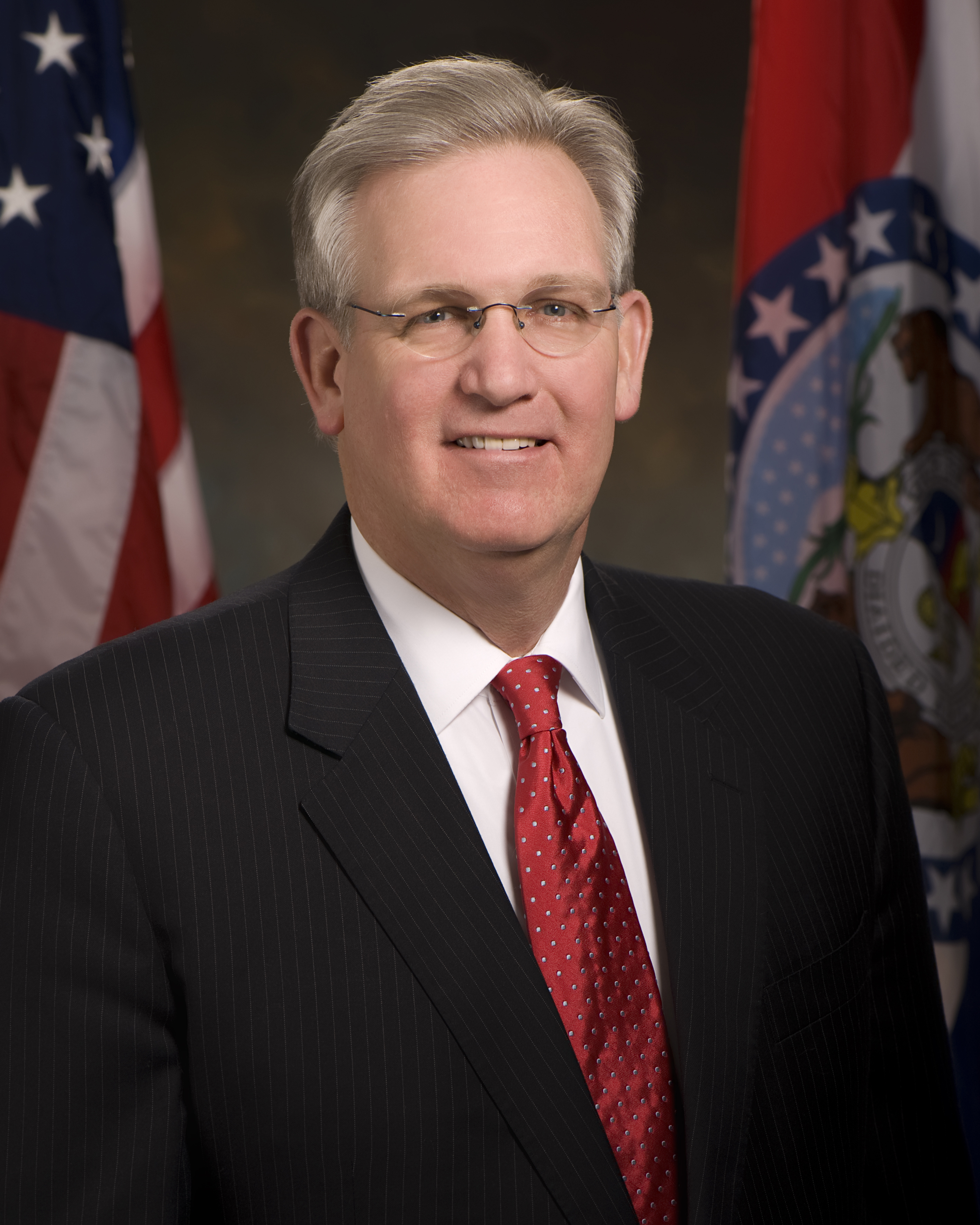
Jay Nixon
Former Governor of Missouri · 2009–2017 · Democratic
Jay Nixon served as Governor of Missouri (2009–2017) for the Democratic party. The page below collects sourced biographical facts, term history, and provenance for Nixon.
Key facts
- Full name
- Jay Nixon
- Office
- Governor of Missouri
- State
- Missouri
- Party
- Democratic
- Tenure
- 2009–2017
- Took office
- 2009
- Terms recorded
- 1
- Status
- Left office
- Current term ends
- —
- Born
- 1956
- Dataset version
- 1.20260608
Biographical narrative
847 words · sourced from the Wikipedia REST extract
Jeremiah Wilson "Jay" Nixon is an American lawyer and politician who served as the 55th governor of Missouri from 2009 to 2017. A member of the Democratic Party, Nixon's political career includes significant roles as the Missouri Attorney General and a state senator. His tenure as governor was marked by various policy initiatives and challenges, and he remains notable as the last Democrat to hold the office in Missouri as of 2025.
Early life and career
Jay Nixon was born on February 13, 1956, in De Soto, Missouri. He grew up in a politically active family; his mother, Betty Lea Nixon, was a teacher and served as the president of the local school board, while his father, Jeremiah "Jerry" Nixon, held the position of mayor in their hometown. Nixon's family history includes notable figures, such as one of his great-grandfathers, Abraham Jonas, who was an early Jewish settler in Illinois and a friend of President Abraham Lincoln. His paternal lineage also includes political figures, with relatives who served in various governmental roles, including the mayor of Philadelphia.
Nixon pursued higher education at the University of Missouri, where he graduated with honors, earning a degree in political science. Following his undergraduate studies, he worked in several construction jobs before continuing his education at the University of Missouri School of Law, where he obtained his Juris Doctor degree. This legal background would later inform his approach to public service and governance.
Nixon entered politics at the age of 30 when he successfully ran for the Missouri Senate, representing Jefferson County. His campaign was marked by an upset victory in the Democratic primary, where he defeated two established lawmakers. He subsequently won the general election against his Republican opponent with a significant majority. During his time in the state legislature, Nixon was active in introducing legislation aimed at improving educational resources, such as a bill that would allow schools to purchase satellite dishes for better broadcasting capabilities. His early legislative efforts earned him recognition as an outstanding legislator.
In 1988, Nixon sought a higher office by running for the U.S. Senate but was unsuccessful against the incumbent Republican. He continued his political career and was elected as the Missouri Attorney General in 1992, a position he would hold for a total of four terms, making him the longest-serving attorney general in Missouri's history. His tenure was characterized by a focus on consumer protection, environmental law enforcement, and significant legal actions that garnered national attention.
Governorship
Nixon's political ascent culminated in his election as governor of Missouri in 2008. He won the gubernatorial race decisively against Republican congressman Kenny Hulshof, marking a significant victory for the Democratic Party in a state that had leaned Republican in previous elections. Nixon's governorship began in January 2009, and he was re-elected in 2012, further solidifying his position in Missouri politics.
As governor, Nixon faced various challenges, including economic issues and natural disasters. His administration focused on job creation, education reform, and healthcare initiatives. He worked to promote economic development through various programs aimed at attracting businesses to Missouri and enhancing workforce training. Nixon also prioritized education, advocating for increased funding for public schools and higher education institutions.
During his time in office, Nixon was involved in responding to significant events, including the aftermath of the Ferguson unrest in 2014. The situation brought national attention to issues of race, policing, and civil rights, prompting Nixon to address the concerns raised by the community and to support initiatives aimed at improving police-community relations.
Nixon's governorship concluded in January 2017 when he was term-limited and succeeded by Republican Eric Greitens. His departure from office marked the end of an era for the Democratic Party in Missouri, as he was the last Democrat to serve as governor of the state as of 2025.
Policy focus and legacy
Throughout his political career, Nixon's policy focus included a strong emphasis on environmental protection, consumer rights, and education. As attorney general, he established the Environmental Protection Division to enforce Missouri's environmental laws, which aimed to safeguard the state's natural resources and public health. His efforts in this area included litigation that resulted in the cleanup of polluted sites and the protection of agricultural interests.
In addition to environmental issues, Nixon's administration sought to address healthcare access and affordability. He supported initiatives to expand healthcare coverage and improve services for Missouri residents, reflecting a commitment to public health as a critical component of his governance.
Nixon's legacy includes his role in shaping Missouri's political landscape during a time of significant change. His tenure as governor was marked by efforts to bridge divides within the state, particularly in the wake of social unrest. His approach to governance emphasized collaboration and dialogue, aiming to foster a more inclusive political environment.
After leaving public office, Nixon joined the Dowd Bennett law firm in St. Louis, continuing his career in law and public service. His contributions to Missouri politics and governance remain a point of reference for discussions on the state's political history and the evolving role of the Democratic Party in Missouri.
Notable legislation
Sponsored and co-sponsored legislation for Jay Nixon is pending operator curation. The biographical narrative above carries the same provenance trail until per-bill rows are written.
Sources
- [1]https://en.wikipedia.org/wiki/Jay_NixonWikipedia · retrieved 2026-06-08
Notable quotes
Sourced quotes for Jay Nixon are pending operator curation. Narrative-scope provenance remains attached below.
Sources
- [1]https://en.wikipedia.org/wiki/Jay_NixonWikipedia · retrieved 2026-06-08
Key positions
Curated policy positions for Jay Nixon are pending operator review. The biographical narrative above carries the same provenance trail until per-topic positions are written.
Sources
- [1]https://en.wikipedia.org/wiki/Jay_NixonWikipedia · retrieved 2026-06-08
Terms served
- 2009–2017Governor of Missouri · Term 1 · Democratic
Sources & provenance
Every attributable claim above carries a per-section [N] marker that resolves to the corresponding URL below. Each entry records the upstream provider, the canonical URL, and the timestamp at which the source was retrieved by the ingest pipeline.
Key facts
- https://www.wikidata.org/wiki/Q562174wikidata · retrieved 2026-06-08
- https://ballotpedia.org/Jay_Nixonballotpedia · retrieved 2026-06-08
Biographical narrative
- https://en.wikipedia.org/wiki/Jay_Nixonwikipedia · retrieved 2026-06-08
Explore governors
Every U.S. state elects a governor. Browse Missouri’s gubernatorial lineage, the full roster of sitting governors, or Missouri’s federal candidates.