
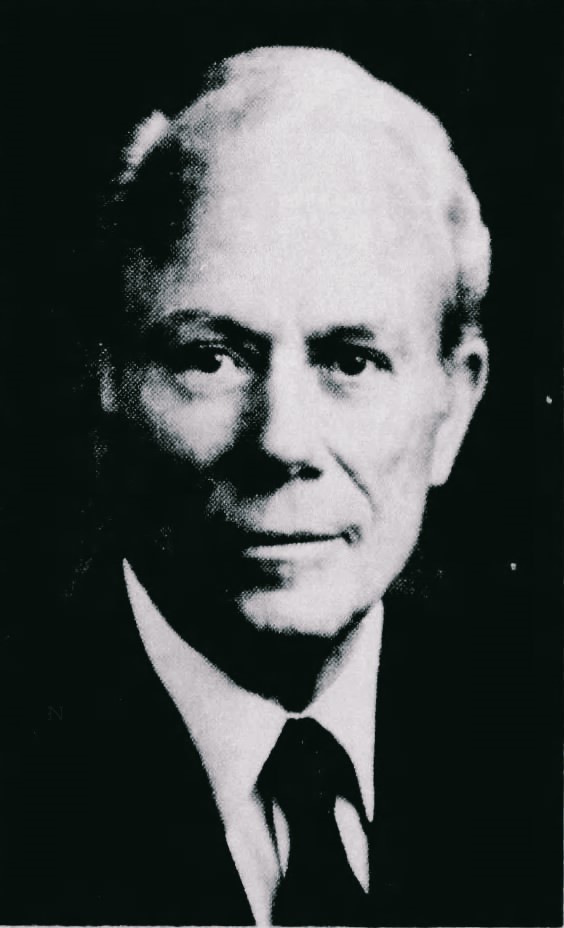
Historical · Governor · Mississippi
Kirk Fordice
Former Governor of Mississippi · 1992–2000 · Republican
Kirk Fordice served as Governor of Mississippi (1992–2000) for the Republican party. The page below collects sourced biographical facts, term history, and provenance for Fordice.
Key facts
- Full name
- Kirk Fordice
- Office
- Governor of Mississippi
- State
- Mississippi
- Party
- Republican
- Tenure
- 1992–2000
- Took office
- 1992
- Terms recorded
- 1
- Status
- Left office
- Current term ends
- —
- Born
- 1934
- Dataset version
- 1.20260608
Biographical narrative
929 words · sourced from the Wikipedia REST extract
Daniel Kirkwood "Kirk" Fordice Jr. was an American politician and businessman who served as the 61st governor of Mississippi from 1992 to 2000. A member of the Republican Party, Fordice was notable for being the first Republican governor of Mississippi since the Reconstruction era and the first to be elected to two consecutive four-year terms following a constitutional amendment in 1987. His governorship was characterized by a conservative platform emphasizing pro-business policies, crime reduction, and traditional family values. Fordice's tenure was also marked by personal controversies, including an extramarital affair that led to his divorce after 44 years of marriage.
Early life and career
Kirk Fordice was born on February 10, 1934, in Memphis, Tennessee. He pursued higher education at Purdue University, where he earned both a bachelor's degree and a master's degree in civil engineering by 1957. Following his academic achievements, Fordice served in the United States Army for two years and continued his military service in the Army Reserve until 1977, retiring with the rank of colonel.
After his military service, Fordice took over his father's business, Fordice Construction Company. Under his leadership, the company expanded significantly; in the 1960s, he established a building division focused on industrial structures and later created a bridge division in the 1980s. His reliance on federal government contracts led him to become actively involved in various construction trade organizations. In 1974, he joined the executive committee of the Associated General Contractors of America, eventually serving as its president from 1989 to 1991. During his tenure, he was a vocal advocate for the construction industry, participating in numerous congressional testimonies and legal battles aimed at challenging minority and small business set-aside requirements for government contracts.
Fordice's growing interest in politics was influenced by his involvement in these trade groups. He became a member of the Republican Party during Barry Goldwater's presidential campaign in 1964 and later chaired local party organizations for gubernatorial candidate Gil Carmichael in the 1970s. His political career began to take shape when he was elected as the secretary of the Mississippi Republican Party in 1982, where he played a pivotal role in garnering support for Republican candidates.
Governorship
Fordice's political ambitions culminated in his candidacy for governor in 1991. He faced off against State Auditor Pete Johnson in the Republican primary, where he gradually built a strong political organization. Despite Johnson being considered the frontrunner for much of the campaign, Fordice's strategy and messaging resonated with voters, leading him to victory in an October runoff. In the general election, he ran against Democratic incumbent Ray Mabus, presenting himself as a candidate focused on legislative term limits and welfare reform. Fordice's campaign was marked by a series of contentious debates, particularly surrounding issues of race and education.
On November 5, 1991, Fordice won the gubernatorial election, marking a significant political shift in Mississippi as he became the first Republican to win a gubernatorial race in the state since 1874. He was inaugurated as governor on January 14, 1992. His administration began with a controversial veto of the Education Enhancement Act of 1992, which he argued represented a tax increase, although the legislature successfully overrode his veto.
Fordice was re-elected in 1995, defeating Democratic Secretary of State Dick Molpus. His second term began on January 16, 1996. Throughout his governorship, Fordice maintained a conservative agenda that included advocating for tax cuts, the abolition of affirmative action, and tougher measures on crime and punishment. His administration faced challenges, including a car accident in November 1995 that temporarily sidelined him from office, during which Lieutenant Governor Ronnie Musgrove served as acting governor.
Fordice's tenure was not without controversy. He made statements that offended various groups, including Jewish organizations, by referring to America as "a Christian Nation." Although he later apologized for any offense caused, his remarks highlighted the contentious nature of his public persona. Additionally, he faced criticism for his refusal to address issues related to public school funding, even as Mississippi ranked low in teacher pay. His administration took a hard stance against teacher strikes, threatening immediate dismissal for any educators who participated in such actions.
Policy focus and legacy
Kirk Fordice's governorship was characterized by a strong commitment to conservative principles. His policies emphasized a pro-business environment, advocating for tax reductions and the expansion of the state's economic base. He sought to position Mississippi as a competitive state for business investment while promoting a tough-on-crime approach that included advocating for capital punishment and the construction of additional prisons.
Fordice's focus on family values and welfare reform resonated with a segment of the electorate, aligning with broader national trends within the Republican Party during the 1990s. His administration's policies aimed to reshape the welfare system and reduce government spending, reflecting his belief in limited government intervention.
Despite his political achievements, Fordice's legacy is complicated by personal controversies and the polarized political climate of his time. His extramarital affair and subsequent divorce drew significant media attention and scrutiny, overshadowing some of his policy initiatives. Additionally, his administration's handling of race-related issues and education policy remains a point of contention among historians and political analysts.
Kirk Fordice's governorship ended in 2000 due to term limits, and he was succeeded by fellow Democrat Ronnie Musgrove. Fordice passed away on September 7, 2004, leaving behind a complex legacy as a pioneering figure in Mississippi politics and a representative of the conservative movement in the state. His tenure marked a significant shift in the political landscape of Mississippi, as he helped pave the way for future Republican leadership in a historically Democratic stronghold.
Notable legislation
Sponsored and co-sponsored legislation for Kirk Fordice is pending operator curation. The biographical narrative above carries the same provenance trail until per-bill rows are written.
Sources
- [1]https://en.wikipedia.org/wiki/Kirk_FordiceWikipedia · retrieved 2026-06-08
Notable quotes
Sourced quotes for Kirk Fordice are pending operator curation. Narrative-scope provenance remains attached below.
Sources
- [1]https://en.wikipedia.org/wiki/Kirk_FordiceWikipedia · retrieved 2026-06-08
Key positions
Curated policy positions for Kirk Fordice are pending operator review. The biographical narrative above carries the same provenance trail until per-topic positions are written.
Sources
- [1]https://en.wikipedia.org/wiki/Kirk_FordiceWikipedia · retrieved 2026-06-08
Terms served
- 1992–2000Governor of Mississippi · Term 1 · Republican
Sources & provenance
Every attributable claim above carries a per-section [N] marker that resolves to the corresponding URL below. Each entry records the upstream provider, the canonical URL, and the timestamp at which the source was retrieved by the ingest pipeline.
Key facts
- https://www.wikidata.org/wiki/Q887553wikidata · retrieved 2026-06-08
- https://ballotpedia.org/Kirk_Fordiceballotpedia · retrieved 2026-06-08
Biographical narrative
- https://en.wikipedia.org/wiki/Kirk_Fordicewikipedia · retrieved 2026-06-08
Explore governors
Every U.S. state elects a governor. Browse Mississippi’s gubernatorial lineage, the full roster of sitting governors, or Mississippi’s federal candidates.