
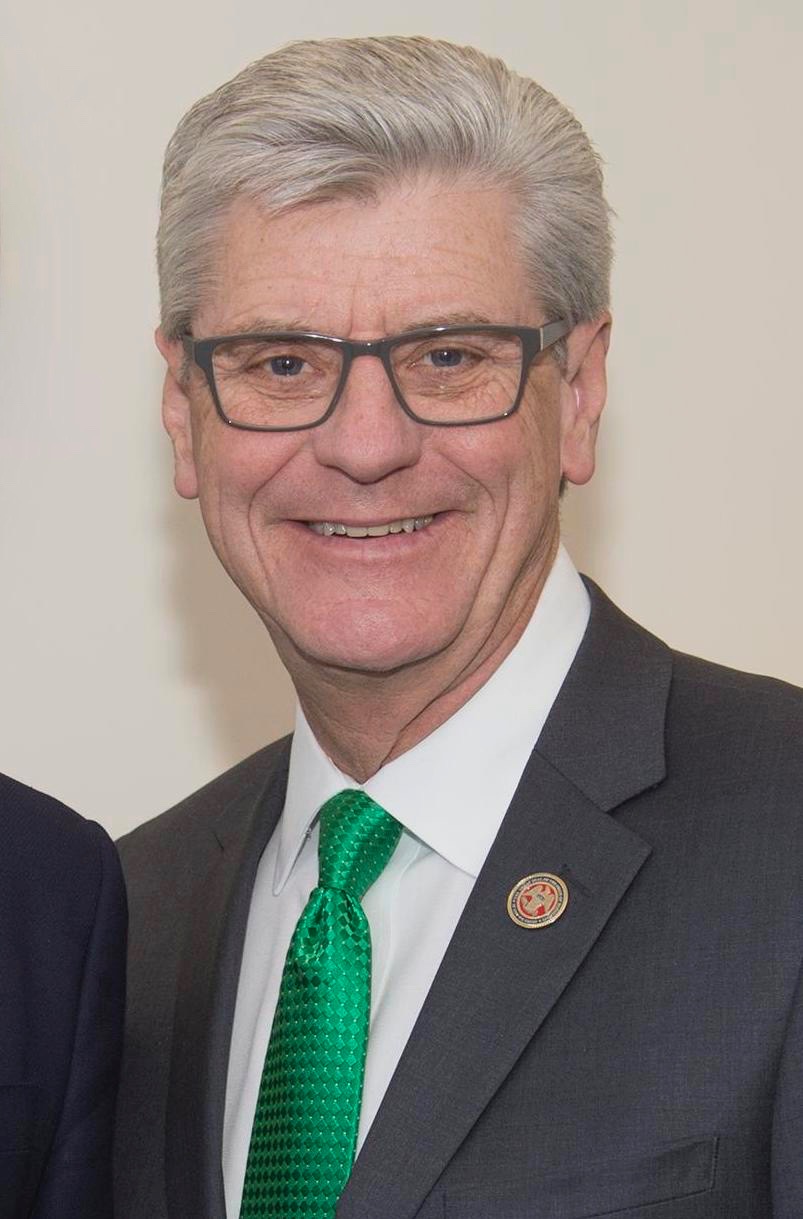
Historical · Governor · Mississippi
Phil Bryant
Former Governor of Mississippi · 2012–2020 · Republican
Phil Bryant served as Governor of Mississippi (2012–2020) for the Republican party. The page below collects sourced biographical facts, term history, and provenance for Bryant.
Key facts
- Full name
- Phil Bryant
- Office
- Governor of Mississippi
- State
- Mississippi
- Party
- Republican
- Tenure
- 2012–2020
- Took office
- 2012
- Terms recorded
- 1
- Status
- Left office
- Current term ends
- —
- Born
- 1954
- Dataset version
- 1.20260608
Biographical narrative
962 words · sourced from the Wikipedia REST extract
Dewey Phillip Bryant is an American politician who served as the 64th governor of Mississippi from 2012 to 2020. A member of the Republican Party, he previously held the positions of lieutenant governor and state auditor in Mississippi. Bryant's political career has been marked by a focus on education reform, fiscal policy, and social issues, particularly regarding abortion and religious freedom.
Early life and career
Phil Bryant was born on December 9, 1954, in Moorhead, Mississippi, located in Sunflower County within the Mississippi Delta region. He is the son of Dewey C. Bryant, a diesel mechanic, and Estelle R. Bryant, who was a homemaker responsible for raising three sons. The Bryant family later relocated to Jackson, Mississippi, where his father worked at Jackson Mack Sales and eventually became the service manager.
Bryant completed his high school education at Council McCluer High School, where he attended during his junior and senior years. Following high school, he pursued higher education at Hinds Community College before transferring to the University of Southern Mississippi, where he earned a bachelor's degree in criminal justice. He furthered his education by obtaining a master's degree in political science from Mississippi College in Clinton. Additionally, he received an Honorary Doctorate of Laws from Mississippi College, where he also served as an adjunct professor, teaching Mississippi political history both before and during his tenure as governor.
Before entering politics, Bryant worked as a deputy sheriff in Hinds County from 1976 to 1981, where he gained experience in law enforcement, including undercover work in drug law enforcement. He also worked as an insurance claims investigator. His political career began with his election to the Mississippi House of Representatives, where he served as Vice Chairman of the House Insurance Committee. During his time in the legislature, he sponsored the Capital Gains Tax Cut Act of 1992.
Bryant's political ascent continued when he was appointed State Auditor by Governor Kirk Fordice in 1996, following the resignation of Steve Patterson. He was sworn in on November 1, 1996, and subsequently won a full term in 1999, followed by re-election in 2003. As auditor, he successfully advocated for granting full powers of arrest to law enforcement officers within the auditor's office's investigative division. In 2007, Bryant was elected as the Lieutenant Governor of Mississippi, defeating the Democratic candidate Jamie Franks.
Governorship
Bryant's journey to the governorship began with his election in 2011, when he won the Republican primary and subsequently defeated Democratic nominee Johnny DuPree in the general election. He was inaugurated as the 64th Governor of Mississippi on January 10, 2012. His administration quickly focused on several key issues, including abortion legislation, education reform, and economic policy.
One of Bryant's first actions as governor was to sign a law requiring doctors at abortion clinics to have admitting privileges at local hospitals. This legislation aimed to impose stricter regulations on abortion services in the state, which at the time had only one abortion clinic, primarily staffed by out-of-state doctors who did not possess in-state admitting privileges.
In the realm of education, Bryant introduced a comprehensive policy framework known as "Framing Mississippi's Future" in 2012. During the 2013 legislative session, he signed multiple bills aimed at improving education in the state. These included the Literacy Based Promotion Act (LBPA), the Pre-K Collaborative Act, the Mississippi Charter School Act, and the Mississippi Student Religious Liberties Act. His administration also expanded the Mississippi Dyslexia Therapy Scholarship program and reformed school accreditation processes. By 2022, the LBPA was recognized for significantly improving student performance in Mississippi, earning the nickname "Mississippi Miracle."
Bryant sought re-election in 2015, where he faced Mitch Young in the Republican primary, winning with a substantial majority. In the general election, he defeated Democratic nominee Robert Gray, securing his second term in office. Due to Mississippi's two-term lifetime limit for governors, he was ineligible to run for a third term in the 2019 gubernatorial election.
During his second term, Bryant signed several notable pieces of legislation, including HB-1523, which allowed government employees and private businesses to refuse services to same-sex couples based on religious beliefs. He characterized this law as a reinforcement of existing rights related to religious freedom. In 2017, he announced emergency budget cuts for state agencies due to projected revenue shortfalls, a move he had previously made in the fiscal year prior.
In January 2019, Bryant expressed support for a bill that would expand civil forfeiture laws, allowing law enforcement to seize assets valued up to $20,000 without requiring judicial oversight. Investigative reporting during his second term revealed that Bryant had not misused campaign funds, having spent approximately $2.6 million on his campaign while maintaining a significant balance in his campaign fund, which was later closed out with most funds directed to a political action committee.
Policy focus and legacy
Bryant's governorship was characterized by a strong emphasis on education reform, fiscal responsibility, and social conservatism. His administration's education initiatives, particularly the Literacy Based Promotion Act, were credited with fostering improvements in student performance, contributing to a narrative of educational progress in Mississippi.
His approach to social issues, particularly regarding abortion and religious freedom, reflected a commitment to conservative values, which resonated with his Republican base. The legislation he signed aimed at restricting abortion access and protecting religious liberties was indicative of broader national trends among Republican governors during his tenure.
Bryant's legacy as governor is marked by both his educational reforms and his controversial stances on social issues. His time in office has been the subject of analysis regarding the effectiveness of his policies and their long-term impacts on Mississippi's educational landscape and social climate. After completing his term in January 2020, he transitioned out of the governorship, leaving behind a complex political legacy shaped by both achievements and challenges.
Notable legislation
Sponsored and co-sponsored legislation for Phil Bryant is pending operator curation. The biographical narrative above carries the same provenance trail until per-bill rows are written.
Sources
- [1]https://en.wikipedia.org/wiki/Phil_BryantWikipedia · retrieved 2026-06-08
Notable quotes
Sourced quotes for Phil Bryant are pending operator curation. Narrative-scope provenance remains attached below.
Sources
- [1]https://en.wikipedia.org/wiki/Phil_BryantWikipedia · retrieved 2026-06-08
Key positions
Curated policy positions for Phil Bryant are pending operator review. The biographical narrative above carries the same provenance trail until per-topic positions are written.
Sources
- [1]https://en.wikipedia.org/wiki/Phil_BryantWikipedia · retrieved 2026-06-08
Terms served
- 2012–2020Governor of Mississippi · Term 1 · Republican
Sources & provenance
Every attributable claim above carries a per-section [N] marker that resolves to the corresponding URL below. Each entry records the upstream provider, the canonical URL, and the timestamp at which the source was retrieved by the ingest pipeline.
Key facts
- https://www.wikidata.org/wiki/Q887898wikidata · retrieved 2026-06-08
- https://ballotpedia.org/Phil_Bryantballotpedia · retrieved 2026-06-08
Biographical narrative
- https://en.wikipedia.org/wiki/Phil_Bryantwikipedia · retrieved 2026-06-08
Explore governors
Every U.S. state elects a governor. Browse Mississippi’s gubernatorial lineage, the full roster of sitting governors, or Mississippi’s federal candidates.