
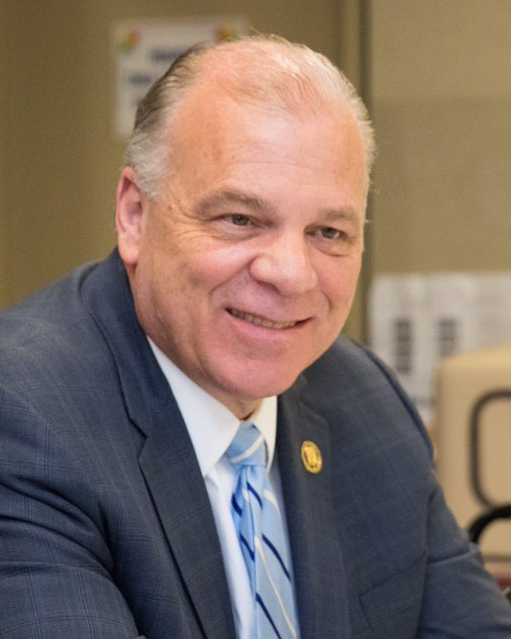
Former · State Senate · New Jersey
Stephen M. Sweeney
Former State Senator · New Jersey · District 3 · Democratic
Stephen M. Sweeney served as a State Senator in the New Jersey State Senate, representing District 3 for the Democratic party. The page below collects sourced biographical facts, the seat and district served, and provenance for Sweeney.
Key facts
- Full name
- Stephen M. Sweeney
- Office
- State Senator
- Chamber
- New Jersey State Senate
- State
- New Jersey
- District
- District 3
- Party
- Democratic
- Status
- Left office
- Born
- 1959
- OpenStates ID
- —
- Dataset version
- 1.20260610
Biographical narrative
934 words · sourced from the Wikipedia REST extract
Stephen M. Sweeney is a former American politician and labor leader who served as a member of the New Jersey Senate from 2002 to 2022, representing the 3rd Legislative District. A member of the Democratic Party, Sweeney held the position of the 114th President of the New Jersey Senate from 2010 until the end of his tenure in 2022. Known for his background as a Union Ironworker, Sweeney was recognized as a significant figure in New Jersey politics, often described as a political power broker. His legislative career concluded with a defeat in the 2021 election, after which he announced his candidacy for the 2025 New Jersey gubernatorial election.
Early life and career
Stephen M. Sweeney was born on June 11, 1959, in Camden, New Jersey. He completed his secondary education at Pennsauken High School, graduating in 1977. Sweeney has Irish ancestry, which he has acknowledged as part of his identity. Following high school, he joined Ironworkers Local 399, based in Camden, where he achieved journeyman status on January 1, 1980. His early career in the labor movement laid the groundwork for his later political endeavors, as he became actively involved in advocating for workers' rights and labor issues.
In addition to his work as an ironworker, Sweeney entered local politics and was elected to the Gloucester County Board of County Commissioners in 1997. He served in this capacity until 2010, during which he held the position of Director of the board from January 6, 2006, until he left office. His dual roles as a county commissioner and state senator during this period were permitted under a grandfather clause in a 2007 state law that allowed individuals who had held both positions prior to a specific date to retain them. This practice, often referred to as "double dipping," was a point of discussion in New Jersey political circles.
Legislative service
Sweeney's legislative career began when he was elected to the New Jersey Senate in 2001, and he officially took office in 2002. Over the course of his tenure, he served a total of 11 distinct terms, becoming a prominent figure in the state legislature. His leadership capabilities were recognized when he was selected as the Senate Majority Leader in 2007, and he later ascended to the role of Senate President in January 2010 after being chosen by the Senate Democratic Caucus.
As Senate President, Sweeney played a crucial role in shaping various pieces of legislation. He was instrumental in sponsoring a law in 2002 that allowed municipalities and public entities to enter into Project Labor Agreements (PLAs) for construction projects. These agreements set forth employment terms and conditions, helping to mitigate potential labor disputes and cost overruns associated with construction projects.
In 2005, Sweeney sponsored legislation that facilitated the establishment of an ethanol plant in Southern New Jersey, marking a significant development as it was the first of its kind in the Mid-Atlantic region. This initiative aimed to create jobs and provide new market opportunities for local farmers. In response to security concerns following the September 11 attacks, Sweeney advocated for legislation that mandated security standards for vulnerable facilities, including nuclear plants. This included a law that permitted security personnel at these facilities to carry assault weapons, contingent upon receiving appropriate training.
Sweeney's legislative portfolio also included measures to support public safety and welfare. He sponsored laws that provided state pensions to the surviving family members of police officers, firefighters, and emergency services personnel who died in the line of duty. Additionally, he co-sponsored legislation that extended health benefits to members of the New Jersey National Guard serving on state active duty for 30 days or more.
One of Sweeney's notable legislative achievements was the introduction of "Maggie's Law," which established driving while seriously fatigued as a form of recklessness. This law, signed in 2003, was the first of its kind in the United States and imposed significant penalties on drivers who caused fatal accidents due to extreme fatigue.
Throughout his time in the Senate, Sweeney served on several committees, including the Joint Budget Oversight Committee and the Budget and Appropriations Committee, where he contributed to the state's financial planning and oversight.
Policy focus and district
Sweeney's policy focus during his legislative career reflected a blend of moderate and fiscally conservative principles, which he identified with throughout his tenure. His district, the 3rd Legislative District, encompasses parts of South Jersey, including areas such as Gloucester County. As a representative of this district, Sweeney worked on various issues pertinent to his constituents, including labor rights, public safety, and economic development.
Sweeney's leadership style and decision-making were often influenced by his background in labor and his experiences as a union member. He was known for advocating for policies that supported workers while also addressing the fiscal realities faced by the state. His approach to governance included a willingness to engage in bipartisan discussions, particularly on contentious issues such as budgetary constraints and public employee compensation.
In December 2016, Sweeney publicly supported legislation to legalize assisted suicide, a position that drew attention given his Catholic background. He argued that individuals should have the autonomy to make personal decisions regarding end-of-life care, reflecting a nuanced stance on social issues.
Sweeney's legislative career came to an end in 2021 when he was defeated in a significant electoral upset. Following this loss, he announced his intention to run for governor in the 2025 New Jersey gubernatorial election, indicating his continued engagement in state politics. His political journey, characterized by a blend of labor advocacy and legislative leadership, has left a lasting impact on New Jersey's political landscape.
Notable legislation
Sponsored and co-sponsored legislation for Stephen M. Sweeney is pending operator curation. The biographical narrative above carries the same provenance trail until per-bill rows are written.
Sources
- [1]https://en.wikipedia.org/wiki/Stephen_SweeneyWikipedia · retrieved 2026-06-10
Notable quotes
Sourced quotes for Stephen M. Sweeney are pending operator curation. Narrative-scope provenance remains attached below.
Sources
- [1]https://en.wikipedia.org/wiki/Stephen_SweeneyWikipedia · retrieved 2026-06-10
Key positions
Curated policy positions for Stephen M. Sweeney are pending operator review. The biographical narrative above carries the same provenance trail until per-topic positions are written.
Sources
- [1]https://en.wikipedia.org/wiki/Stephen_SweeneyWikipedia · retrieved 2026-06-10
Legislative service
- New Jersey State Senate2002–2022District 3 · Democratic
Sources & provenance
Every attributable claim above carries a per-section [N] marker that resolves to the corresponding URL below. Each entry records the upstream provider, the canonical URL, and the timestamp at which the source was retrieved by the ingest pipeline.
Key facts
- https://www.wikidata.org/wiki/Q7609861wikidata · retrieved 2026-06-10
- https://ballotpedia.org/Stephen_M._Sweeneyballotpedia · retrieved 2026-06-10
Biographical narrative
- https://en.wikipedia.org/wiki/Stephen_Sweeneywikipedia · retrieved 2026-06-10
Explore the State Senate
Browse New Jersey’s District 3 seat, the full New Jersey State Senate roster, or New Jersey’s federal candidates.
Related on The Candidate
- New Jersey District 3Every member representing District 3 in the New Jersey State Senate.Open
- New Jersey State SenateThe full roster of the New Jersey State Senate, by district.Open
- New Jersey legislatureBoth chambers of the New Jersey state legislature.Open
- New Jersey federal candidatesEvery 2026 federal House and Senate candidate in New Jersey.Open