
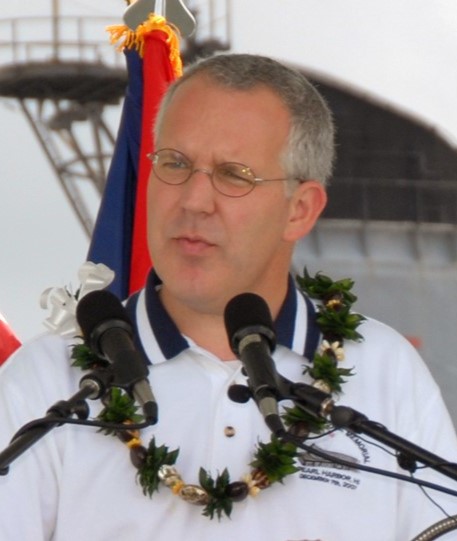
Historical · Governor · Oklahoma
Brad Henry
Former Governor of Oklahoma · 2003–2011 · Democratic
Brad Henry served as Governor of Oklahoma (2003–2011) for the Democratic party. The page below collects sourced biographical facts, term history, and provenance for Henry.
Key facts
- Full name
- Brad Henry
- Office
- Governor of Oklahoma
- State
- Oklahoma
- Party
- Democratic
- Tenure
- 2003–2011
- Took office
- 2003
- Terms recorded
- 1
- Status
- Left office
- Current term ends
- —
- Born
- 1963
- Dataset version
- 1.20260608
Biographical narrative
931 words · sourced from the Wikipedia REST extract
Charles Bradford Henry is an American politician and lawyer who served as the 26th governor of Oklahoma from 2003 to 2011. A member of the Democratic Party, he is noted for being the most recent Democrat to hold the governorship in Oklahoma as of 2026. Prior to his governorship, Henry was a member of the Oklahoma Senate from 1992 to 2003. His tenure as governor was marked by a focus on education, healthcare, and various social issues, alongside a moderate political stance.
Early life and career
Brad Henry was born on July 10, 1963, in Shawnee, Oklahoma. He is the son of Charles Henry, a notable judge and former state representative, which likely influenced his interest in public service and law. After completing his secondary education at Shawnee High School in 1981, Henry pursued higher education at the University of Oklahoma. He was recognized as a President's Leadership Scholar and graduated with a bachelor's degree in economics in 1985. During his time at the university, he was also an active member of the Delta Tau Delta fraternity.
Henry continued his education at the University of Oklahoma College of Law, where he earned his Juris Doctor (J.D.) degree in 1988. While in law school, he served as the managing editor of the Law Review, demonstrating his commitment to legal scholarship and leadership. Following his graduation, Henry practiced law in Shawnee, establishing a foundation for his future political career.
In 1992, he entered the political arena by running for a seat in the Oklahoma State Senate, where he served until he became governor in 2003. His legislative experience provided him with insights into state governance and the political landscape of Oklahoma, which would later inform his policies as governor.
Governorship
Brad Henry was elected governor of Oklahoma in 2002, securing his position with 43.2% of the vote in a competitive election against State Senator Enoch Kelly Haney and businessman Vince Orza in the Democratic primary, followed by a narrow victory over former Republican Congressman Steve Largent in the general election. His campaign strategy included extensive outreach to rural areas and grassroots efforts, which were instrumental in his success. He was known for his focus on education, advocating for increased teacher salaries and funding for higher education through the establishment of a state lottery.
Henry's re-election in 2006 was marked by a significant increase in support, as he won with 66.5% of the vote against Republican opponent Ernest Istook. This victory was notable as it represented one of the highest margins for a gubernatorial candidate in Oklahoma in nearly fifty years. His ability to garner support across various demographics and regions of the state highlighted his appeal as a moderate Democrat.
During his time in office, Henry was sworn in as Oklahoma's 26th governor on January 13, 2003. He was an active member of several national and regional organizations, including the National Governors Association, the Southern Governors' Association, and the Democratic Governors Association. In 2007, he served as the president of the Council of State Governments, further enhancing his influence within the political community.
Henry's governorship was characterized by a moderate political stance, which included a mix of progressive and conservative views. He was pro-choice and vetoed legislation that mandated ultrasound viewings prior to abortion procedures. His approach to healthcare included support for expanding public healthcare and holding health maintenance organizations (HMOs) accountable for inadequate care. However, he also upheld the death penalty and opposed gun control measures, reflecting a complex stance on social issues.
One of the notable events during his governorship was his involvement in a political dispute with Texas. Henry provided sanctuary to Texas Democrats who fled their state to avoid a quorum for voting on a controversial redistricting plan. This action drew national attention and underscored his willingness to engage in political maneuvers that aligned with his party's interests.
Policy focus and legacy
Throughout his governorship, Henry prioritized education, healthcare, and social justice issues. He was recognized as the "education governor," advocating for policies that aimed to improve the educational landscape in Oklahoma. His administration focused on increasing funding for education and supporting initiatives that would benefit teachers and students alike.
In addition to education, Henry's policies included significant legislative measures aimed at addressing various social issues. He signed laws that made downloading child pornography a crime and strengthened the financial oversight of HMOs. His administration also took steps to regulate medical liability actions and penalize predatory lending practices. These legislative efforts reflected his commitment to addressing pressing concerns within the state.
Henry's establishment of the Governor's Ethnic American Advisory Council in 2004 was another significant aspect of his legacy. This initiative aimed to promote diversity and inclusion within the state's governance. The council published an English translation of the Quran, which was distributed to state legislators, although it faced some controversy and rejection from certain lawmakers.
After serving two consecutive terms, Henry was unable to seek a third term in the 2010 election due to term limits set by the Oklahoma Constitution. He was succeeded by Republican Mary Fallin, who had previously served as the state's lieutenant governor. Following his governorship, Henry was mentioned as a potential candidate for the U.S. Senate but ultimately declined to run in the 2014 special election.
Brad Henry's tenure as governor of Oklahoma is marked by his moderate approach to governance, his focus on education and healthcare, and his engagement in significant political events. His legacy continues to influence the political landscape of Oklahoma, particularly as he remains the most recent Democrat to have held the governorship in the state.
Notable legislation
Sponsored and co-sponsored legislation for Brad Henry is pending operator curation. The biographical narrative above carries the same provenance trail until per-bill rows are written.
Sources
- [1]https://en.wikipedia.org/wiki/Brad_HenryWikipedia · retrieved 2026-06-08
Notable quotes
Sourced quotes for Brad Henry are pending operator curation. Narrative-scope provenance remains attached below.
Sources
- [1]https://en.wikipedia.org/wiki/Brad_HenryWikipedia · retrieved 2026-06-08
Key positions
Curated policy positions for Brad Henry are pending operator review. The biographical narrative above carries the same provenance trail until per-topic positions are written.
Sources
- [1]https://en.wikipedia.org/wiki/Brad_HenryWikipedia · retrieved 2026-06-08
Terms served
- 2003–2011Governor of Oklahoma · Term 1 · Democratic
Sources & provenance
Every attributable claim above carries a per-section [N] marker that resolves to the corresponding URL below. Each entry records the upstream provider, the canonical URL, and the timestamp at which the source was retrieved by the ingest pipeline.
Key facts
- https://www.wikidata.org/wiki/Q538331wikidata · retrieved 2026-06-08
- https://ballotpedia.org/Brad_Henryballotpedia · retrieved 2026-06-08
Biographical narrative
- https://en.wikipedia.org/wiki/Brad_Henrywikipedia · retrieved 2026-06-08
Explore governors
Every U.S. state elects a governor. Browse Oklahoma’s gubernatorial lineage, the full roster of sitting governors, or Oklahoma’s federal candidates.