
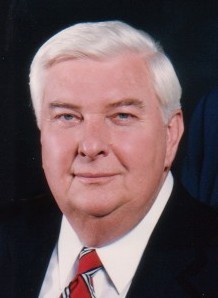
Historical · Governor · Rhode Island
Lincoln Almond
Former Governor of Rhode Island · 1995–2003 · Republican
Lincoln Almond served as Governor of Rhode Island (1995–2003) for the Republican party. The page below collects sourced biographical facts, term history, and provenance for Almond.
Key facts
- Full name
- Lincoln Almond
- Office
- Governor of Rhode Island
- State
- Rhode Island
- Party
- Republican
- Tenure
- 1995–2003
- Took office
- 1995
- Terms recorded
- 1
- Status
- Left office
- Current term ends
- —
- Born
- 1936
- Dataset version
- 1.20260608
Biographical narrative
850 words · sourced from the Wikipedia REST extract
Lincoln Almond was an American attorney and politician who served as the 72nd Governor of Rhode Island from 1995 to 2003. A member of the Republican Party, Almond's political career was marked by his previous role as the United States Attorney for the District of Rhode Island, where he focused on issues such as organized crime and political corruption. His governorship was characterized by significant initiatives in healthcare, education, and economic development.
Early life and career
Lincoln Almond was born on June 16, 1936, in Pawtucket, Rhode Island, to Thomas Clifton Almond and Elsie (Carter) Almond. He spent his early years in Central Falls, Rhode Island, until his family relocated to Lincoln in 1947. Almond attended Central Falls High School, as there was no high school in Lincoln at that time. He pursued higher education at the University of Rhode Island, where he earned a Bachelor of Science degree in 1959. Following this, he attended Boston University School of Law, obtaining his Juris Doctor degree in 1961. After completing his education, Almond began his career as a practicing attorney in Rhode Island.
In January 1963, Almond was appointed Town Administrator of Lincoln, a position he held for three terms until June 1969. During his tenure, he implemented significant improvements to the municipal water system and oversaw a school construction program that included the establishment of a new high school to accommodate a growing student population. Additionally, he was responsible for the construction of a new police station and town hall in Lincoln. Following his service as town administrator, Almond took on a leadership role at the Blackstone Valley Development Corporation, a not-for-profit organization focused on developing industrial parks in the surrounding areas.
Almond's career in public service continued as he was appointed U.S. Attorney for the District of Rhode Island, a position he held from 1969 to 1978 and again from 1981 to 1993. His tenure as U.S. Attorney spanned a total of 21 years, making him one of the longest-serving individuals in that role in the district's history. Almond's focus during this time included combating organized crime, drug offenses, and white-collar crime, particularly political corruption. He was involved in several high-profile prosecutions and served on an advisory committee for U.S. Attorneys, providing guidance on resource allocation and federal legislative priorities.
Governorship
Almond's political journey included an unsuccessful bid for the U.S. Congress in 1968 and a failed attempt to become governor in 1978, where he was defeated by the incumbent, J. Joseph Garrahy. However, he made a notable comeback in the 1994 Republican primary for governor, where he defeated the favored candidate, U.S. Representative Ron Machtley. Almond subsequently won the general election against Democratic State Senator Myrth York, who had previously unseated the incumbent governor in her primary.
Almond became the first governor to serve a four-year term following changes to the Rhode Island Constitution, which also instituted a two-term limit for statewide offices. His administration focused on various issues, including healthcare, education, and economic development, reflecting his commitment to improving the state's infrastructure and services.
Policy focus and legacy
During his time in office, healthcare and human services were significant priorities for Almond. His administration expanded RIte Care, the state's public healthcare program for children, and implemented an aggressive childhood immunization program. Additionally, he expanded state-funded prenatal care programs, which contributed to a reduction in low-weight births. Almond's administration also increased the availability of state-subsidized childcare slots and raised standards for childcare providers, ensuring that healthcare services were accessible to these providers as well. Under his leadership, Rhode Island achieved one of the highest rates of health insurance coverage among its residents.
In the realm of education, Almond was a strong advocate for higher education funding. He promoted a bond referendum in 2000 that included financing for a new campus of the Community College of Rhode Island (CCRI) in Newport, ensuring that affordable education was accessible to lower-income students. Throughout his governorship, he successfully froze tuition at CCRI for most of his tenure. Almond also directed funds toward improving facilities at Rhode Island College and supported the construction of the Nazarian Performing Arts Center. As the first University of Rhode Island graduate to serve as governor, he made substantial investments in URI, addressing the neglected physical infrastructure and enhancing various academic buildings.
Almond's administration also focused on economic development through tax policy and regulatory reforms. His efforts included introducing tax incentives that encouraged the growth of industries such as financial services, biotechnology, and marine trades. One notable achievement was the signing of the historic preservation tax credit in 2001, which facilitated the rehabilitation of historical sites, including the transformation of the Masonic Temple into a hotel in Providence. Additionally, he oversaw the expansion of the Quonset Davisville Port and Commerce Park, which increased business opportunities and economic activity in the region.
Almond's governorship concluded in 2003, and he left a legacy marked by his contributions to healthcare, education, and economic development in Rhode Island. His career in public service, spanning various roles, reflects his commitment to addressing the needs of the state and its residents.
Notable legislation
Sponsored and co-sponsored legislation for Lincoln Almond is pending operator curation. The biographical narrative above carries the same provenance trail until per-bill rows are written.
Sources
- [1]https://en.wikipedia.org/wiki/Lincoln_AlmondWikipedia · retrieved 2026-06-08
Notable quotes
Sourced quotes for Lincoln Almond are pending operator curation. Narrative-scope provenance remains attached below.
Sources
- [1]https://en.wikipedia.org/wiki/Lincoln_AlmondWikipedia · retrieved 2026-06-08
Key positions
Curated policy positions for Lincoln Almond are pending operator review. The biographical narrative above carries the same provenance trail until per-topic positions are written.
Sources
- [1]https://en.wikipedia.org/wiki/Lincoln_AlmondWikipedia · retrieved 2026-06-08
Terms served
- 1995–2003Governor of Rhode Island · Term 1 · Republican
Sources & provenance
Every attributable claim above carries a per-section [N] marker that resolves to the corresponding URL below. Each entry records the upstream provider, the canonical URL, and the timestamp at which the source was retrieved by the ingest pipeline.
Key facts
- https://www.wikidata.org/wiki/Q886847wikidata · retrieved 2026-06-08
- https://ballotpedia.org/Lincoln_Almondballotpedia · retrieved 2026-06-08
Biographical narrative
- https://en.wikipedia.org/wiki/Lincoln_Almondwikipedia · retrieved 2026-06-08
Explore governors
Every U.S. state elects a governor. Browse Rhode Island’s gubernatorial lineage, the full roster of sitting governors, or Rhode Island’s federal candidates.