
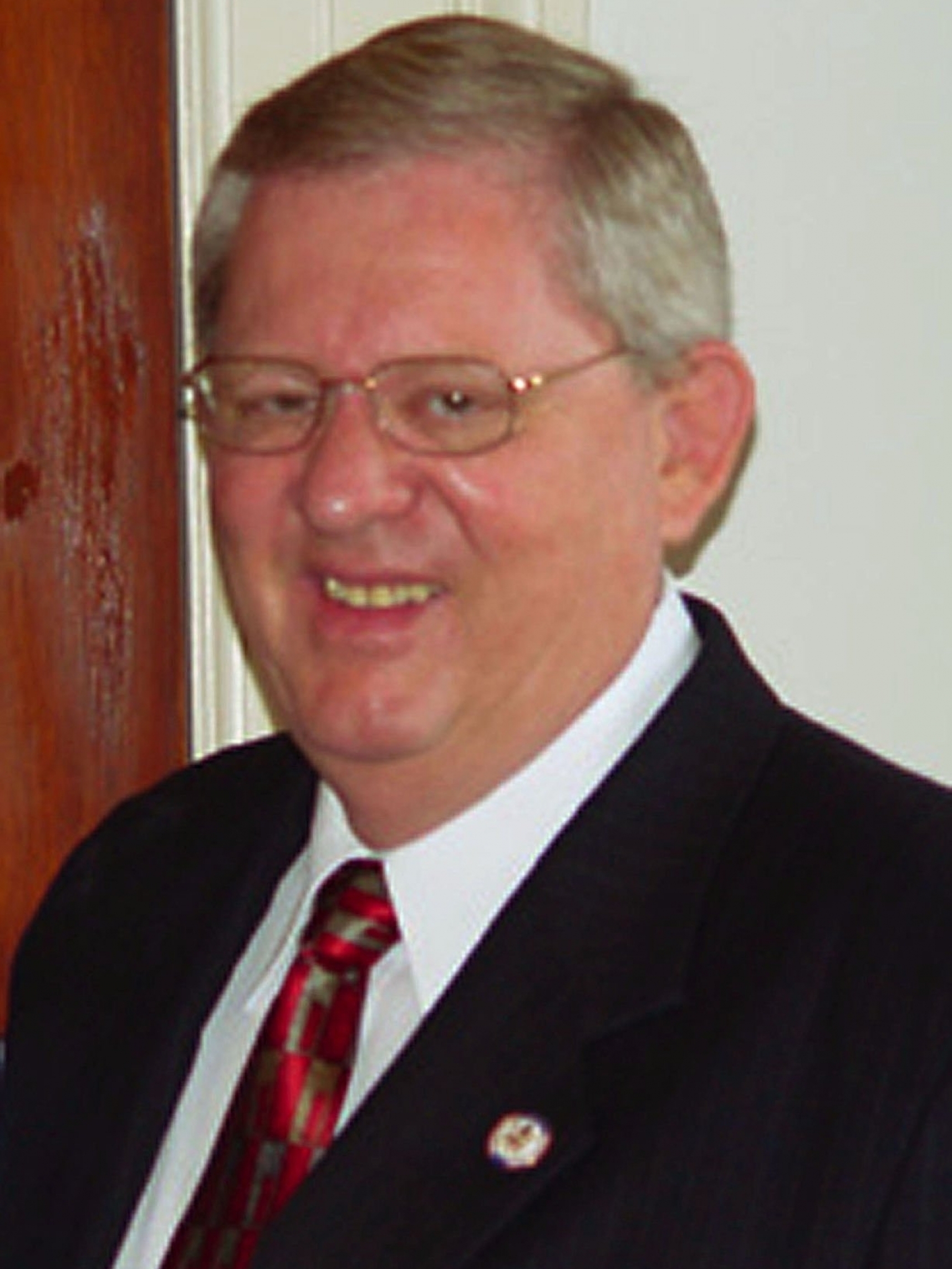
Historical · Governor · South Dakota
Bill Janklow
Former Governor of South Dakota · 1979–2003 · Republican
Bill Janklow served as Governor of South Dakota (1979–2003) for the Republican party. The page below collects sourced biographical facts, term history, and provenance for Janklow.
Key facts
- Full name
- Bill Janklow
- Office
- Governor of South Dakota
- State
- South Dakota
- Party
- Republican
- Tenure
- 1979–2003
- Took office
- 1979
- Terms recorded
- 2
- Status
- Left office
- Current term ends
- —
- Born
- 1939
- Dataset version
- 1.20260608
Biographical narrative
906 words · sourced from the Wikipedia REST extract
William John Janklow was an American lawyer and politician who served as the Governor of South Dakota, representing the Republican Party. His tenure as governor is notable for being the longest in the state's history, spanning a total of sixteen years across two non-consecutive terms. Janklow's political career included significant roles in both state and federal government, and he is remembered for his legal advocacy and legislative initiatives. However, his career was also marked by controversies that impacted his public image.
Early life and career
Bill Janklow was born on September 13, 1939, in Chicago, Illinois. His early life was shaped by personal tragedy when his father, a prosecutor at the Nuremberg Trials, died of a heart attack when Janklow was just ten years old. Following this loss, his mother relocated the family to her hometown of Flandreau, South Dakota, where they settled when Janklow was fifteen. His youth was tumultuous; he faced legal troubles due to juvenile delinquency, which led to a pivotal decision by a judge who offered him a choice between reform school or military service. Janklow chose the latter, dropping out of high school to enlist in the U.S. Marine Corps in 1956.
During his military service, Janklow was trained as a personnel clerk and assigned to the 3rd Marine Division in Okinawa. He participated in the U.S. response to the Quemoy-Matsu crisis in 1958, during which he sustained a gunshot wound. He received an honorable discharge in 1959, after which he pursued higher education. Janklow enrolled at the University of South Dakota, where he managed to remain in school despite lacking a high school diploma, ultimately graduating in 1964 with a Bachelor of Science degree in business administration.
Following his undergraduate studies, Janklow continued his education at the University of South Dakota School of Law, earning his Juris Doctor degree in 1966. He began his legal career as a Legal Services lawyer on the Rosebud Indian Reservation, where he worked for six years and eventually directed the program. In 1973, he was appointed as chief prosecutor and chief of litigation in the South Dakota Attorney General's Office, gaining recognition as a skilled trial lawyer.
Governorship
Janklow's political career began in earnest when he was elected as the 25th Attorney General of South Dakota in 1974, serving from 1975 until 1979. His tenure as attorney general included significant legal cases, notably two he argued before the United States Supreme Court. His successful arguments in South Dakota v. Opperman and Rosebud Sioux Tribe v. Kneip showcased his legal acumen and set the stage for his gubernatorial ambitions.
In 1978, Janklow was elected as the 27th Governor of South Dakota, marking the beginning of his first term. He was reelected in 1982, achieving a historic victory with nearly 71 percent of the vote, the highest percentage for a gubernatorial candidate in the state’s history. During his first term, Janklow faced the challenge of addressing a revenue shortfall caused by the repeal of the personal property tax, which had funded local governments. He collaborated with the state legislature to implement a contractor’s excise tax and reform the franchise tax on banks, which helped stabilize the state's finances.
Janklow's administration was marked by several significant legislative actions. In 1979, he signed a bill reinstating capital punishment in South Dakota and took steps to abolish the Department of Environmental Protection, a move that was controversial due to its implications for resource development in the Black Hills. He also supported legislation that lifted limits on interest rates, which attracted banks to the state, including Citibank, which established a credit card center in Sioux Falls.
After serving two terms, Janklow returned to the governorship in 1995 after being elected again, serving until 2003. His second term continued to focus on economic development and legal reforms. In 1980, he became the first sitting governor to argue before the U.S. Supreme Court when he represented South Dakota in the case of Reeves, Inc. v. Stake, successfully arguing that the state-owned cement plant could legally refuse to sell cement to out-of-state customers.
In 2002, Janklow transitioned to federal politics when he was elected to the United States House of Representatives. However, his time in Congress was cut short when he resigned in 2004 after being convicted of manslaughter related to a fatal automobile accident.
Policy focus and legacy
Throughout his lengthy political career, Janklow's policy focus included economic development, legal reform, and public safety. His efforts to attract businesses to South Dakota through tax reforms and deregulation were significant aspects of his governance. Janklow's administration is often credited with fostering an environment conducive to economic growth, particularly in the banking sector.
However, his legacy is complicated by the controversies that surrounded his personal life and legal challenges. Notably, accusations from 1974 regarding a serious crime committed in 1967 cast a long shadow over his career. Although these allegations did not prevent him from achieving high office, they remained a point of contention in discussions about his legacy.
Janklow's impact on South Dakota politics is evident in the long duration of his governorship, which remains unmatched in the state’s history. His legal background and experience in public service contributed to a unique approach to governance, blending legal expertise with political strategy. Despite the controversies, Janklow's tenure as governor is a significant chapter in South Dakota's political history, reflecting both the complexities of leadership and the challenges faced by public figures.
Notable legislation
Sponsored and co-sponsored legislation for Bill Janklow is pending operator curation. The biographical narrative above carries the same provenance trail until per-bill rows are written.
Sources
- [1]https://en.wikipedia.org/wiki/Bill_JanklowWikipedia · retrieved 2026-06-08
Notable quotes
Sourced quotes for Bill Janklow are pending operator curation. Narrative-scope provenance remains attached below.
Sources
- [1]https://en.wikipedia.org/wiki/Bill_JanklowWikipedia · retrieved 2026-06-08
Key positions
Curated policy positions for Bill Janklow are pending operator review. The biographical narrative above carries the same provenance trail until per-topic positions are written.
Sources
- [1]https://en.wikipedia.org/wiki/Bill_JanklowWikipedia · retrieved 2026-06-08
Terms served
- 1979–1987Governor of South Dakota · Term 1 · Republican
- 1995–2003Governor of South Dakota · Term 2 · Republican
Sources & provenance
Every attributable claim above carries a per-section [N] marker that resolves to the corresponding URL below. Each entry records the upstream provider, the canonical URL, and the timestamp at which the source was retrieved by the ingest pipeline.
Key facts
- https://www.wikidata.org/wiki/Q862213wikidata · retrieved 2026-06-08
- https://ballotpedia.org/Bill_Janklowballotpedia · retrieved 2026-06-08
Biographical narrative
- https://en.wikipedia.org/wiki/Bill_Janklowwikipedia · retrieved 2026-06-08
Explore governors
Every U.S. state elects a governor. Browse South Dakota’s gubernatorial lineage, the full roster of sitting governors, or South Dakota’s federal candidates.