
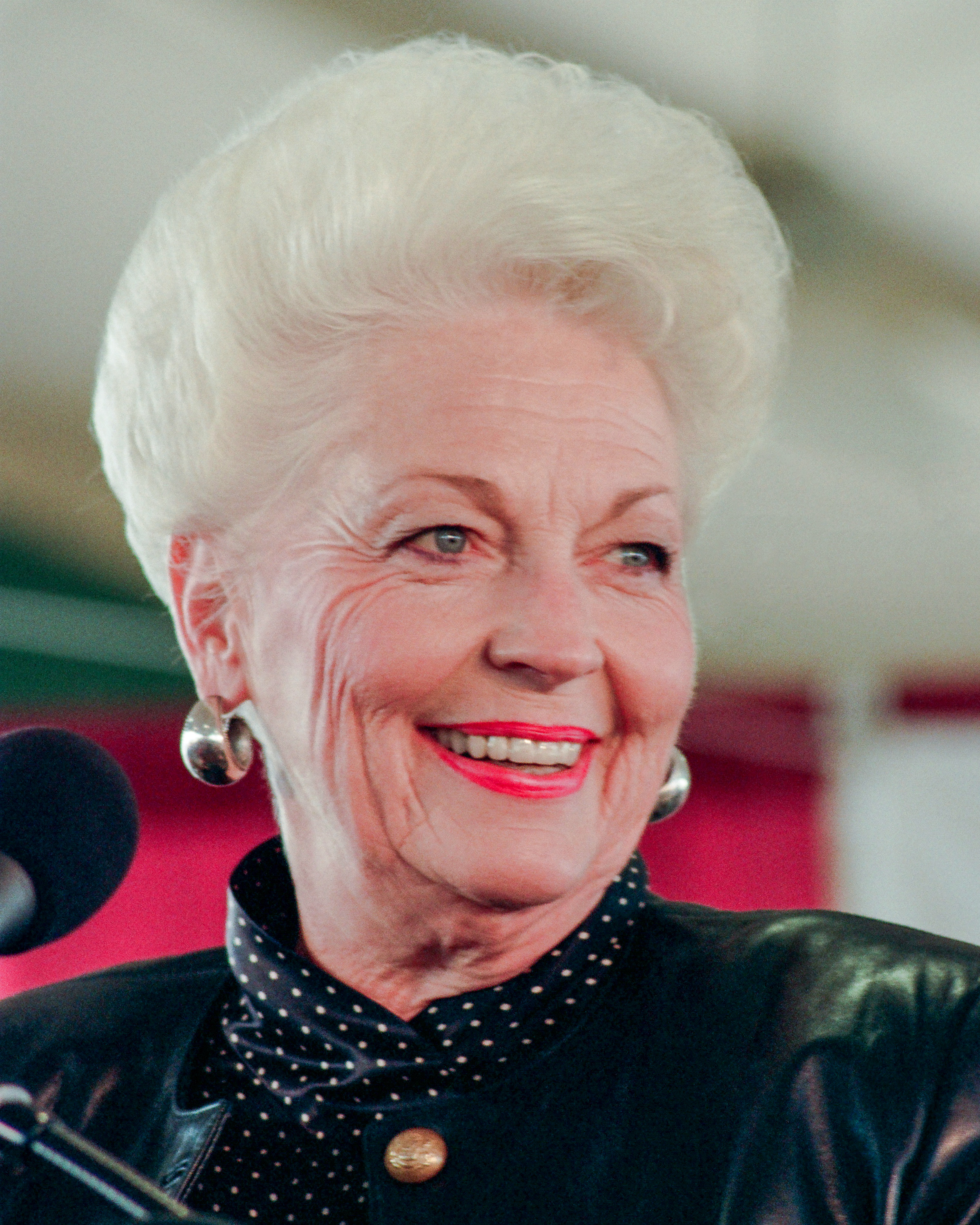
Historical · Governor · Texas
Ann Richards
Former Governor of Texas · 1991–1995 · Democratic
Ann Richards served as Governor of Texas (1991–1995) for the Democratic party. The page below collects sourced biographical facts, term history, and provenance for Richards.
Key facts
- Full name
- Ann Richards
- Office
- Governor of Texas
- State
- Texas
- Party
- Democratic
- Tenure
- 1991–1995
- Took office
- 1991
- Terms recorded
- 1
- Status
- Left office
- Current term ends
- —
- Born
- 1933
- Dataset version
- 1.20260608
Biographical narrative
965 words · sourced from the Wikipedia REST extract
Dorothy Ann Richards, known as Ann Richards, was an American politician who served as the 45th governor of Texas from 1991 to 1995. A member of the Democratic Party, she gained prominence as the Texas State Treasurer prior to her governorship and became known for her charismatic speaking style and advocacy for women's rights. Richards was the second woman to hold the office of governor in Texas, following Miriam A. Ferguson. Her tenure was marked by a commitment to progressive policies and a focus on education and social issues.
Early life and career
Ann Richards was born on September 1, 1933, in Lakeview, Texas, which is now part of Lacy Lakeview, located in McLennan County. She was the only child of Robert Cecil Willis, a pharmaceutical salesman and World War II veteran, and Mildred Iona "Ona" Warren, a homemaker. Both of her parents were originally from Texas. Richards spent her formative years in Waco, Texas, although her family briefly lived in San Diego before returning to Texas when she was in high school. During her high school years, she adopted her middle name, Ann, and became actively involved in student government, participating in Girls State, a mock governmental assembly that fosters civic engagement among young women. She also represented Texas at the Girls Nation event in Washington, D.C., which further ignited her interest in politics.
Richards graduated from Waco High School in 1950 and attended Baylor University on a debate team scholarship, where she earned a bachelor's degree. After marrying her high school sweetheart, David "Dave" Richards, she moved to Austin, Texas, where she obtained a teaching certificate from the University of Texas. From 1955 to 1956, she taught social studies and history at Fulmore Junior High School in Austin while her husband pursued a law degree. The couple later moved to Washington, D.C., and Dallas before returning to Austin in 1969. During this time, Richards became increasingly involved in political campaigns, supporting liberal and progressive candidates such as Henry B. Gonzalez and Ralph Yarborough.
Richards and her husband had four children: Cecile, Daniel, Clarke, and Ellen. Her family background and personal experiences shaped her views and commitment to public service, laying the groundwork for her future political career.
Governorship
Richards' political career took a significant turn when she was elected as the Texas State Treasurer in 1983, becoming the first woman to hold statewide office in Texas in over fifty years. She won the Democratic nomination for the position after the incumbent faced legal issues, and she was subsequently elected against a Republican opponent. Her tenure as treasurer was marked by her proactive approach to managing state investments, which earned her popularity among constituents. In 1986, she was re-elected without opposition, further solidifying her reputation as a capable and effective public servant.
Richards gained national recognition when she delivered a keynote address at the 1988 Democratic National Convention, where she criticized the Reagan Administration and then-Vice President George H. W. Bush. Her speech highlighted her wit and ability to connect with the audience, making her a prominent figure in the Democratic Party. Following this exposure, she decided to run for governor of Texas in 1990.
In the gubernatorial race, Richards faced a competitive primary against Attorney General Jim Mattox and former governor Mark White. She successfully secured the Democratic nomination and went on to challenge Republican nominee Clayton Williams, a wealthy rancher known for his unconventional campaign style. The election was characterized by a series of controversies and gaffes, particularly on the part of Williams, which ultimately played a role in Richards' victory. She won the gubernatorial election and took office in January 1991.
During her time as governor, Richards focused on various issues, including education reform, healthcare, and women's rights. She advocated for increased funding for public schools and worked to improve access to healthcare services for low-income families. Her administration was marked by a commitment to progressive values, and she often used her platform to address social issues affecting Texans.
Richards' governorship was not without challenges. She faced significant opposition from Republican lawmakers and was unable to secure all of her policy goals. In 1994, she ran for re-election but was defeated by George W. Bush, marking the end of her term as governor. Despite the loss, Richards remained active in public life and continued to advocate for issues she was passionate about until her death in 2006.
Policy focus and legacy
Ann Richards' governorship is remembered for its emphasis on education, healthcare, and women's rights. She sought to increase funding for public education and improve the quality of education in Texas, believing that a strong educational system was essential for the state's future. Additionally, she championed healthcare initiatives aimed at expanding access to services for underserved populations, reflecting her commitment to social equity.
Richards was also a prominent advocate for women's rights and often spoke about the importance of female representation in politics. Her outspoken feminism and ability to connect with diverse audiences made her a significant figure in the Democratic Party and a role model for many women in politics. She was known for her sharp wit and memorable one-liners, which contributed to her popularity and public persona.
Although her time in office was relatively short, Richards left a lasting impact on Texas politics. She is recognized as the most recent Democrat to serve as governor of Texas, and her legacy continues to influence discussions on women's rights and progressive policies within the state. Following her governorship, she remained engaged in public discourse and continued to advocate for the issues she cared about until her passing in 2006.
Richards' life and career exemplify the challenges and triumphs of women in politics, and her contributions to Texas and national politics are remembered as part of her enduring legacy.
Notable legislation
Sponsored and co-sponsored legislation for Ann Richards is pending operator curation. The biographical narrative above carries the same provenance trail until per-bill rows are written.
Sources
- [1]https://en.wikipedia.org/wiki/Ann_RichardsWikipedia · retrieved 2026-06-08
Notable quotes
Sourced quotes for Ann Richards are pending operator curation. Narrative-scope provenance remains attached below.
Sources
- [1]https://en.wikipedia.org/wiki/Ann_RichardsWikipedia · retrieved 2026-06-08
Key positions
Curated policy positions for Ann Richards are pending operator review. The biographical narrative above carries the same provenance trail until per-topic positions are written.
Sources
- [1]https://en.wikipedia.org/wiki/Ann_RichardsWikipedia · retrieved 2026-06-08
Terms served
- 1991–1995Governor of Texas · Term 1 · Democratic
Sources & provenance
Every attributable claim above carries a per-section [N] marker that resolves to the corresponding URL below. Each entry records the upstream provider, the canonical URL, and the timestamp at which the source was retrieved by the ingest pipeline.
Key facts
- https://www.wikidata.org/wiki/Q237918wikidata · retrieved 2026-06-08
- https://ballotpedia.org/Ann_Richardsballotpedia · retrieved 2026-06-08
Biographical narrative
- https://en.wikipedia.org/wiki/Ann_Richardswikipedia · retrieved 2026-06-08
Explore governors
Every U.S. state elects a governor. Browse Texas’s gubernatorial lineage, the full roster of sitting governors, or Texas’s federal candidates.