
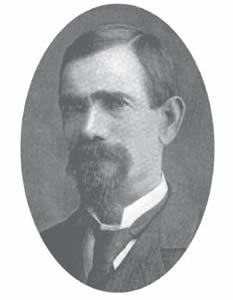
Former · State House · Texas
George C. Pendleton
Former State Representative · Texas · District 56 · Democratic
George C. Pendleton served as a State Representative in the Texas House of Representatives, representing District 56 for the Democratic party. The page below collects sourced biographical facts, the seat and district served, and provenance for Pendleton.
Key facts
- Full name
- George C. Pendleton
- Office
- State Representative
- Chamber
- Texas House of Representatives
- State
- Texas
- District
- District 56
- Party
- Democratic
- Status
- Left office
- Born
- 1845
- OpenStates ID
- —
- Dataset version
- 1.20260610
Biographical narrative
866 words · sourced from the Wikipedia REST extract
George C. Pendleton was a prominent American politician affiliated with the Democratic Party, known for his service as a member of the Texas House of Representatives, where he also held the position of Speaker. His political career extended beyond the state legislature, as he later served as Lieutenant Governor of Texas and represented the state in the U.S. Congress. Pendleton's life was marked by his involvement in various political and civic activities, reflecting the dynamics of Texas politics during the late 19th and early 20th centuries.
Early life and career
George Cassety Pendleton was born on April 23, 1845, in Coffee County, Tennessee, near the town of Viola in Warren County. He was the son of Edmund Gaines "Ned" Pendleton and Sarah Pendleton (née Smartt). In 1857, the Pendleton family relocated to Ellis County, Texas, where George would spend much of his formative years. The onset of the American Civil War saw Pendleton enlist as a private in the Confederate Army, where he served with the Nineteenth Texas Cavalry in the Trans-Mississippi Department. His father, Edmund Pendleton, was also politically active during this period, having served in the Texas House of Representatives.
After the Civil War, Pendleton returned to Texas and briefly attended Waxahachie Academy. However, he was compelled to withdraw due to illness. To regain his health, he took a position as a traveling salesman for a Dallas implement company, a role he maintained for a decade. In 1870, he married Helen Embree, a native of Belton, Texas, and together they raised five children. Pendleton's early career also included a stint in Bell County, Texas, where he lived in Old Howard and later in Pendleton, engaging in various business ventures. His experiences as a farmer led him to participate in the activities of the Grange, an organization aimed at advocating for agricultural interests. In 1882, he moved to Temple, Texas, where he joined the land abstract and title firm of his brother-in-law, William E. Hill, and A. M. Monteith.
Legislative service
Pendleton's political career began in earnest when he was elected as a state representative for Texas House District 56, which included Bell County. He served in the Eighteenth, Nineteenth, and Twentieth legislatures, with his tenure as Speaker of the House occurring from 1887 to 1889. His involvement in the Democratic Party was significant; he was a delegate to every Democratic State convention from 1876 to 1910. During his time in the legislature, Pendleton held various leadership roles within the party, including serving as chairman pro tem of the antiprohibition state convention in May 1887 and the state convention in 1888.
In 1890, recognizing Pendleton's background with the Grange and his connections to agrarian issues, the Democratic state convention nominated him as the running mate for gubernatorial candidate James S. Hogg. This nomination was part of a broader strategy to appeal to the state's agrarian voters during a period of heightened farmer activism. Following Hogg's successful election, Pendleton served as Lieutenant Governor of Texas from 1891 to 1893. His political career continued to evolve when he was elected to the U.S. Congress from Texas's seventh district in 1892, representing a diverse constituency that included several counties. He served two terms in Congress and was a delegate to the Democratic National Convention in Chicago in 1896.
Policy focus and district
During his legislative service, Pendleton was involved in various policy discussions and initiatives that reflected the interests of his constituents and the broader Democratic agenda of the time. His background as a farmer and his association with the Grange informed his perspectives on agricultural issues, which were particularly relevant given the economic challenges faced by farmers in Texas during the late 19th century. Pendleton's leadership roles within the Democratic Party also positioned him as a key figure in shaping party strategies and platforms, particularly in relation to agrarian concerns.
After his congressional service, Pendleton returned to Temple in 1897, where he transitioned into banking while also studying law. He was admitted to the bar in 1900 and practiced law until his death. Pendleton remained active in Democratic politics throughout his later years, serving in various capacities, including as chairman pro tem of the state convention in 1902 and as a member of the committee on platform and resolutions in 1904. In this latter role, he advocated for state control over interstate corporations operating in Texas and called for an investigation into the relationship between Senator Joseph W. Bailey and the Standard Oil Company.
Pendleton's long-standing commitment to the Democratic Party was recognized when he was slated for the position of Postmaster of Temple following the election of Woodrow Wilson in 1912. However, this appointment was never finalized, as Pendleton passed away on January 19, 1913, after suffering a stroke. He was interred in Hillcrest Cemetery in Temple, Texas.
Pendleton's legacy is intertwined with the political developments of Texas during a transformative period in American history. His contributions to the state's legislative processes and his involvement in the Democratic Party reflect the complexities of governance and representation in the late 19th century. His family background, military service, and subsequent political career illustrate the multifaceted nature of public service and civic engagement during this era.
Notable legislation
Sponsored and co-sponsored legislation for George C. Pendleton is pending operator curation. The biographical narrative above carries the same provenance trail until per-bill rows are written.
Sources
- [1]https://en.wikipedia.org/wiki/George_C._PendletonWikipedia · retrieved 2026-06-10
Notable quotes
Sourced quotes for George C. Pendleton are pending operator curation. Narrative-scope provenance remains attached below.
Sources
- [1]https://en.wikipedia.org/wiki/George_C._PendletonWikipedia · retrieved 2026-06-10
Key positions
Curated policy positions for George C. Pendleton are pending operator review. The biographical narrative above carries the same provenance trail until per-topic positions are written.
Sources
- [1]https://en.wikipedia.org/wiki/George_C._PendletonWikipedia · retrieved 2026-06-10
Legislative service
- Texas House of Representatives1887–1889District 56 · Democratic
Sources & provenance
Every attributable claim above carries a per-section [N] marker that resolves to the corresponding URL below. Each entry records the upstream provider, the canonical URL, and the timestamp at which the source was retrieved by the ingest pipeline.
Key facts
- https://www.wikidata.org/wiki/Q1294931wikidata · retrieved 2026-06-10
- https://ballotpedia.org/George_C._Pendletonballotpedia · retrieved 2026-06-10
Biographical narrative
- https://en.wikipedia.org/wiki/George_C._Pendletonwikipedia · retrieved 2026-06-10
Explore the State House
Browse Texas’s District 56 seat, the full Texas House of Representatives roster, or Texas’s federal candidates.
Related on The Candidate
- Texas District 56Every member representing District 56 in the Texas House of Representatives.Open
- Texas State HouseThe full roster of the Texas House of Representatives, by district.Open
- Texas legislatureBoth chambers of the Texas state legislature.Open
- Texas federal candidatesEvery 2026 federal House and Senate candidate in Texas.Open