
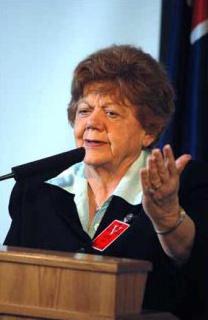
Historical · Governor · Utah
Olene S. Walker
Former Governor of Utah · 2003–2005 · Republican
Olene S. Walker served as Governor of Utah (2003–2005) for the Republican party. The page below collects sourced biographical facts, term history, and provenance for Walker.
Key facts
- Full name
- Olene S. Walker
- Office
- Governor of Utah
- State
- Utah
- Party
- Republican
- Tenure
- 2003–2005
- Took office
- 2003
- Terms recorded
- 1
- Status
- Left office
- Current term ends
- —
- Born
- 1930
- Dataset version
- 1.20260608
Biographical narrative
929 words · sourced from the Wikipedia REST extract
Olene S. Walker was an American politician who served as the 15th governor of Utah from 2003 to 2005. A member of the Republican Party, she was notable for being the first female governor of Utah and the first woman to hold the office of lieutenant governor in the state. Walker's tenure as governor was marked by a focus on education, public service, and community development. She is recognized for her contributions to Utah's political landscape and her efforts to promote affordable housing and literacy initiatives.
Early life and career
Olene Smith was born on November 15, 1930, in Ogden, Utah, to Thomas Ole Smith and Nina Hadley Smith. She was the second of five children in her family. Walker completed her early education at Weber High School before pursuing higher education. She earned her bachelor's degree from Brigham Young University in 1953, followed by a master's degree from Stanford University. She later obtained a doctorate in education administration from the University of Utah, which laid the foundation for her future career in public service and education.
Walker's political career began in the Utah House of Representatives, where she served from 1981 to 1989. During her time in the House, she held the position of Majority Whip and was instrumental in establishing Utah’s Rainy Day Fund, a financial reserve designed to help the state manage economic downturns. Following her tenure in the House, she served as the fourth lieutenant governor of Utah for a decade, from 1993 until she assumed the governorship in 2003. In addition to her legislative roles, Walker founded the Salt Lake Education Foundation and served as its director, further demonstrating her commitment to education.
Throughout her career, Walker held various leadership positions, including director of the Utah Division of Community Development. She chaired several important committees, such as the Commission on Criminal and Juvenile Justice and the Utah State Housing Coordinating Committee. Her involvement in these organizations reflected her dedication to improving the lives of Utah residents, particularly in the areas of education and community development. Walker's political journey was characterized by her advocacy for women in government, and she is remembered for paving the way for future female leaders in Utah.
Governorship
Walker became governor of Utah in 2003, succeeding Mike Leavitt, who resigned after being nominated by President George W. Bush to lead the Environmental Protection Agency. Her governorship lasted until January 3, 2005, making her the shortest-serving governor in Utah's history, with a tenure of just over a year. Despite the brevity of her time in office, Walker made significant contributions to the state's educational policies and community initiatives.
During her governorship, Walker prioritized education, launching the Read With a Child Early Literacy Initiative, which aimed to promote literacy among young children. She frequently visited classrooms to engage with students and encourage reading. Walker also took a firm stance on educational funding, vetoing a proposal for private school vouchers that she believed would divert essential resources from public schools. Her commitment to education was a central theme throughout her political career.
In addition to her focus on education, Walker signed legislation that abolished the use of firing squads for executions in Utah, reflecting her progressive approach to criminal justice issues. She also worked on initiatives to preserve Utah's wilderness and promote affordable housing, addressing critical needs within the state. However, her governorship faced challenges, particularly regarding her re-election campaign. In May 2004, the Utah Republican Party chose not to place her on the ballot for the party primary, a decision that marked the first time in nearly five decades that an incumbent Utah governor was not nominated for re-election. This decision effectively ended her chances of continuing in office, as her rivals had a head start in their campaigns. Despite this setback, Walker left office with a high approval rating, indicating her popularity among the public.
Policy focus and legacy
Olene Walker's legacy is closely tied to her commitment to education and public service. Her initiatives, particularly in early childhood literacy and affordable housing, have had a lasting impact on the state of Utah. In 2012, she established the Olene S. Walker Institute of Politics & Public Service at Weber State University. This institute aims to inspire students and the broader community to engage in public service and political participation. It coordinates internships, hosts public forums, and provides workshops on leadership and citizenship, reflecting Walker's dedication to fostering civic engagement.
Walker’s influence extended beyond her governorship. The State of Utah operates the Olene Walker Housing Loan Fund, which aims to provide affordable housing options and support low-income residents. Her contributions to education and housing have been recognized through various honors, including being named Utahn of the Year by The Salt Lake Tribune in 2003. Additionally, in 2010, the Utah County Democratic Party awarded her its first distinguished service award, highlighting her bipartisan appeal and recognition across party lines.
Walker was married to Myron Walker, and together they had seven children. They were active members of The Church of Jesus Christ of Latter-day Saints, and Walker served in various church capacities throughout her life. She passed away on November 28, 2015, just days after her 85th birthday, leaving behind a legacy of public service and dedication to the people of Utah.
In summary, Olene S. Walker's career as a politician and educator has had a significant and lasting impact on the state of Utah. Her pioneering role as the first female governor and her commitment to education and community development continue to inspire future generations of leaders in the state.
Notable legislation
Sponsored and co-sponsored legislation for Olene S. Walker is pending operator curation. The biographical narrative above carries the same provenance trail until per-bill rows are written.
Sources
- [1]https://en.wikipedia.org/wiki/Olene_WalkerWikipedia · retrieved 2026-06-08
Notable quotes
Sourced quotes for Olene S. Walker are pending operator curation. Narrative-scope provenance remains attached below.
Sources
- [1]https://en.wikipedia.org/wiki/Olene_WalkerWikipedia · retrieved 2026-06-08
Key positions
Curated policy positions for Olene S. Walker are pending operator review. The biographical narrative above carries the same provenance trail until per-topic positions are written.
Sources
- [1]https://en.wikipedia.org/wiki/Olene_WalkerWikipedia · retrieved 2026-06-08
Terms served
- 2003–2005Governor of Utah · Term 1 · Republican
Sources & provenance
Every attributable claim above carries a per-section [N] marker that resolves to the corresponding URL below. Each entry records the upstream provider, the canonical URL, and the timestamp at which the source was retrieved by the ingest pipeline.
Key facts
- https://www.wikidata.org/wiki/Q271061wikidata · retrieved 2026-06-08
- https://ballotpedia.org/Olene_S._Walkerballotpedia · retrieved 2026-06-08
Biographical narrative
- https://en.wikipedia.org/wiki/Olene_Walkerwikipedia · retrieved 2026-06-08
Explore governors
Every U.S. state elects a governor. Browse Utah’s gubernatorial lineage, the full roster of sitting governors, or Utah’s federal candidates.