
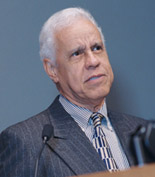
Historical · Governor · Virginia
Douglas Wilder
Former Governor of Virginia · 1990–1994 · Independent
Douglas Wilder served as Governor of Virginia (1990–1994) for the Independent party. The page below collects sourced biographical facts, term history, and provenance for Wilder.
Key facts
- Full name
- Douglas Wilder
- Office
- Governor of Virginia
- State
- Virginia
- Party
- Independent
- Tenure
- 1990–1994
- Took office
- 1990
- Terms recorded
- 1
- Status
- Left office
- Current term ends
- —
- Born
- 1931
- Dataset version
- 1.20260608-2
Biographical narrative
930 words · sourced from the Wikipedia REST extract
Lawrence Douglas Wilder, born on January 17, 1931, is an American lawyer and politician who served as the 66th governor of Virginia from 1990 to 1994. He is notable for being the first African American to be elected as governor of a U.S. state since the Reconstruction era, marking a significant milestone in American political history. After his governorship, Wilder continued to engage in public service and academia, currently holding a position as a professor at the Wilder School at Virginia Commonwealth University.
Early life and career
Douglas Wilder was born in Richmond, Virginia, in a segregated neighborhood known as Church Hill. He was the son of Beulah Olive Richards and Robert Judson Wilder, and he is a descendant of enslaved individuals, with his paternal grandparents having been enslaved in Goochland County. Wilder was the seventh of eight siblings and was named in honor of prominent African American writers, including Paul Laurence Dunbar and Frederick Douglass. His family experienced what Wilder described as "gentle poverty" during the Great Depression, with his father working as an insurance salesman and his mother employed as a maid.
Wilder completed his secondary education at Armstrong High School in 1947, where he was contemporaneous with notable figures such as dancer and choreographer Nat Horne. He then attended Virginia Union University, a historically black institution, where he worked various jobs, including waiting tables and shining shoes, to finance his education. He graduated in 1951 with a degree in chemistry.
Following his graduation, Wilder was drafted into the United States Army during the Korean War, where he volunteered for combat duty. He participated in the Battle of Pork Chop Hill, where he and two fellow soldiers managed to capture a group of North Korean soldiers, an act for which he received the Bronze Star Medal. Wilder was discharged from the Army in 1953 with the rank of sergeant.
After his military service, Wilder worked in the state medical examiner's office while pursuing a master's degree in chemistry. However, he shifted his career focus to law and enrolled at Howard University School of Law, graduating in 1959. He subsequently established a law practice in Richmond, Virginia. In 1958, Wilder married Eunice Montgomery, and the couple had three children: Lynn Diana, Lawrence Douglas Jr., and Loren Deane, before divorcing in 1978.
Wilder's political career began in 1969 when he won a special election to the Virginia State Senate, becoming the first African American elected to that body since Reconstruction. He served in the Senate until 1986, during which time he developed a reputation as a liberal voice in a predominantly conservative legislature. In 1985, he was elected as the 35th Lieutenant Governor of Virginia, making history as the first African American to hold statewide office in the state.
Governorship
Wilder's campaign for governor began in earnest in 1989 when he ran as the Democratic candidate in the gubernatorial election. He entered the race with a notable lead in the polls, but the election proved to be unexpectedly close. Factors contributing to this closeness included strong voter mobilization efforts by the Republican Party and Wilder's open stance on issues such as abortion, which may have influenced voter sentiment. Some analysts suggested that the Bradley effect, where white voters may have been hesitant to disclose their voting intentions to pollsters, played a role in the election dynamics.
On November 8, 1989, Wilder was elected governor, defeating Republican candidate Marshall Coleman by a narrow margin of less than half a percent. The close results necessitated a recount, which ultimately confirmed Wilder's victory. He was sworn in on January 13, 1990, by former U.S. Supreme Court Justice Lewis F. Powell Jr., marking a historic moment in Virginia's political landscape.
During his tenure as governor, Wilder faced various challenges and opportunities. His administration was characterized by efforts to address issues such as economic development, education, and social justice. Wilder's governorship was significant not only for its historical context but also for the policies and initiatives he pursued during his time in office.
Wilder's term as governor concluded in 1994, as Virginia's constitution prohibits governors from seeking immediate re-election. After leaving office, he briefly sought the Democratic nomination for the presidency in 1992 but withdrew before the primaries began. He also considered running as an independent candidate in the 1994 Virginia Senate election but ultimately decided against it.
Policy focus and legacy
Wilder's governorship is remembered for its historical significance and the challenges he faced as an African American leader in a predominantly white political landscape. His administration focused on various policy areas, including economic development, education reform, and social justice initiatives. Wilder's approach often emphasized the importance of inclusivity and representation in governance, reflecting his own experiences and the broader context of race relations in the United States.
After his governorship, Wilder returned to public service as the first directly elected mayor of Richmond in 2005, serving until 2009. He continued to engage in academic pursuits, taking on a role as an adjunct professor and contributing to discussions on race, politics, and history. Wilder was also involved in planning the United States National Slavery Museum, an ambitious project aimed at educating the public about the history and legacy of slavery in America, although the museum has not yet come to fruition.
Wilder's legacy is multifaceted, encompassing his groundbreaking role as the first African American governor of Virginia, his contributions to public service, and his ongoing commitment to education and social justice. His life and career reflect the complexities of American politics and the ongoing struggle for equality and representation in governance.
Notable legislation
Sponsored and co-sponsored legislation for Douglas Wilder is pending operator curation. The biographical narrative above carries the same provenance trail until per-bill rows are written.
Sources
- [1]https://en.wikipedia.org/wiki/Douglas_WilderWikipedia · retrieved 2026-06-08
Notable quotes
Sourced quotes for Douglas Wilder are pending operator curation. Narrative-scope provenance remains attached below.
Sources
- [1]https://en.wikipedia.org/wiki/Douglas_WilderWikipedia · retrieved 2026-06-08
Key positions
Curated policy positions for Douglas Wilder are pending operator review. The biographical narrative above carries the same provenance trail until per-topic positions are written.
Sources
- [1]https://en.wikipedia.org/wiki/Douglas_WilderWikipedia · retrieved 2026-06-08
Terms served
- 1990–1994Governor of Virginia · Term 1 · Independent
Sources & provenance
Every attributable claim above carries a per-section [N] marker that resolves to the corresponding URL below. Each entry records the upstream provider, the canonical URL, and the timestamp at which the source was retrieved by the ingest pipeline.
Key facts
- https://www.wikidata.org/wiki/Q881154wikidata · retrieved 2026-06-08
- https://ballotpedia.org/Douglas_Wilderballotpedia · retrieved 2026-06-08
Biographical narrative
- https://en.wikipedia.org/wiki/Douglas_Wilderwikipedia · retrieved 2026-06-08
Explore governors
Every U.S. state elects a governor. Browse Virginia’s gubernatorial lineage, the full roster of sitting governors, or Virginia’s federal candidates.