
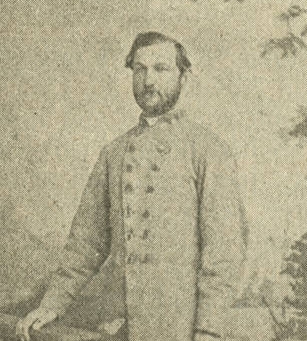
Historical · U.S. House · Alabama · District 1
Thomas Herndon
Former U.S. Representative · Alabama District 1 · 1879–1885 · Democratic
Thomas Herndon represented Alabama's District 1 in the United States House of Representatives (1879–1885) for the Democratic party. The page below collects sourced biographical facts, term history, committee roles, and provenance for Herndon.
Bioguide ID: H000534
Key facts
- Full name
- Thomas Herndon
- State
- Alabama
- District
- District 1
- Party
- Democratic
- House service
- 1879–1885
- First House term
- 1879
- Status
- Left office
- Current term ends
- —
- Born
- 1828
- Bioguide ID
- H000534
- Committee assignments
- —
- Dataset version
- 1.20260606
Biographical narrative
960 words · sourced from the Wikipedia REST extract
Thomas Herndon was a U.S. Representative from Alabama, serving in the House of Representatives during the late 19th century. A member of the Democratic Party, Herndon's congressional career spanned three terms, beginning in 1879 and concluding with his death in 1883. His life and career were marked by significant events, including his service as an officer in the Confederate Army during the American Civil War, as well as his involvement in state politics and education. Herndon was born in Alabama and pursued a career in law and journalism before entering public service.
Early life and career
Thomas Hord Herndon was born on July 1, 1828, in Erie, which is now part of Hale County, Alabama. He was the son of Thomas Hord Herndon, Sr., and Sarah Emma Toulmin Herndon. His maternal lineage included notable figures, as his mother was the daughter of Harry Toulmin, a federal judge. This background likely influenced Herndon's early education and aspirations. He attended a private school for his foundational education and later graduated from the University of Alabama at Tuscaloosa in 1847. Following his undergraduate studies, he briefly attended Harvard University’s law school in 1848, which provided him with a strong legal foundation.
After being admitted to the bar in Alabama in 1849, Herndon began his legal practice in Eutaw, Alabama. His career in law was complemented by his role as the editor of the Eutaw Democrat in 1850, where he likely honed his skills in communication and public discourse. In 1853, Herndon relocated to Mobile, Alabama, where he continued his legal practice. His political career began to take shape when he served in the Alabama House of Representatives during the years 1857 and 1858. His commitment to education was evident when he became a trustee of the University of Alabama in 1858.
The political landscape of Alabama shifted dramatically with the onset of the Civil War. In 1861, Herndon was a member of the state secession convention, which played a crucial role in Alabama's decision to leave the Union. He volunteered for the Confederate Army and joined the 36th Regiment Alabama Infantry, where he initially served as a Major. His military service was marked by bravery, as he was wounded in battle on two occasions and ultimately rose to the rank of Colonel by the end of the war. This military experience would later influence his political identity and public service.
After the Civil War, Herndon returned to Mobile, where he resumed his legal career. In 1872, he sought higher office as a Democratic candidate for Governor of Alabama, although he was unsuccessful in that bid. However, his political involvement continued as he was elected to the state constitutional convention in 1875 and served in the Alabama House of Representatives again in 1876 and 1877. These experiences laid the groundwork for his future congressional career.
House tenure
Thomas Herndon was elected to the United States House of Representatives as a Democrat, beginning his first term on March 4, 1879. He served in the Forty-sixth, Forty-seventh, and Forty-eighth Congresses, representing Alabama's 1st congressional district. His tenure in the House was characterized by the political and social challenges of the post-Civil War era, including issues related to Reconstruction and the integration of Southern states back into the Union.
During his time in Congress, Herndon was part of a legislative body that was grappling with the ramifications of the Civil War and the ongoing struggle for civil rights and economic stability in the South. His service in the House coincided with a period of significant change in American politics, as the nation sought to heal from the divisions of war and address the needs of its diverse population.
Herndon’s congressional career was cut short by his untimely death on March 28, 1883, in Mobile, Alabama. He passed away just before the convening of the Forty-eighth Congress, marking the end of his service in the House. His contributions to the legislative process during a tumultuous time in American history were significant, as he participated in discussions and decisions that would shape the future of the nation.
Legislative focus and committees
While specific details about the legislation Herndon supported or the committees on which he served are not extensively documented, it can be inferred that his background as a lawyer and his experiences during the Civil War likely influenced his legislative priorities. As a member of the Democratic Party during a period of Reconstruction, Herndon would have been involved in addressing issues pertinent to the South, including economic recovery, civil rights, and the reintegration of Southern states into the federal framework.
Herndon's military service and his role in state politics may have also informed his perspectives on veterans' affairs and military-related legislation. The post-war period was marked by a growing recognition of the needs of veterans, and a representative with military experience would have been well-positioned to advocate for such issues.
His involvement in the state constitutional convention and the Alabama House of Representatives suggests that he was engaged in foundational legislative work that aimed to establish a new legal and political framework for Alabama following the Civil War. This experience would have provided him with insights into the complexities of governance and the importance of addressing the needs of constituents.
In summary, Thomas Herndon's life and career were shaped by his early education, legal practice, military service, and political involvement. His tenure in the U.S. House of Representatives was marked by a commitment to public service during a critical period in American history. Despite his relatively brief time in Congress, Herndon's contributions reflected the challenges and aspirations of a nation in transition. He was interred in Magnolia Cemetery in Mobile, Alabama, leaving behind a legacy intertwined with the history of his state and the nation.
Notable legislation
Sponsored and co-sponsored legislation for Thomas Herndon is pending operator curation. The biographical narrative above carries the same provenance trail until per-bill rows are written.
Sources
- [1]https://en.wikipedia.org/wiki/Thomas_H._HerndonWikipedia · retrieved 2026-06-06
Notable quotes
Sourced quotes for Thomas Herndon are pending operator curation. Narrative-scope provenance remains attached below.
Sources
- [1]https://en.wikipedia.org/wiki/Thomas_H._HerndonWikipedia · retrieved 2026-06-06
Key positions
Curated policy positions for Thomas Herndon are pending operator review. The biographical narrative above carries the same provenance trail until per-topic positions are written.
Sources
- [1]https://en.wikipedia.org/wiki/Thomas_H._HerndonWikipedia · retrieved 2026-06-06
Terms served
- 1879–1881U.S. House · Term 1 · Democratic
- 1881–1883U.S. House · Term 2 · Democratic
- 1883–1885U.S. House · Term 3 · Democratic
Sources & provenance
Every attributable claim above carries a per-section [N] marker that resolves to the corresponding URL below. Each entry records the upstream provider, the canonical URL, and the timestamp at which the source was retrieved by the ingest pipeline.
Key facts
- https://bioguide.congress.gov/search/bio/H000534bioguide · retrieved 2026-06-06
- https://www.govtrack.us/congress/members/405396govtrack · retrieved 2026-06-06
Biographical narrative
- https://en.wikipedia.org/wiki/Thomas_H._Herndonwikipedia · retrieved 2026-06-06
Find your representative
Every U.S. state elects representatives by district. Browse Alabama’s delegation, the full former-representative roster, or explore the role and term length.
Related on The Candidate
- Preceded by Jeremiah HaralsonEarlier holder of the Alabama District 1 House seat · Republican.Open
- Succeeded by Richard ClarkeLater holder of the Alabama District 1 House seat · Democratic.Open
- Alfred BuckFormer U.S. Representative · Alabama District 1 · RepublicanOpen
- Benjamin TurnerFormer U.S. Representative · Alabama District 1 · RepublicanOpen
- Bradley ByrneFormer U.S. Representative · Alabama District 1 · RepublicanOpen
- Edmund DarganFormer U.S. Representative · Alabama District 1 · DemocraticOpen