
Historical · U.S. House · Alabama · District 2
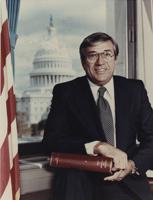
William Dickinson
Former U.S. Representative · Alabama District 2 · 1965–1993 · Republican
William Dickinson represented Alabama's District 2 in the United States House of Representatives (1965–1993) for the Republican party. The page below collects sourced biographical facts, term history, committee roles, and provenance for Dickinson.
Bioguide ID: D000326
Key facts
- Full name
- William Dickinson
- State
- Alabama
- District
- District 2
- Party
- Republican
- House service
- 1965–1993
- First House term
- 1965
- Status
- Left office
- Current term ends
- —
- Born
- 1925
- Bioguide ID
- D000326
- Committee assignments
- —
- Dataset version
- 1.20260605
Biographical narrative
906 words · sourced from the Wikipedia REST extract
William L. Dickinson was a prominent American politician who served as a U.S. Representative for Alabama's 2nd congressional district from 1965 until 1993. A member of the Republican Party, Dickinson played a significant role in Alabama's political landscape during a time of considerable change, particularly as the state transitioned from a Democratic stronghold to a more competitive political environment. His lengthy tenure in Congress spanned 14 terms, during which he became known for his involvement in national defense policies and his strong constituent service.
Early life and career
William Louis Dickinson was born on June 5, 1925, in Opelika, Alabama. His early life was marked by his service in the United States Navy during World War II, where he participated in operations in the European Theater. Following the conclusion of the war, Dickinson pursued higher education and graduated from the University of Alabama School of Law. This legal background laid the foundation for his initial career in law.
In 1950, Dickinson began practicing law in Opelika, where he worked for two years before entering public service. In 1952, he was elected as a city court judge, marking the beginning of his political career. He subsequently served as a juvenile court and common pleas judge in Lee County from 1954 to 1958, and later as a judge of the Fifth Judicial Circuit of Alabama from 1958 to 1962. During this period, he also contributed to local education by serving on the Opelika Board of Education from 1954 to 1962, including a year as board president in 1961. In 1960, he co-founded the Lee County Rehabilitation Center and remained active on its board until 1962.
In 1962, Dickinson transitioned from the judiciary to the transportation sector, taking on the role of assistant vice president of the Southern Railway, a position he held until 1964. This diverse background in law and public service provided him with a unique perspective as he entered the political arena.
House tenure
Dickinson's political career took a significant turn in 1964 when he switched his party affiliation from Democrat to Republican, a notable decision in a state that had historically leaned Democratic since the Civil War. He ran for the United States House of Representatives in Alabama's 2nd congressional district, which includes Montgomery and much of southeastern Alabama. His campaign coincided with the presidential candidacy of Barry Goldwater, who won Alabama's electoral votes. Dickinson successfully defeated the incumbent Democrat, George M. Grant, who had held the position for 13 terms, securing nearly 62 percent of the vote.
This victory was part of a broader shift in Alabama's political landscape, as Dickinson was one of several Republicans who won House seats in the state during that election cycle. His success marked a turning point, as it was the first time since Reconstruction that Republicans held a majority of Alabama's House delegation.
Following his initial victory, Dickinson was reelected multiple times, often with comfortable margins. He faced his first competitive race in 1982, winning by a narrow margin of just 0.8 percent against Alabama Public Service Commission President Billy Joe Camp. Throughout his 28 years in the House, Dickinson never served in the majority party, yet he maintained a strong connection with his constituents, which contributed to his electoral success. His reputation for effective constituent service helped him navigate the challenges of representing a district that had not previously been represented by a Republican.
Despite the changing political tides, Dickinson remained a popular figure in his district, even during challenging national political climates. For instance, in 1974, amidst widespread Republican losses due to the Watergate scandal, he was reelected with a significant majority. He continued to win reelection through various political shifts, including during the presidency of Jimmy Carter, who won Alabama in 1976.
Legislative focus and committees
Throughout his congressional tenure, Dickinson was particularly influential in shaping national defense policies during the 1970s and 1980s. As he gained seniority, he became the ranking member of the House Armed Services Committee, where he played a key role in discussions and decisions regarding military and defense issues. His alignment with the conservative wing of the Republican Party positioned him as a significant player in legislative matters concerning national security.
Dickinson's legislative record also included controversial moments, particularly regarding civil rights. In 1965, he made several speeches to Congress in which he criticized civil rights marchers, alleging misconduct and suggesting that their actions were part of a larger communist conspiracy. These claims were met with strong opposition from other members of Congress, who defended the civil rights movement and challenged Dickinson's assertions. The backlash highlighted the contentious political climate of the era and underscored the divisions within the country regarding civil rights issues.
In addition to his focus on defense, Dickinson's voting record included positions on various legislative matters. Notably, he voted against the Abandoned Shipwrecks Act of 1987, which aimed to assert U.S. title to certain abandoned shipwrecks and empower states to manage these cultural resources. His opposition to this legislation reflected his broader approach to governance and policy-making.
Dickinson's long career in the House of Representatives concluded when he left office on January 3, 1993. His tenure was marked by significant political shifts in Alabama and the nation, as well as by his commitment to serving his constituents and addressing national defense issues. Following his retirement from Congress, he remained a notable figure in Alabama politics until his passing on March 31, 2008.
Notable legislation
Sponsored and co-sponsored legislation for William Dickinson is pending operator curation. The biographical narrative above carries the same provenance trail until per-bill rows are written.
Sources
- [1]https://en.wikipedia.org/wiki/William_L._DickinsonWikipedia · retrieved 2026-06-05
Notable quotes
Sourced quotes for William Dickinson are pending operator curation. Narrative-scope provenance remains attached below.
Sources
- [1]https://en.wikipedia.org/wiki/William_L._DickinsonWikipedia · retrieved 2026-06-05
Key positions
Curated policy positions for William Dickinson are pending operator review. The biographical narrative above carries the same provenance trail until per-topic positions are written.
Sources
- [1]https://en.wikipedia.org/wiki/William_L._DickinsonWikipedia · retrieved 2026-06-05
Terms served
- 1965–1967U.S. House · Term 1 · Republican
- 1967–1969U.S. House · Term 2 · Republican
- 1969–1971U.S. House · Term 3 · Republican
- 1971–1973U.S. House · Term 4 · Republican
- 1973–1975U.S. House · Term 5 · Republican
- 1975–1977U.S. House · Term 6 · Republican
- 1977–1979U.S. House · Term 7 · Republican
- 1979–1981U.S. House · Term 8 · Republican
- 1981–1983U.S. House · Term 9 · Republican
- 1983–1985U.S. House · Term 10 · Republican
- 1985–1987U.S. House · Term 11 · Republican
- 1987–1989U.S. House · Term 12 · Republican
- 1989–1991U.S. House · Term 13 · Republican
- 1991–1993U.S. House · Term 14 · Republican
Sources & provenance
Every attributable claim above carries a per-section [N] marker that resolves to the corresponding URL below. Each entry records the upstream provider, the canonical URL, and the timestamp at which the source was retrieved by the ingest pipeline.
Key facts
- https://bioguide.congress.gov/search/bio/D000326bioguide · retrieved 2026-06-05
- https://www.govtrack.us/congress/members/403446govtrack · retrieved 2026-06-05
Biographical narrative
- https://en.wikipedia.org/wiki/William_L._Dickinsonwikipedia · retrieved 2026-06-05
Find your representative
Every U.S. state elects representatives by district. Browse Alabama’s delegation, the full former-representative roster, or explore the role and term length.
Related on The Candidate
- Preceded by John TysonEarlier holder of the Alabama District 2 House seat · Democratic.Open
- Succeeded by Terry EverettLater holder of the Alabama District 2 House seat · Republican.Open
- Alfred BuckFormer U.S. Representative · Alabama District 1 · RepublicanOpen
- Benjamin TurnerFormer U.S. Representative · Alabama District 1 · RepublicanOpen
- Bradley ByrneFormer U.S. Representative · Alabama District 1 · RepublicanOpen
- Edmund DarganFormer U.S. Representative · Alabama District 1 · DemocraticOpen