
Historical · U.S. House · Alabama · District 3
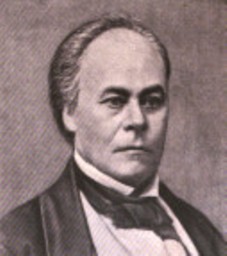
George Crabb
Former U.S. Representative · Alabama District 3 · 1837–1841 · Whig
George Crabb represented Alabama's District 3 in the United States House of Representatives (1837–1841) for the Whig party. The page below collects sourced biographical facts, term history, committee roles, and provenance for Crabb.
Bioguide ID: C000847
Key facts
- Full name
- George Crabb
- State
- Alabama
- District
- District 3
- Party
- Whig
- House service
- 1837–1841
- First House term
- 1837
- Status
- Left office
- Current term ends
- —
- Born
- 1804
- Bioguide ID
- C000847
- Committee assignments
- —
- Dataset version
- 1.20260606
Biographical narrative
852 words · sourced from the Wikipedia REST extract
George Crabb was a U.S. Representative from Alabama, serving as a member of the Whig Party during the late 1830s and early 1840s. His political career included two terms in the U.S. House of Representatives, where he contributed to the legislative process during a formative period in American history. Crabb's background encompassed military service, state-level political roles, and various positions in public administration, reflecting a diverse career dedicated to public service.
Early life and career
George Crabb was born on February 22, 1804, in Botetourt County, Virginia. His early education took place in public schools, which provided him with a foundational knowledge that would serve him throughout his career. Crabb later moved to Nashville, Tennessee, before settling in Tuscaloosa, Alabama. This relocation marked the beginning of his involvement in the political landscape of Alabama.
Crabb's political career began in earnest in 1829 when he was elected to serve as the assistant secretary of the Alabama State Senate. This position allowed him to gain experience in legislative processes and state governance. Following this role, he was appointed as the comptroller of public accounts, further solidifying his involvement in state financial matters.
In addition to his administrative roles, Crabb participated in the Florida Indian War in 1836, where he served as a lieutenant colonel in the Alabama Volunteers. His military service during this conflict contributed to his reputation and leadership skills, which would later benefit him in his political endeavors. After his military service, he continued to engage in state politics, being elected to the Alabama House of Representatives in 1836 and 1837. His tenure in the state legislature provided him with valuable insights into the needs and concerns of his constituents.
Crabb's political influence expanded when he served in the Alabama State Senate in 1837 and 1838. His leadership capabilities were recognized when he was elected or appointed as a major general of the militia, earning him the title of General Crabb. This combination of military and political experience positioned him well for future opportunities in public service.
House tenure
George Crabb's tenure in the U.S. House of Representatives began when he was elected as a Whig to the Twenty-fifth Congress. He filled the vacancy left by the death of Joab Lawler, marking his entry into federal politics. Crabb's first term in the House commenced on September 4, 1838, and he was subsequently reelected to the Twenty-sixth Congress, serving until March 4, 1841. During his time in the House, Crabb participated in the legislative process during a period characterized by significant national developments, including debates over issues such as westward expansion, economic policy, and the role of the federal government.
Crabb's service in Congress was marked by his alignment with the Whig Party, which was known for its opposition to the policies of President Andrew Jackson and its advocacy for a more active role of the federal government in economic development. As a member of the House, Crabb contributed to discussions and decisions that shaped the direction of the country during a time of considerable change. His legislative contributions, while not detailed in specific terms, were part of the broader efforts of the Whig Party to address the concerns of their constituents and promote their political agenda.
Despite his efforts and contributions, Crabb was unsuccessful in his bid for reelection to the Twenty-seventh Congress. This marked the end of his congressional career, but his involvement in public service did not conclude with his departure from the House.
Legislative focus and committees
While specific details regarding George Crabb's committee assignments and legislative initiatives during his time in Congress are not extensively documented, his alignment with the Whig Party suggests that his legislative focus may have included issues relevant to the party's platform. The Whig Party was known for advocating economic modernization, infrastructure development, and a cautious approach to territorial expansion. Crabb's background in state politics and military service likely informed his perspectives on these matters.
In addition to his legislative work, Crabb's earlier roles in state government and military service provided him with a unique vantage point on the challenges facing Alabama and the nation during his time in office. His experience as a comptroller and in the state legislature would have equipped him with insights into fiscal responsibility and governance, which were important topics during his congressional tenure.
After leaving Congress, Crabb continued to serve the public in other capacities. In 1846, he was appointed as a judge of the county court of Mobile, Alabama, a role that allowed him to apply his legal and administrative skills in a judicial context. His appointment to this position reflects the trust placed in him by his peers and the community, as well as his ongoing commitment to public service.
George Crabb passed away on August 15, 1846, in Philadelphia, Pennsylvania. His contributions to Alabama's political landscape and his service in the U.S. Congress are remembered as part of the broader narrative of American governance during a critical period in the nation's history. He was interred in Greenwood Cemetery in Tuscaloosa, Alabama, where his legacy as a public servant continues to be acknowledged.
Notable legislation
Sponsored and co-sponsored legislation for George Crabb is pending operator curation. The biographical narrative above carries the same provenance trail until per-bill rows are written.
Sources
- [1]https://en.wikipedia.org/wiki/George_W._CrabbWikipedia · retrieved 2026-06-06
Notable quotes
Sourced quotes for George Crabb are pending operator curation. Narrative-scope provenance remains attached below.
Sources
- [1]https://en.wikipedia.org/wiki/George_W._CrabbWikipedia · retrieved 2026-06-06
Key positions
Curated policy positions for George Crabb are pending operator review. The biographical narrative above carries the same provenance trail until per-topic positions are written.
Sources
- [1]https://en.wikipedia.org/wiki/George_W._CrabbWikipedia · retrieved 2026-06-06
Terms served
- 1837–1839U.S. House · Term 1 · Whig
- 1839–1841U.S. House · Term 2 · Whig
Sources & provenance
Every attributable claim above carries a per-section [N] marker that resolves to the corresponding URL below. Each entry records the upstream provider, the canonical URL, and the timestamp at which the source was retrieved by the ingest pipeline.
Key facts
- https://bioguide.congress.gov/search/bio/C000847bioguide · retrieved 2026-06-06
- https://www.govtrack.us/congress/members/402963govtrack · retrieved 2026-06-06
Biographical narrative
- https://en.wikipedia.org/wiki/George_W._Crabbwikipedia · retrieved 2026-06-06
Find your representative
Every U.S. state elects representatives by district. Browse Alabama’s delegation, the full former-representative roster, or explore the role and term length.
Related on The Candidate
- Preceded by Samuel MardisEarlier holder of the Alabama District 3 House seat · Jackson.Open
- Succeeded by William YanceyLater holder of the Alabama District 3 House seat · Democratic.Open
- Alfred BuckFormer U.S. Representative · Alabama District 1 · RepublicanOpen
- Benjamin TurnerFormer U.S. Representative · Alabama District 1 · RepublicanOpen
- Bradley ByrneFormer U.S. Representative · Alabama District 1 · RepublicanOpen
- Edmund DarganFormer U.S. Representative · Alabama District 1 · DemocraticOpen