
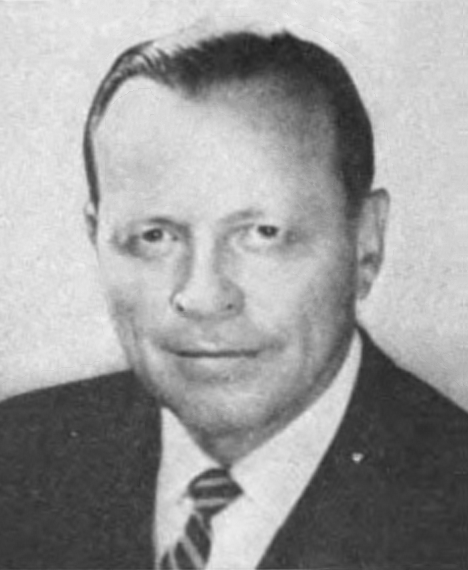
Historical · U.S. House · Alabama · District 4
Arthur Andrews
Former U.S. Representative · Alabama District 4 · 1965–1967 · Republican
Arthur Andrews represented Alabama's District 4 in the United States House of Representatives (1965–1967) for the Republican party. The page below collects sourced biographical facts, term history, committee roles, and provenance for Andrews.
Bioguide ID: A000204
Key facts
- Full name
- Arthur Andrews
- State
- Alabama
- District
- District 4
- Party
- Republican
- House service
- 1965–1967
- First House term
- 1965
- Status
- Left office
- Current term ends
- —
- Born
- 1909
- Bioguide ID
- A000204
- Committee assignments
- —
- Dataset version
- 1.20260605
Biographical narrative
956 words · sourced from the Wikipedia REST extract
Arthur Andrews was an American politician who served as a U.S. Representative for Alabama's 4th congressional district from 1965 to 1967. A member of the Republican Party, he was born on January 15, 1909, in Anniston, Alabama. Andrews's political career was marked by a single term in the House of Representatives, during which he participated in significant legislative debates of the era, including opposition to the Voting Rights Act of 1965. After leaving Congress, he continued his professional life in various capacities, including a role as a trustee in bankruptcy court. He passed away on September 25, 2008, and was noted for being the last living former U.S. representative born in the 1900s.
Early life and career
Arthur Glenn Andrews was born in Anniston, a city located in Calhoun County in northern Alabama. He was the son of Roger Lee Andrews and Beryl Elizabeth Jones. Growing up in Birmingham, Andrews attended public schools before transferring to Mercersburg Academy, a prestigious boarding school in Pennsylvania. His educational journey culminated at Princeton University, where he earned an A.B. degree in politics in 1931. His senior thesis, which was notably extensive at 83 pages, focused on Charles Evans Hughes, a prominent figure in American politics and law.
Following his graduation, Andrews began his professional career in the financial sector, working for the National City Bank of New York from 1931 to 1933. He then transitioned to the technology industry, joining International Business Machines (IBM) from 1933 to 1936. His career trajectory continued as he became the district manager for a subsidiary of Eastman Kodak, a position he held until 1946. Afterward, he ventured into advertising, where he worked as an executive until 1970, with the exception of his time in Congress.
In 1937, Andrews married Ethel Standish Jackson, and together they would navigate the political landscape of Alabama. His professional background in business and advertising likely influenced his approach to politics, as he sought to represent the interests of his constituents in Alabama's 4th congressional district.
House tenure
Andrews's political career took a significant turn when he was elected to the United States House of Representatives in 1964, representing Alabama's 4th congressional district. This district, which includes his hometown of Anniston, was a focal point for his political ambitions. He served during the 89th Congress, with his term beginning on January 3, 1965, and concluding on January 3, 1967.
During his time in Congress, Andrews was part of a larger group of Alabama representatives who opposed the Voting Rights Act of 1965. This landmark legislation aimed to eliminate various forms of racial discrimination in voting, particularly in the southern states, where such practices were prevalent. The act was a response to the civil rights movement and was catalyzed by events such as the March from Selma to Montgomery, which highlighted the struggles faced by African Americans in their pursuit of voting rights.
Andrews's opposition to the Voting Rights Act placed him in a contentious political environment, reflecting the broader national debates over civil rights during the 1960s. His tenure in Congress was characterized by these significant legislative discussions, which would have lasting implications for American society.
In 1966, Andrews sought re-election but was defeated by Democratic State Senator Bill Nichols. The election results indicated a shift in voter sentiment, with Nichols receiving a substantial majority of the votes cast. This defeat marked the end of Andrews's congressional career, as he was unable to secure a second term in office.
Following his departure from Congress, Andrews remained active in Alabama politics. He chaired the Alabama Fourth Congressional District Republican Executive Committee, a role that allowed him to continue influencing the Republican Party's direction in his home state. In 1970, he attempted to return to Congress but faced another defeat against Nichols, who had solidified his position in the district.
Legislative focus and committees
During his brief tenure in the House of Representatives, Andrews's legislative focus was largely shaped by the political climate of the 1960s, particularly regarding civil rights and social justice. His opposition to the Voting Rights Act of 1965 placed him in a controversial position, as the legislation was a pivotal moment in the fight for equality in the United States. The act aimed to dismantle systemic barriers that prevented African Americans from exercising their right to vote, and Andrews's stance reflected the complexities of political allegiances in the South during this transformative period.
While specific details about the committees on which Andrews served are not provided, it is common for members of Congress to participate in various committees that align with their interests and the needs of their constituents. These committees play a crucial role in shaping legislation and overseeing government functions. Andrews's background in business and finance may have influenced his committee assignments, potentially focusing on economic issues relevant to his district.
After leaving Congress, Andrews's career continued in a different capacity when he was appointed as a trustee in bankruptcy court by President Richard Nixon. This role, which he held from 1973 to 1985, involved overseeing bankruptcy cases and ensuring that the legal processes were followed appropriately. This position allowed him to remain engaged in public service and contribute to the legal and economic landscape of Alabama.
Arthur Andrews's life came to a close on September 25, 2008, in White Plains, Alabama. His passing marked the end of an era, as he was the last living former U.S. representative born in the 1900s. He was cremated, and his ashes were interred at Grace Episcopal Church Columbarium in Anniston, Alabama. Andrews's legacy as a politician is intertwined with the significant social changes of the 1960s, and his experiences reflect the complexities of political life during a time of profound transformation in American society.
Notable legislation
Sponsored and co-sponsored legislation for Arthur Andrews is pending operator curation. The biographical narrative above carries the same provenance trail until per-bill rows are written.
Sources
- [1]https://en.wikipedia.org/wiki/Glenn_AndrewsWikipedia · retrieved 2026-06-05
Notable quotes
Sourced quotes for Arthur Andrews are pending operator curation. Narrative-scope provenance remains attached below.
Sources
- [1]https://en.wikipedia.org/wiki/Glenn_AndrewsWikipedia · retrieved 2026-06-05
Key positions
Curated policy positions for Arthur Andrews are pending operator review. The biographical narrative above carries the same provenance trail until per-topic positions are written.
Sources
- [1]https://en.wikipedia.org/wiki/Glenn_AndrewsWikipedia · retrieved 2026-06-05
Terms served
- 1965–1967U.S. House · Term 1 · Republican
Sources & provenance
Every attributable claim above carries a per-section [N] marker that resolves to the corresponding URL below. Each entry records the upstream provider, the canonical URL, and the timestamp at which the source was retrieved by the ingest pipeline.
Key facts
- https://bioguide.congress.gov/search/bio/A000204bioguide · retrieved 2026-06-05
- https://www.govtrack.us/congress/members/400872govtrack · retrieved 2026-06-05
Biographical narrative
- https://en.wikipedia.org/wiki/Glenn_Andrewswikipedia · retrieved 2026-06-05
Find your representative
Every U.S. state elects representatives by district. Browse Alabama’s delegation, the full former-representative roster, or explore the role and term length.
Related on The Candidate
- Preceded by Samuel HobbsEarlier holder of the Alabama District 4 House seat · Democratic.Open
- Succeeded by Tom BevillLater holder of the Alabama District 4 House seat · Democratic.Open
- Alfred BuckFormer U.S. Representative · Alabama District 1 · RepublicanOpen
- Benjamin TurnerFormer U.S. Representative · Alabama District 1 · RepublicanOpen
- Bradley ByrneFormer U.S. Representative · Alabama District 1 · RepublicanOpen
- Edmund DarganFormer U.S. Representative · Alabama District 1 · DemocraticOpen