
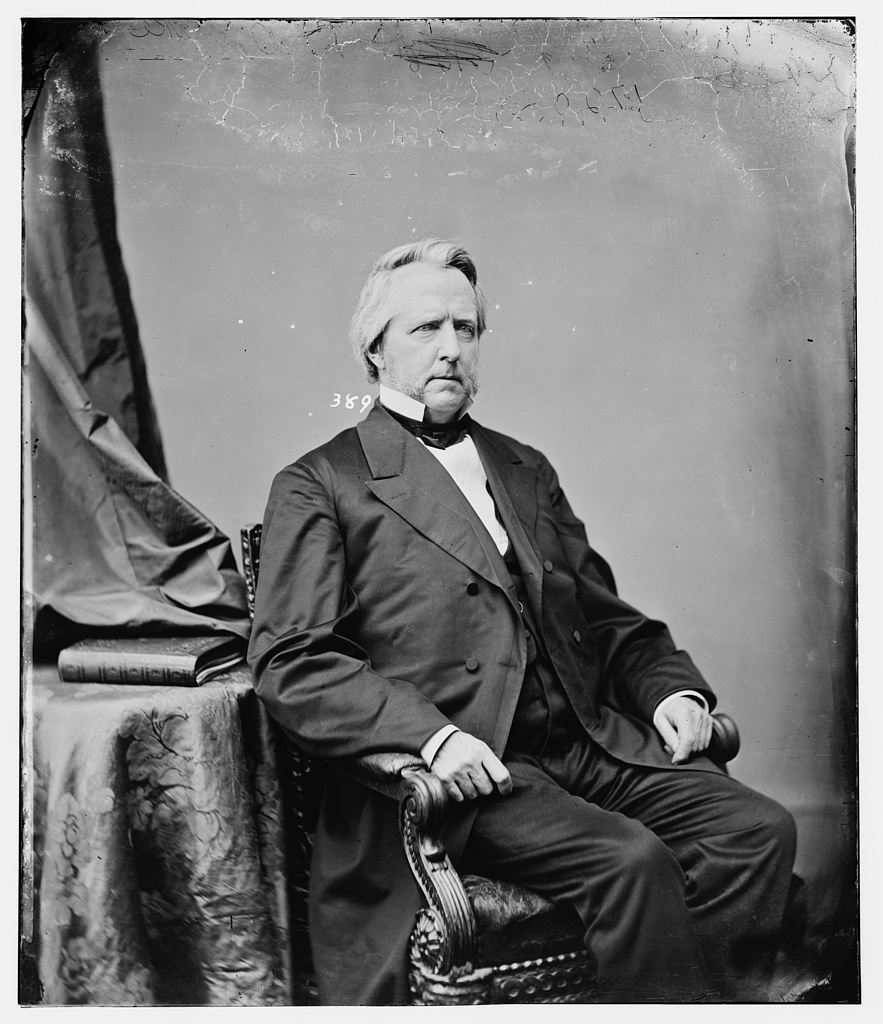
Historical · U.S. House · Alabama · District 5
Peter Dox
Former U.S. Representative · Alabama District 5 · 1869–1873 · Democratic
Peter Dox represented Alabama's District 5 in the United States House of Representatives (1869–1873) for the Democratic party. The page below collects sourced biographical facts, term history, committee roles, and provenance for Dox.
Bioguide ID: D000478
Key facts
- Full name
- Peter Dox
- State
- Alabama
- District
- District 5
- Party
- Democratic
- House service
- 1869–1873
- First House term
- 1869
- Status
- Left office
- Current term ends
- —
- Born
- 1813
- Bioguide ID
- D000478
- Committee assignments
- —
- Dataset version
- 1.20260606
Biographical narrative
1,040 words · sourced from the Wikipedia REST extract
Peter Dox was an American politician who served as a U.S. Representative for Alabama's 5th congressional district from 1869 to 1873. A member of the Democratic Party, Dox's political career unfolded during a transformative period in American history, marked by the aftermath of the Civil War and the Reconstruction era. His legislative service in the House of Representatives was characterized by his commitment to the political and social issues of his time, reflecting the complexities of governance during a period of significant change in the United States.
Early life and career
Peter Myndert Dox was born on September 11, 1813, in Geneva, Ontario County, New York. He was the eldest child in a family that included several siblings: John Nicolas Dox, Mary Blair Dox, Anne Nicholas Dox, and Ernest B. Dox. His family background was notable; his paternal grandfather, Pieter Dox, was a merchant and skipper who participated in both the French and Indian War and the Revolutionary War, indicating a lineage with a history of service. Additionally, Dox's paternal uncles held significant positions, including Myndert M. Dox, who served as the Collector of the Port of Buffalo, and Gerrit L. Dox, who was the New York State Treasurer. On his maternal side, his grandfather John Nicholas served as a U.S. Representative from Virginia, further emphasizing the family's engagement in public service and politics.
Dox pursued his education at Hobart College in Geneva, graduating in 1833. Following his graduation, he studied law and was subsequently admitted to the bar, beginning his legal practice in Geneva. His early career included a political role as a member of the New York State Assembly in 1842. Dox's involvement in politics continued as he served as a judge in the Ontario County courts, a position he held as a member of the Know Nothing Party from November 1855 until his resignation in March 1856. The Know Nothing Party, known for its anti-immigrant and anti-Catholic sentiments, was a significant political force during the mid-19th century, reflecting the social tensions of the time.
In the mid-1850s, Dox relocated to Alabama, settling in Madison County. This move marked a significant transition in his life, as he shifted from a legal and political career in New York to agricultural pursuits in the South. His involvement in agriculture was likely influenced by the economic conditions of the region and the opportunities available in Alabama. Dox's political engagement continued as he participated as a delegate in the Alabama constitutional convention of 1865, a crucial event in the state's efforts to redefine its governance following the Civil War.
House tenure
Dox's political career took a significant turn in 1868 when he was elected to the U.S. House of Representatives as a Democrat. His election came during a time when the Democratic Party was working to regain influence in the South after the Civil War and the subsequent Reconstruction period. Dox's first term in the House began in 1869, and he was re-elected for a second term, serving until March 3, 1873. His tenure in Congress coincided with a critical period in American history, characterized by efforts to rebuild the nation and address the challenges of integrating formerly enslaved individuals into society.
During his time in the House, Dox participated in various legislative discussions and decisions that were pivotal to the Reconstruction efforts. The political landscape was fraught with tensions as Congress grappled with issues related to civil rights, economic recovery, and the reintegration of Southern states into the Union. Dox's role as a representative from Alabama placed him at the center of these discussions, where he contributed to the shaping of policies that would impact the South for years to come.
Dox's legislative work was marked by the complexities of representing a Southern state during a period of significant national upheaval. The challenges he faced included addressing the needs of his constituents while navigating the broader political dynamics of a nation still healing from the wounds of civil conflict. His service in the House was characterized by a commitment to the principles of the Democratic Party, which at the time was focused on restoring local governance and opposing some of the more radical Reconstruction measures proposed by the Republican majority.
Legislative focus and committees
While specific details regarding Dox's legislative initiatives and committee assignments during his time in the House are not extensively documented, it can be inferred that his focus would have aligned with the interests of his constituents in Alabama. Given the socio-economic context of the South during the Reconstruction era, Dox likely engaged with issues related to agriculture, economic development, and civil rights. The agricultural economy was a central concern for many Southern representatives, and policies that supported farmers and addressed the economic challenges of the post-war period would have been critical.
Dox's participation in the Alabama constitutional convention of 1865 suggests that he had a vested interest in the governance and legal framework of his state, which may have influenced his legislative priorities in Congress. The convention was a significant event aimed at restructuring Alabama's government and addressing the implications of the Civil War and emancipation. As a representative, Dox would have been involved in discussions that sought to balance the needs of a changing society while advocating for the interests of his constituents.
After serving two terms in the House, Dox concluded his congressional career on March 3, 1873. Following his departure from public office, he returned to private life, where he continued to engage with his community in Alabama. Dox's later years were marked by a retreat from the political spotlight, and he passed away on April 2, 1891, in Huntsville, Alabama. He was laid to rest in Maple Hill Cemetery in Huntsville, leaving behind a legacy as a public servant during a pivotal era in American history.
In summary, Peter Dox's career as a U.S. Representative reflects the complexities of political life during the Reconstruction era. His journey from New York to Alabama, coupled with his legislative service, illustrates the evolving nature of American governance in the aftermath of the Civil War. Dox's contributions to the House of Representatives during this transformative time underscore the challenges and responsibilities faced by lawmakers as they navigated the path toward national reconciliation and rebuilding.
Notable legislation
Sponsored and co-sponsored legislation for Peter Dox is pending operator curation. The biographical narrative above carries the same provenance trail until per-bill rows are written.
Sources
- [1]https://en.wikipedia.org/wiki/Peter_M._DoxWikipedia · retrieved 2026-06-06
Notable quotes
Sourced quotes for Peter Dox are pending operator curation. Narrative-scope provenance remains attached below.
Sources
- [1]https://en.wikipedia.org/wiki/Peter_M._DoxWikipedia · retrieved 2026-06-06
Key positions
Curated policy positions for Peter Dox are pending operator review. The biographical narrative above carries the same provenance trail until per-topic positions are written.
Sources
- [1]https://en.wikipedia.org/wiki/Peter_M._DoxWikipedia · retrieved 2026-06-06
Terms served
- 1869–1871U.S. House · Term 1 · Democratic
- 1871–1873U.S. House · Term 2 · Democratic
Sources & provenance
Every attributable claim above carries a per-section [N] marker that resolves to the corresponding URL below. Each entry records the upstream provider, the canonical URL, and the timestamp at which the source was retrieved by the ingest pipeline.
Key facts
- https://bioguide.congress.gov/search/bio/D000478bioguide · retrieved 2026-06-06
- https://www.govtrack.us/congress/members/403587govtrack · retrieved 2026-06-06
Biographical narrative
- https://en.wikipedia.org/wiki/Peter_M._Doxwikipedia · retrieved 2026-06-06
Find your representative
Every U.S. state elects representatives by district. Browse Alabama’s delegation, the full former-representative roster, or explore the role and term length.
Related on The Candidate
- Preceded by John CallisEarlier holder of the Alabama District 5 House seat · Republican.Open
- Succeeded by John CaldwellLater holder of the Alabama District 5 House seat · Democratic.Open
- Alfred BuckFormer U.S. Representative · Alabama District 1 · RepublicanOpen
- Benjamin TurnerFormer U.S. Representative · Alabama District 1 · RepublicanOpen
- Bradley ByrneFormer U.S. Representative · Alabama District 1 · RepublicanOpen
- Edmund DarganFormer U.S. Representative · Alabama District 1 · DemocraticOpen