
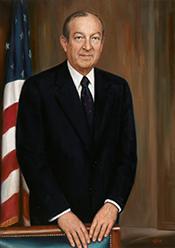
Historical · U.S. House · Alabama · District 5
Robert Jones Jr.
Former U.S. Representative · Alabama District 5 · 1947–1977 · Democratic
Robert Jones Jr. represented Alabama's District 5 in the United States House of Representatives (1947–1977) for the Democratic party. The page below collects sourced biographical facts, term history, committee roles, and provenance for Jr..
Bioguide ID: J000248
Key facts
- Full name
- Robert Jones Jr.
- State
- Alabama
- District
- District 5
- Party
- Democratic
- House service
- 1947–1977
- First House term
- 1947
- Status
- Left office
- Current term ends
- —
- Born
- 1912
- Bioguide ID
- J000248
- Committee assignments
- —
- Dataset version
- 1.20260605
Biographical narrative
981 words · sourced from the Wikipedia REST extract
Robert E. Jones Jr. was a prominent American politician who served as a U.S. Representative for Alabama's 5th congressional district from 1947 until his retirement in 1977. A member of the Democratic Party, Jones was known for his long tenure in Congress, spanning 15 terms, during which he engaged in various legislative efforts that reflected the political landscape of his time. His career was marked by a commitment to economic development in northern Alabama, as well as significant involvement in infrastructure and environmental legislation.
Early life and career
Robert Emmett Jones Jr. was born on June 12, 1912, in Scottsboro, Alabama, located in Jackson County. He received his education in the public school system before attending the University of Alabama, where he pursued a degree in law. He graduated from the University of Alabama's law department on January 7, 1937, and was subsequently admitted to the bar the same year. Following his admission, Jones engaged in legal practice in Scottsboro, establishing a foundation for his future political career.
In July 1940, Jones was elected as the judge of the Jackson County Court, a position he held until October 1946. His judicial role was marked by a reelection in absentia in May 1945, which underscored his standing in the community. During World War II, Jones served in the United States Navy as a gunnery officer, participating in operations in both the Atlantic and Pacific theaters from December 1943 until his discharge in February 1946. This military service contributed to his understanding of national issues and the needs of veterans, which would later inform his legislative priorities.
House tenure
Jones entered the United States Congress in 1947 through a special election, filling the vacancy left by John Sparkman, who had been elected to the U.S. Senate. As a New Deal Democrat, he aligned with the party's progressive policies and quickly became involved in significant legislative initiatives. One of his early contributions was his support for the Housing Act of 1949, particularly Section V, which allocated funding for rural farm housing. His advocacy for this legislation demonstrated his commitment to addressing housing needs in rural communities.
Throughout his congressional career, Jones played a role in various key legislative efforts. He was a supporter of the Federal Highway Act of 1956, which was instrumental in establishing the modern interstate highway system that transformed transportation across the United States. However, his political stance on civil rights issues drew criticism; he was a signatory of the 1956 Southern Manifesto, which opposed the Supreme Court's decision in Brown v. Board of Education that mandated the desegregation of public schools. Jones voted against several significant civil rights measures, including the Civil Rights Acts of 1957, 1960, 1964, and 1968, as well as the Voting Rights Act of 1965 and the 24th Amendment to the U.S. Constitution.
Despite his controversial positions on civil rights, Jones was a proponent of economic development in northern Alabama. He actively supported military projects, NASA initiatives, and the Tennessee Valley Authority, all of which contributed to the economic landscape of his district. His leadership culminated in his role as Chairman of the House Public Works and Transportation Committee during his final term, where he oversaw critical infrastructure projects.
Jones served a total of 14 consecutive terms in the House of Representatives, demonstrating a sustained commitment to his constituents and the issues that mattered to them. He chose not to seek reelection in 1976, concluding his congressional career on January 3, 1977. His papers and records are preserved at the University of Alabama in Huntsville, providing insight into his legislative work and political philosophy.
Legislative focus and committees
Throughout his tenure in Congress, Robert E. Jones Jr. was involved in a range of legislative initiatives that reflected both his priorities and the needs of his constituents. His focus on economic development was evident in his support for various infrastructure projects and his advocacy for federal funding aimed at improving the quality of life in northern Alabama. He was particularly interested in initiatives that would enhance transportation and public works, recognizing their importance for regional growth and connectivity.
One of Jones's notable legislative achievements was his principal sponsorship of the Federal Water Pollution Control Act of 1972. This act aimed to address the growing concerns about water quality and pollution, establishing a framework for federal involvement in environmental protection. His work on this legislation highlighted his recognition of the need for sustainable practices and the importance of safeguarding natural resources.
Additionally, Jones played a significant role in the passage of the Appalachian Regional Development Act of 1965, which aimed to promote economic development in the Appalachian region. This act was designed to address the unique challenges faced by communities in the area, including poverty and lack of access to resources. Jones's involvement in this legislation underscored his commitment to improving the economic conditions of his constituents and fostering regional development.
Jones's legislative focus was also characterized by his participation in various committees throughout his congressional career. As Chairman of the House Public Works and Transportation Committee, he had a significant influence on policies related to infrastructure and transportation, shaping the direction of federal investment in these critical areas. His leadership in this role allowed him to advocate for projects that would benefit his district and the broader region.
In summary, Robert E. Jones Jr.'s congressional career was marked by a blend of support for infrastructure development, environmental legislation, and a complex stance on civil rights. His long tenure in the House of Representatives allowed him to influence key policies and advocate for the interests of his constituents in northern Alabama. After leaving Congress, he remained a notable figure in Alabama politics until his passing on June 4, 1997, in Florence, Alabama. His legacy continues to be recognized, with institutions and infrastructure named in his honor, reflecting his impact on the state and its development.
Notable legislation
Sponsored and co-sponsored legislation for Robert Jones Jr. is pending operator curation. The biographical narrative above carries the same provenance trail until per-bill rows are written.
Sources
- [1]https://en.wikipedia.org/wiki/Robert_E._Jones_Jr.Wikipedia · retrieved 2026-06-05
Notable quotes
Sourced quotes for Robert Jones Jr. are pending operator curation. Narrative-scope provenance remains attached below.
Sources
- [1]https://en.wikipedia.org/wiki/Robert_E._Jones_Jr.Wikipedia · retrieved 2026-06-05
Key positions
Curated policy positions for Robert Jones Jr. are pending operator review. The biographical narrative above carries the same provenance trail until per-topic positions are written.
Sources
- [1]https://en.wikipedia.org/wiki/Robert_E._Jones_Jr.Wikipedia · retrieved 2026-06-05
Terms served
- 1947–1949U.S. House · Term 1 · Democratic
- 1949–1951U.S. House · Term 2 · Democratic
- 1951–1953U.S. House · Term 3 · Democratic
- 1953–1955U.S. House · Term 4 · Democratic
- 1955–1957U.S. House · Term 5 · Democratic
- 1957–1959U.S. House · Term 6 · Democratic
- 1959–1961U.S. House · Term 7 · Democratic
- 1961–1963U.S. House · Term 8 · Democratic
- 1963–1965U.S. House · Term 9 · Democratic
- 1965–1967U.S. House · Term 10 · Democratic
- 1967–1969U.S. House · Term 11 · Democratic
- 1969–1971U.S. House · Term 12 · Democratic
- 1971–1973U.S. House · Term 13 · Democratic
- 1973–1975U.S. House · Term 14 · Democratic
- 1975–1977U.S. House · Term 15 · Democratic
Sources & provenance
Every attributable claim above carries a per-section [N] marker that resolves to the corresponding URL below. Each entry records the upstream provider, the canonical URL, and the timestamp at which the source was retrieved by the ingest pipeline.
Key facts
- https://bioguide.congress.gov/search/bio/J000248bioguide · retrieved 2026-06-05
- https://www.govtrack.us/congress/members/406141govtrack · retrieved 2026-06-05
Biographical narrative
- https://en.wikipedia.org/wiki/Robert_E._Jones_Jr.wikipedia · retrieved 2026-06-05
Find your representative
Every U.S. state elects representatives by district. Browse Alabama’s delegation, the full former-representative roster, or explore the role and term length.
Related on The Candidate
- Preceded by Joe StarnesEarlier holder of the Alabama District 5 House seat · Democratic.Open
- Succeeded by Ronnie FlippoLater holder of the Alabama District 5 House seat · Democratic.Open
- Alfred BuckFormer U.S. Representative · Alabama District 1 · RepublicanOpen
- Benjamin TurnerFormer U.S. Representative · Alabama District 1 · RepublicanOpen
- Bradley ByrneFormer U.S. Representative · Alabama District 1 · RepublicanOpen
- Edmund DarganFormer U.S. Representative · Alabama District 1 · DemocraticOpen