
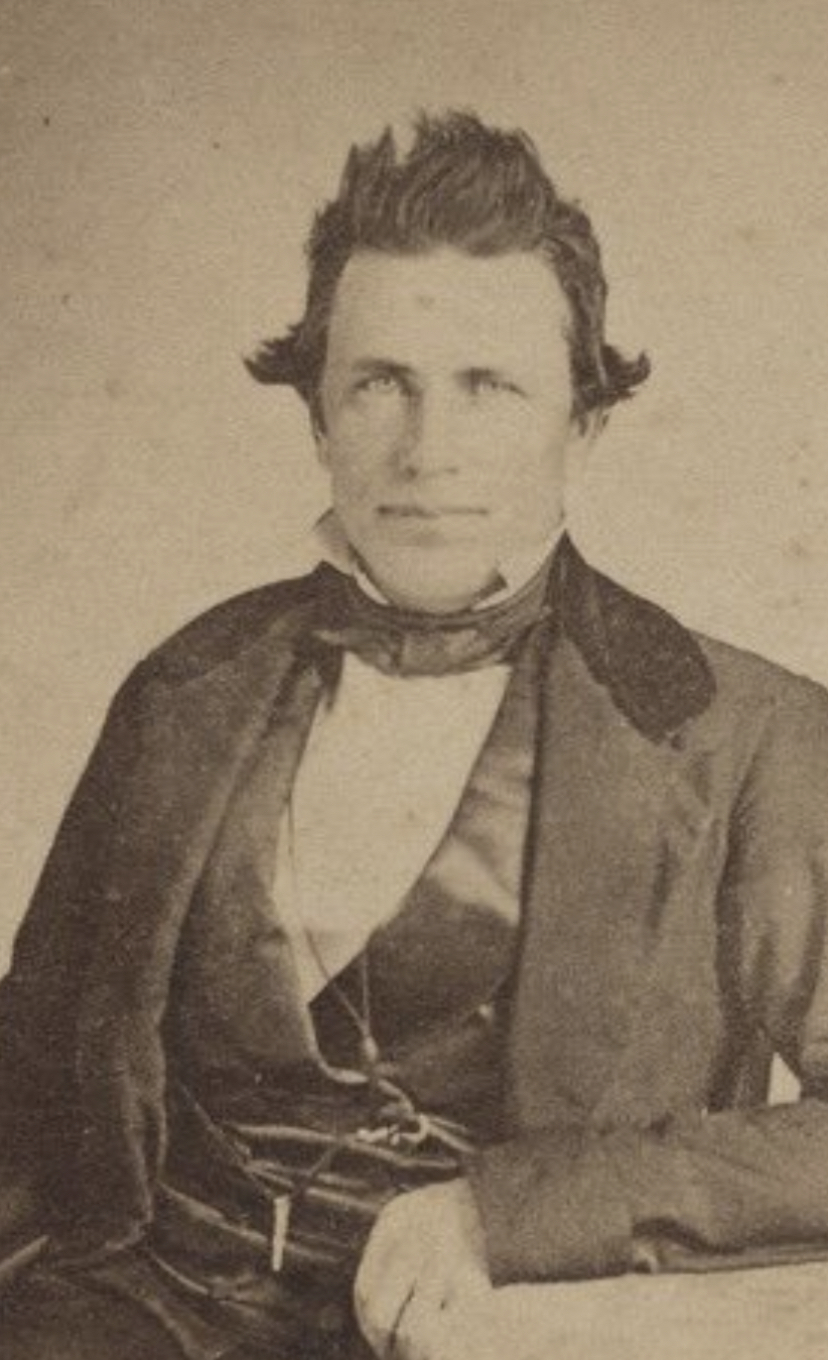
Historical · U.S. House · Alabama · District 5
Thomas Williams
Former U.S. Representative · Alabama District 5 · 1879–1885 · Democratic
Thomas Williams represented Alabama's District 5 in the United States House of Representatives (1879–1885) for the Democratic party. The page below collects sourced biographical facts, term history, committee roles, and provenance for Williams.
Bioguide ID: W000537
Key facts
- Full name
- Thomas Williams
- State
- Alabama
- District
- District 5
- Party
- Democratic
- House service
- 1879–1885
- First House term
- 1879
- Status
- Left office
- Current term ends
- —
- Born
- 1825
- Bioguide ID
- W000537
- Committee assignments
- —
- Dataset version
- 1.20260606
Biographical narrative
873 words · sourced from the Wikipedia REST extract
Thomas Williams was an American politician, lawyer, and farmer who served as a U.S. Representative from Alabama. A member of the Democratic Party, he represented Alabama's 5th congressional district in the House of Representatives from 1879 until 1885. Williams' career spanned various roles, including law practice, agriculture, and public service, reflecting the diverse experiences of many politicians of his era.
Early life and career
Thomas Williams was born on August 11, 1825, in Greensville County, Virginia. He was the son of Reverend John D. Williams, which may have influenced his early education and values. At the age of 14, Williams and his family relocated to Kowaliga, Alabama. This move marked the beginning of his connection to the state that would later become his political base. In Kowaliga, he worked as a farmhand, gaining firsthand experience in agriculture, which would later play a significant role in his life and career.
Williams' educational journey included attendance at preparatory schools, culminating in his graduation from the University of East Tennessee. His legal career began in earnest when he read law using books borrowed from a local attorney, Seth P. Storrs. After completing his studies, he was admitted to the bar in 1852. Following his admission, Williams spent a few years in Texas before returning to Wetumpka, Alabama, where he established his law practice. However, in 1872, he chose to retire from law and focus on agriculture, indicating a shift in his professional interests.
In addition to his legal and agricultural pursuits, Williams engaged in public service. He held various positions, including justice of the peace and register in a court of equity. His commitment to public service was further demonstrated when he was appointed as a state prison inspector in 1872. Williams also served in the Alabama House of Representatives in 1878, contributing to his growing political profile.
House tenure
Williams' congressional career began when he was elected to the U.S. House of Representatives, where he served from March 4, 1879, to March 3, 1885. During his time in Congress, he represented Alabama's 5th congressional district. His tenure in the House was marked by a focus on issues relevant to his constituents and the broader political landscape of the time.
As a member of the Democratic Party, Williams aligned with the party's platform and priorities during the late 19th century. His legislative activities reflected the interests of his district and the Democratic agenda, which often included support for agrarian policies and labor issues. Williams' political career coincided with a period of significant change in the United States, including the post-Civil War Reconstruction era, which influenced many aspects of governance and policy.
Throughout his three terms in the House, Williams participated in various legislative discussions and decisions. His support for penal labor and the leasing of convicts to the private sector was notable, reflecting the complex social and economic issues of the time. This stance on penal labor was part of a broader trend in Southern states, where labor shortages and economic recovery efforts led to the controversial practice of leasing convicts for work.
Williams' congressional service concluded in 1885, after which he returned to his agricultural pursuits in Wetumpka. His time in Congress contributed to the political landscape of Alabama and provided him with experiences that would shape his later endeavors.
Legislative focus and committees
During his tenure in the U.S. House of Representatives, Thomas Williams focused on issues that were significant to his constituents and aligned with the Democratic Party's objectives. His legislative priorities included support for penal labor, which was a contentious topic during the late 19th century. The practice of leasing convicts to private enterprises was seen by some as a necessary economic measure, while others criticized it for ethical reasons. Williams' advocacy for this policy reflected the economic realities faced by many Southern states in the aftermath of the Civil War.
Williams' involvement in various committees during his time in Congress allowed him to engage more deeply with the legislative process. While specific committee assignments are not detailed in the available records, it is common for members of Congress to serve on committees that align with their interests and expertise. These committees play a crucial role in shaping legislation and overseeing government functions, and Williams' participation would have provided him with a platform to influence policy decisions.
In addition to his legislative work, Williams' background as a lawyer and farmer informed his perspectives on agricultural and labor issues. His experiences in these fields likely contributed to his understanding of the challenges faced by constituents in his district, particularly those related to economic development and labor practices.
After leaving Congress, Williams returned to farming in Wetumpka, where he continued to engage with his community. His involvement in local affairs and his membership in the Methodist Episcopal Church further exemplified his commitment to public service and community engagement.
Thomas Williams passed away on April 13, 1903, following a paralyzing stroke. He was 77 years old at the time of his death and was buried in Wetumpka Cemetery. His life and career reflect the complexities of American politics during a transformative period in the nation's history, as well as the diverse roles that individuals played in shaping their communities and the country.
Notable legislation
Sponsored and co-sponsored legislation for Thomas Williams is pending operator curation. The biographical narrative above carries the same provenance trail until per-bill rows are written.
Sources
- [1]https://en.wikipedia.org/wiki/Thomas_Williams_(Alabama_politician)Wikipedia · retrieved 2026-06-06
Notable quotes
Sourced quotes for Thomas Williams are pending operator curation. Narrative-scope provenance remains attached below.
Sources
- [1]https://en.wikipedia.org/wiki/Thomas_Williams_(Alabama_politician)Wikipedia · retrieved 2026-06-06
Key positions
Curated policy positions for Thomas Williams are pending operator review. The biographical narrative above carries the same provenance trail until per-topic positions are written.
Sources
- [1]https://en.wikipedia.org/wiki/Thomas_Williams_(Alabama_politician)Wikipedia · retrieved 2026-06-06
Terms served
- 1879–1881U.S. House · Term 1 · Democratic
- 1881–1883U.S. House · Term 2 · Democratic
- 1883–1885U.S. House · Term 3 · Democratic
Sources & provenance
Every attributable claim above carries a per-section [N] marker that resolves to the corresponding URL below. Each entry records the upstream provider, the canonical URL, and the timestamp at which the source was retrieved by the ingest pipeline.
Key facts
- https://bioguide.congress.gov/search/bio/W000537bioguide · retrieved 2026-06-06
- https://www.govtrack.us/congress/members/411694govtrack · retrieved 2026-06-06
Biographical narrative
- https://en.wikipedia.org/wiki/Thomas_Williams_(Alabama_politician)wikipedia · retrieved 2026-06-06
Find your representative
Every U.S. state elects representatives by district. Browse Alabama’s delegation, the full former-representative roster, or explore the role and term length.
Related on The Candidate
- Preceded by Robert LigonEarlier holder of the Alabama District 5 House seat · Democratic.Open
- Succeeded by Thomas SadlerLater holder of the Alabama District 5 House seat · Democratic.Open
- Alfred BuckFormer U.S. Representative · Alabama District 1 · RepublicanOpen
- Benjamin TurnerFormer U.S. Representative · Alabama District 1 · RepublicanOpen
- Bradley ByrneFormer U.S. Representative · Alabama District 1 · RepublicanOpen
- Edmund DarganFormer U.S. Representative · Alabama District 1 · DemocraticOpen